Opening the Doors: William Blake, Jack Kerouac, Allen Ginsberg, and the Beat Generation

Howl: The War of this World against Vision and Imagination

Screenshot 2022-02-27 at 16.13.12 4

Screenshot 2022-02-23 at 09.39.58

Old New York

Screenshot 2022-02-23 at 12.18.27-OK

Screen Shot 2021-05-10 at 10.39.26

Introduction: Blake & the Beats

Screenshot 2022-02-23 at 10.35.06 2

Allen Ginsberg (1926–1997) in front of the opening lines of Howl, referencing Blake in its opening section

William Blake’s influence on the Beat Generation is arguably more significant than that of any other writer or artist. Most notably he was Ginsberg’s “guru” and the “catalyst” for his poetry, and even warranted a mention in “Howl”. Blake supposedly appeared to Ginsberg in 1945 and read “Ah Sun-flower”, and again in 1948 when Ginsberg was reading “The Sick Rose”. He explained,

I was never able to figure out whether I was having a religious vision, a hallucinatory experience, or what, but it was the deepest ‘spiritual’ experience I had in my life, and determined my karma as poet. That’s the-key pivotal turnabout of my own existence. That’s why I was hung up on setting Blake to music.

Visions were important to Blake, who claimed that his poetry was not necessarily a work that he created, but something channeled through him. He referred to himself as a “true Orator” and claimed that poetry came from a voice that he simply wrote down.

Read More

Revolution of the Psyche, by Krishnamurti

The Thinker and the Thought: “What you are, the world is. So your problem is the world’s problem”

Screenshot 2021-12-25 at 15.00.59

Screenshot 2022-02-20 at 16.45.17

Revolutions

Screen Shot 2021-05-10 at 10.39.26

Introduction

Screenshot 2022-02-20 at 16.31.23 3

Krishnamurti in 1910. The year before, theosophist Charles Webster Leadbeater, who claimed clairvoyance, had noticed Krishnamurti on the Society’s beach on the Adyar river and was amazed by the “most wonderful aura he had ever seen, without a particle of selfishness in it.” Leadbeater was convinced that the boy would become a spiritual teacher and a great orator; the likely “vehicle for the Lord Maitreya” in theosophical doctrine, an advanced spiritual entity periodically appearing on Earth as a World Teacher to guide the evolution of humankind. Krishnamurti later rejected this role, and indeed rejected the whole idea of following “roles”, after an intense spiritual experience in 1922.

Jiddu Krishnamurti was an Indian philosopher, speaker, and writer. In his early life, he was groomed to be the new ‘World Teacher’ (the Theosophical concept of Maitreya), but he later rejected this mantle and withdrew from the Theosophy organization behind it.

His interests included psychological revolution, the nature of mind, meditation, holistic inquiry, human relationships, and bringing about radical change in society. He stressed the need for a revolution in the psyche of every human being and emphasised that such revolution cannot be brought about by any external authority, be it religious, political, or social.

Krishnamurti was often seen as a spiritual master, although he interestingly mistrusted all religions and denounced the Eastern convention of deifying living spiritual masters. This gives some of his thinking an unusual and indeed at times devastating honesty. Perhaps nowhere is this more seen than in his critiques of the ego – the basis of both the modern personality and of most orthodox psychoanalytic thinking (the purpose of much Freudian and Jungian analysis is actually to strengthen the ego). The goal in Krishnamurti’s vision seems to be to go beyond both ‘self’ and beyond ‘mind’ (which, like Tolle, Krishnamurti equates with ego or what Blake calls “Selfhood”). “Judgement and comparison commit us irrevocably to duality”, he says – and we can never be happy therefore while we are in this state. And neither can those around us.

Read More

‘Why War?’: The Freud-Einstein Letters

War in the Mind: Psychoanalysing the origins of war

Screenshot 2022-03-02 at 13.55.54 2

Screen Shot 2021-05-10 at 10.39.26

Introduction: Freud and Einstein on War

In 1931, the Institute for Intellectual Cooperation invited Albert Einstein to a cross-disciplinary exchange of ideas about politics and peace with a thinker of his choosing. He selected Sigmund Freud, whom he had met briefly in 1927 and whose work, despite being skeptical of psychoanalysis, the legendary physicist had come to admire. A series of letters followed, discussing the abstract generalities of human nature and the potential concrete steps for reducing violence in the world.

In a twist of irony, the correspondence was only published in 1933 — after Hitler, who would eventually banish both Einstein and Freud into exile, rose to power — in a slim limited-edition pamphlet titled Why War?. Only 2,000 copies of the English translation were printed, most of which were lost during the war. But the gist of the correspondence, which remains surprisingly little-known, is preserved in the 1960 volume Einstein on Peace, featuring a foreword by none other than Bertand Russell. 

The initial letter came from Einstein, who posed the question, ‘Is there any way of delivering mankind from the menace of war?’  Freud sets out his response, exploring various aspects of human nature which illustrate how war appears virtually inevitable.

Read More

Milton’s Satan and the Fall of the Left Hemisphere, by Jordan Peterson

Totalitarianism and the Urizenic Mind

Screenshot 2021-12-25 at 16.37.30 2

Milton wrote Paradise Lost just before the rise of the nation states, and Milton also had the intuition that there was something wrong with rationality, and he identified rationality with the mythology of Satan. 

In the mythology of Satan, Satan was represented as the highest angel in God’s heavenly kingdom – so you can think about that as the highest psychological function, who had rebelled against God and then was cast into Hell. 

His hypothesis was this: Evil was the force that believes that its knowledge of the world is complete. And that it can do without the transcendent. And as soon as it makes that claim, it instantly exists in a place that’s indistinguishable from hell.  [“In Hell all is Self Righteousness” – Blake. As McGilchrist notes in his fascinating gloss on Blake, “He who sees the Infinite (looks outward to the ever-becoming with the right hemisphere) in all things sees God. He who sees the Ratio only [looks at the self-defined world brought into being by the left hemisphere] sees himself only (the left hemisphere is self-reflexive)”]. And it could get out merely by admitting its Error, and it will never do that.

Read More

Angels in Blake, by Mia Forbes

Unfolding Emissaries:  Angels and Devils as Dialectic

Screen Shot 2021-11-24 at 18.46.59

Screen Shot 2021-11-24 at 10.09.19-Blake

Screen Shot 2021-11-24 at 11.59.31

Screen Shot 2021-11-24 at 18.36.22 (1)

Just as Blake believed that angels are inter-relational and can interpenetrate many dimensions, a part of the divine fabric that constitutes human imagination and an extended field of gravity-like attraction and connection (“betweenness”), this piece weaves together the thought of three different but interrelated Blake commentators on angels – Mia Forbes, S. Foster Damon, and Northrop Frye – thus hoping to build, in a sense, the wings of mutual communion and flight, ones which constitute the true or ‘best’ sense of the angelic in Blake: wings enfolded within wings.

“Angel” is the Greek word for “messenger” or “emissary”.  Blake used the word in the specific sense only once, in expanding Matthew 1:20, where the Angel of the Lord appears to Joseph in a dream, bidding him marry Mary. In the Bible it is not always easy to be sure whether God himself may not be intended by the word. Blake combined the two: “I heard his voice in my sleep & his Angel in my dream” (Jerusalem). But anything that speaks of Eternity may be an angel; thus the tiny skylark is “a Mighty Angel” (Milton: 12; cf.L’Allegro).

“Every man’s leading propensity ought to be call’d his leading Virtue & his good Angel” (Blake, On Lavater). Blake had one (see ‘A Dream’, Songs of Innocence; or “The Angel that presided o’er my birth”, from Blake’s Notebook 1808-26); Milton had one (Milton); also the unfortunate heroine of ‘The Angel’ (Songs of Experience). Angels guard children and give them sleep (‘Night’, and ‘A Cradle Song’, Songs of Innocence).

Read More

Embodying Heaven: The Body in Blake’s Dante, by Silvia Riccardi

Images of Transfiguration: Trasumanar and Transformation in Paradise

Screen Shot 2021-11-06 at 11.46.40

Screen Shot 2021-05-10 at 10.39.26

Introduction: Inside Blake’s Body

Dante’s journey in the otherworld has introduced generations of readers to the consequences of the divine judgment, the architecture of sin and salvation, the moral condemnation of materialism, and the pilgrim’s encounter with God. God is the “somma luce” (“eternal beam”), which cannot be grasped by means of human understanding. The blinding light of redemption thus remains a mystery untold in the Commedia.

Read More

Blake and Zoroastrianism, by Mary Jackson

Ahriman and Ormazd: The Creation of Urizen and the Billateral Mind

img_1127459_36102374_0 (1)

Screen Shot 2021-11-02 at 17.46.49

Screen Shot 2021-05-10 at 10.39.26

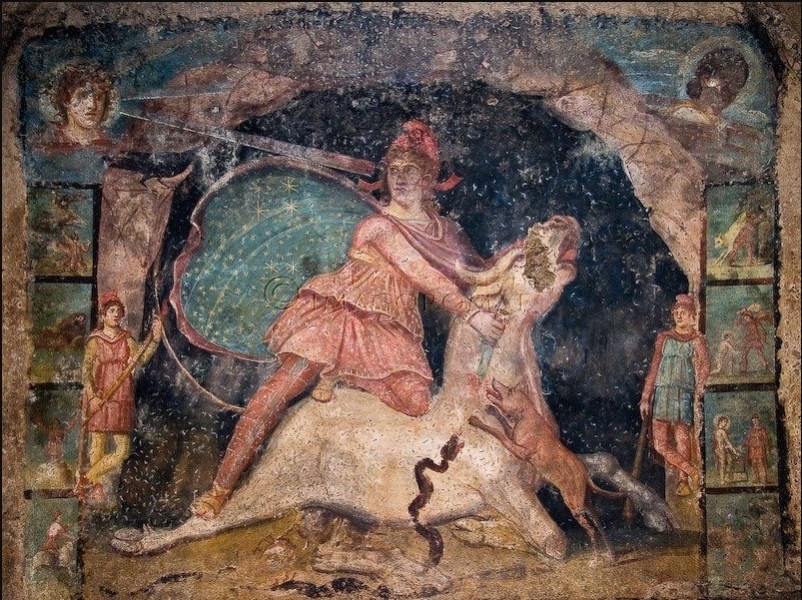
There is considerable evidence that Blake was influenced by Zoroastrian and Mithraic iconography in several illuminations for his and other’s poetry. When one compares the figures of god and daeva (diabolical spirit) with Blake’s drawings and engravings, the sheer number of parallels argues convincingly for some form of influence. Were there no other data than this to prove that Blake may have incorporated elements of representations of the bull-slaying ritual, of Arimanes or Ahriman, god of dark, and Ormazd, god of light, into his visual art, the evidence would seem persuasive.

Read More

‘For Empire is no more’: Blake’s America, by Allen Ginsberg

Countering the Beast and the Whore: Revolution as Revelation

Screen Shot 2021-10-21 at 22.10.27

interior_kline_restlessspirit_part1scene13

Screen Shot 2020-06-19 at 23.13.53

Screen Shot 2021-05-10 at 10.39.26

In February 1979, the great American poet and writer Allen Ginsberg gave a series of remarkable lectures on the prophetic books of William Blake, providing teachings and commentary on their meaning. They were delivered to the students at the Naropa Institute (Naropa University) in Boulder, Colorado.

This is an edited version of his lectures on Blake’s prophetic work America a Prophecy, which explores themes of empire, liberation, terror, the role of prophetic anger, and the centrality of imagination in the struggle to envision and to realise a better world.

Read More

Militarizing Minds: The Media and the Military, by Lt. Col. Dave Grossman

“We’re teaching our kids not how to remember, but how to kill”

new-bond

“The media in our modern information society have done much to perpetuate the myth of easy killing and have thereby become part of society’s unspoken conspiracy of deception that glorifies killing and war. There are exceptions … but for the most part we are given James Bond, Luke Skywalker, Rambo, and Indiana Jones blithely and remorselessly killing men by the hundreds.”

Screen Shot 2021-05-10 at 10.39.26

Introduction: Sex and Killing

Screen Shot 2021-10-20 at 16.17.19Why should we study killing? One might just as readily ask, Why study sex? The two questions have much in common. Every society has a blind spot, an area into which it has great difficulty looking. Today that blind spot is killing. A century ago it was sex.

Sex is a natural and essential part of life. A society that has no sex has no society in one generation. Today our society has begun the slow, painful process of escaping from the pathological dichotomy of simultaneous sexual repression and obsession. But we may have begun our escape from one denial only to fall into a new and possibly even more dangerous one. A new repression, revolving around killing and death, precisely parallels the pattern established by the previous sexual repression.

Part of the reason for our lack of knowledge in this area is that combat is, like sex, laden with a baggage of expectations and myths. In the same way that we did not understand what was occurring in the bedroom, we have not understood what was occurring on the battlefield. Our ignorance of the destructive act matched that of the procreative act.

Read More

Oedipus Rex, by Pier Paolo Pasolini

Seeing and Not Seeing: The Nature of the Modern Rational Self

Screen Shot 2021-08-27 at 11.17.21

Screen Shot 2021-08-27 at 11.20.07

Screen Shot 2021-08-27 at 11.20.52 (1)

Screen Shot 2021-08-27 at 11.25.14

Screen Shot 2021-05-10 at 10.39.26

Pasolini’s Oedipus

Pier Paolo Pasolini’s remarkable film version of the story of Oedipus, true to both Sophocles’s original drama and yet filled with more contemporary, Freudian meanings and undertones, is one of the great achievements of modern cinema: both disturbing and revelatory. For anyone interested in the Oedipus complex (which, let’s face it, is all of us), this film is a must see (unless of course, like Oedipus, you don’t want to see).  With a shocking – in the sense of arresting and very unexpected – final scene, shocking for its beauty and sudden shift of meaning.

It’s a remarkably modern-feeling – almost shamanistic (as perhaps the original Greek dramas were) – version of this story. It feels both very contemporary and very ancient – seemingly fittingly so, for such an archetypal theme. 

Read More