Was there a conspiracy against Kids Company?

The Story of Kids Company and the Centre for Policy Studies

August 2020 marks the fifth anniversary of the closure of the children’s charity Kids Company. The charity had been forced to close in 2015 following allegations of serious sexual abuse broadcast by BBC’s Newsnight programme, and stories of “gross financial mismanagement”, led by the Spectator magazine, including mismanagement of a £3 million grant given to the charity shortly before it closed. A subsequent investigation by the Metropolitan Police into the allegations of sexual and physical abuse that were aired so sensationally by Newsnight however found “no evidence of criminality” and no fault with the charity’s safeguarding of children and vulnerable adults. In 2017 the courts finally confirmed that the £3million grant that had been given to the charity did not have to be returned, and that the terms of the grant had not been breached by the charity. But by then the doors were closed and the charity in liquidation.

BBC Newsnight’s damaging report was instrumental in the destruction of the children’s charity, as the Parliamentary Enquiry into the Collapse of Kids Company noted: “The charity closed on 5 August 2015, following the launch of a police investigation into allegations of sexual abuse at the charity.”

Read More

WILLIAM BLAKE and JACOB BOEHME, by Kevin Fischer
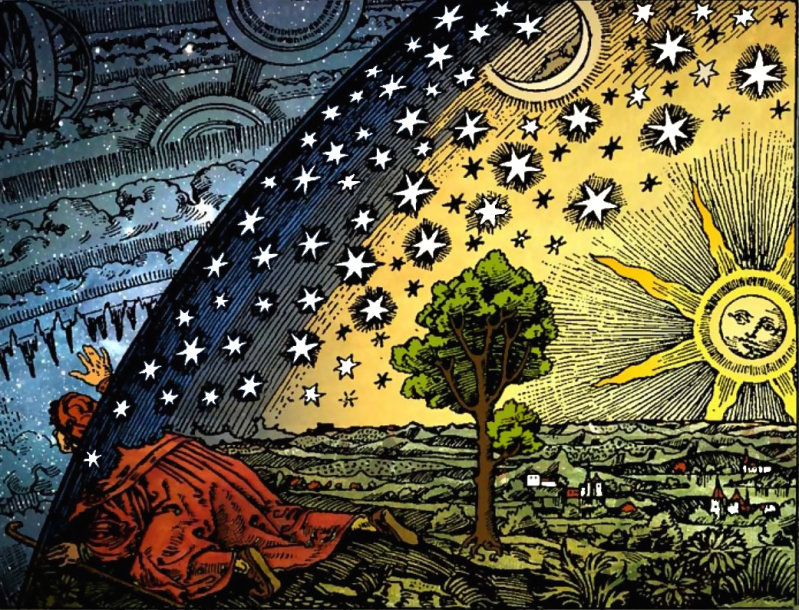
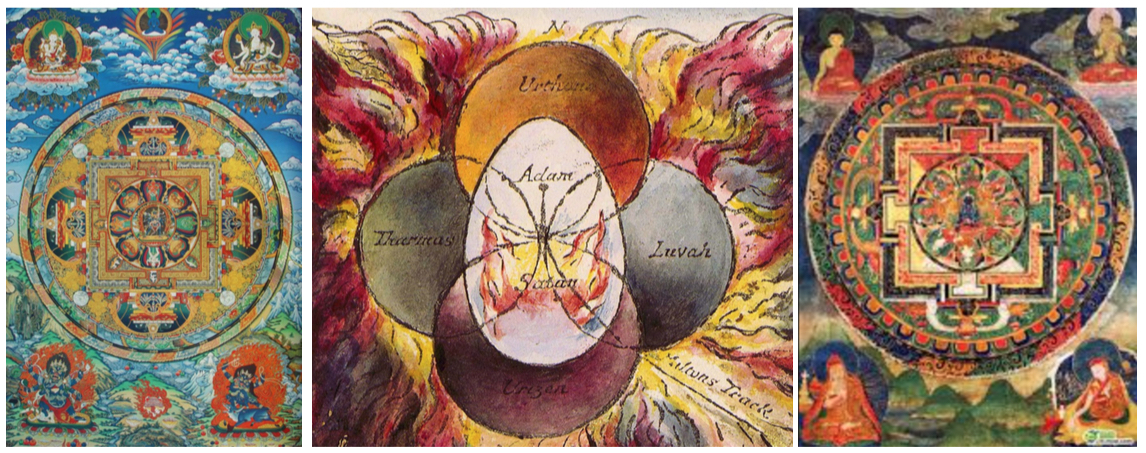
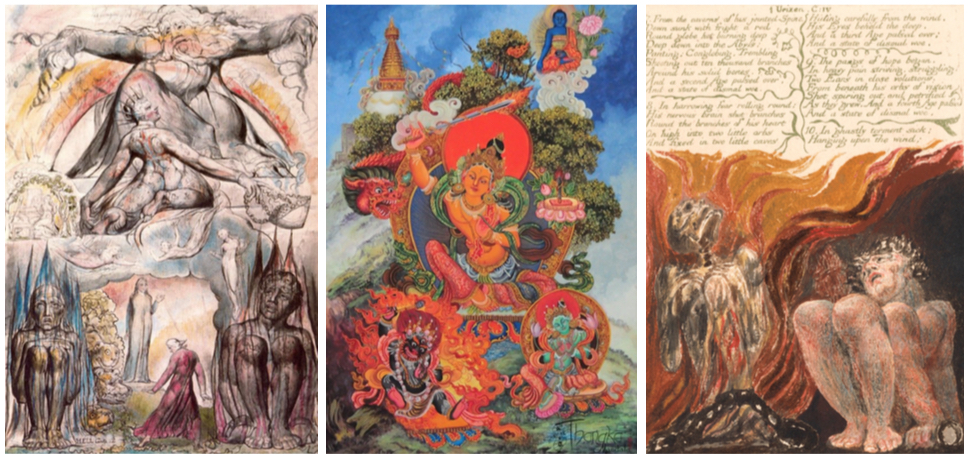
This essay will examine how Jacob Boehme and William Blake understood and valued imagination, and how imagination is quite distinct from fantasy. Both men saw it as rooted in living experience, and as such necessary for a fuller knowledge and understanding of reality. For both, abstract reasoning alone gives only a partial view, one that can distort and limit our understanding and the world that we do experience. By contrast, the creative embodied imagination places us more fully in existence, in ourselves and in the world; it makes possible true Reason; it reveals all the profound potential that is too often unexplored and unrealised in us; and by doing so it affords us a vital living understanding of and relationship with the Divine.

Read More

How We See War, by Rod Tweedy

Rod Tweedy reviews the book War against War! by Ernst Friedrich

On May Day 1924 Ernst Friedrich published a collection of photographic images of the atrocities of World War I, hoping to use the relatively new medium of photography as documentary evidence to challenge the orthodox presentation of war. As Douglas Kellner has remarked, “Friedrich hoped that when they actually saw the reality of modern warfare, people everywhere would become more critical of war, the military, and militarism.”

The book was called War against War!, and the photographs made an immediate and lasting impression on his contemporaries, both within and outside of Germany. The images attracted even greater attention when he put them in the window of his newly-opened Anti-Kriegs-Museum in Berlin, the first international anti-war museum (opened in 1925).

Read More

Team Human: Beyond the Machine, by Douglas Rushkoff

I Must Create My Own Operating System or Be Enslaved by Another’s


One of the most exciting, thought-provoking, inspiring, and Blakean thinkers of his generation, Douglas Rushkoff leads the way in developing a revolutionary 21st century project of recentering what it means to be human. His compelling and innovative take on everything from psychedelic drugs and the post-capitalist economy to the nature of digital technology and how to hack into our cultural programmes and start rewriting them, makes him a leading figure in understanding the dynamic intersection of technology, society and culture. He’s a media theorist – he’s the guy who coined the terms ‘viral media’, ‘digital native’ and ‘social currency’ – as well as an innovative writer, lecturer and hyper-cool graphic novelist, perhaps best known for his association with the early cyberpunk culture, and his advocacy of open source solutions to social problems.

Here’s just a glimpse of the magic. 

Team Human is most simply a sustained argument for human intervention in the Machine, that we’re living increasingly automated, directed, digital, capitalist lives – we’re living in a world that does not promote or celebrate human autonomy.”

Read More

Masks of Anarchy, by Paul Foot

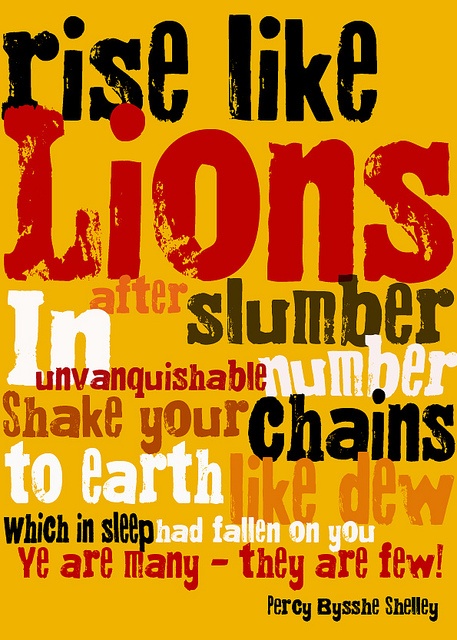
Rise like lions after slumber: Revolutionary Shelley


Richard Holmes rightly describes Shelley’s The Mask of Anarchy as “the greatest political poem ever written in English”. The ninety-two verses of The Mask were written in hot indignation in September 1819, immediately after Shelley heard the news of the massacre at Peterloo. It is the most concise, the most popularly written and the most explicit statement of his political ideas in poetry.

Read More

Eternity in an Hour: Blake in Time, by S. Foster Damon

Left Brain Time and Right Brain Space

Eternity is what always is, the reality underlying all temporal phenomena, the nunc stans of St. Thomas Aquinas. It is vulgarly supposed to be an endless prolongation of Time, to begin in the future; it is instead the annihilation of Time, which is limited to this temporal world; in short, Eternity is the real Now.

The problem of conceptualising eternity with the linear time (left hemisphere) program. We don’t enter Eternity – we enter Time; we’re already in Eternity

“Eternity Exists, and All Things in Eternity” (Vision of the Last Judgment). Whatever was, is, and shall be is there. “Every thing exists & not one sigh nor smile nor tear, one hair nor particle of dust, not one can pass away” (Jerusalem). Nothing real can have a literal beginning. Man “pre-existed” before his creation in Eden, which was only his materialising, an episode of his Fall.

Read More

Through a Glass Darkly: Cleansing the Doors of Religion, by Christopher Rowland

                                    Seeing the Bible through Blake’s Eyes


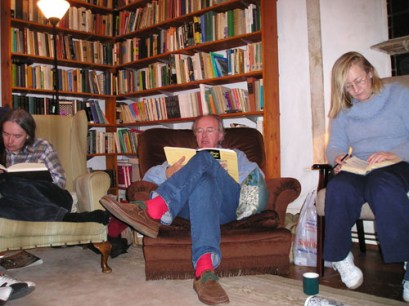
A decade ago I was invited by one of my graduate students to share in a complete reading of William Blake’s Jerusalem. A group of 12 of us attended the event, among them Philip Pullman, a Blake admirer. Each member of the group was asked to share in turn their experience of Blake and his work.

Reading Blake’s Jerusalem: (left to right) Tim Heath (the Spectre), Philip Pullman (Albion), and Val Doulton (the Daughters of Albion)

I found myself blurting out the words, ‘Blake has taught me to read the Bible.’ I had never articulated it like that before, but since then I have often recollected that off-the-cuff comment. I had never thought in that way before. I have reflected on the truth of that statement and come to see that Blake (as in much else in my intellectual endeavour) has been an important catalyst for my thoughts and understanding (Rowland, Blake and the Bible).

In trying to articulate what it is that Blake has taught me, I have started with this because the words ‘Blake taught me’ suggest a direct impact rather than a detached engagement with someone’s words. There’s always a sense when engaging with any of Blake’s works that more is going on than a mere encounter with words or images. It is what is constitutive of what is ‘more’ that is one of the most important aspects of Blake’s works, indeed, is the way he relates to pedagogy.

Read More