The Great Selfhood Satan: The Pathological Nature of the Human Ego

William Blake, Eckhart Tolle, and the Obstacle to God

https://www.youtube.com/watch?v=hbj4nLOPN8o&t=454s

“Imagine a chief of police trying to find an arsonist when the arsonist is the chief of police” (Tolle)

I am your Rational Power O Albion & that Human Form

You call Divine, is but a Worm seventy inches long
That creeps forth in a night & is dried in the morning sun

In fortuitous concourse of memorys accumulated & lost …

So spoke the Spectre to Albion. he is the Great Selfhood

Satan: Worshipd as God by the Mighty Ones of the Earth

Having a white Dot calld a Center from which branches out

A Circle in continual gyrations (Blake, Jerusalem)


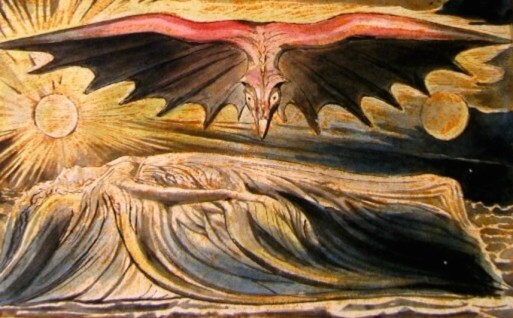
The Spectre
OLYMPUS DIGITAL CAMERA

“The Spectre is the Reasoning Power in Man,” Blake succinctly notes in Jerusalem, and throughout his works he consistently links the “spectral” or compulsive aspect of divided and divisive rationality with the contemporary form of human reason itself:

… it is the Reasoning Power
An Abstract objecting power, that Negatives every thing

This is the Spectre of Man, the Holy Reasoning Power
And in its Holiness is closed the Abomination of Desolation.

Read More

Opening the Doors of Perception, by Aldous Huxley

William Blake, Mescaline, and the end of Time

symbolism_symbolic_jacobs_ladder_william_blake-re8ffa684355a4f63b51aa8067301d4b8_zz7zs_324-DOORS-OF-PERCEPTION (4)

Huxley cited his fascination with Blake as a primary factor in his decision to take mescaline, which he hoped would help him transcend the self and see the world without the usual filters on reality: “the drug would admit me at least for a few hours, into the kind of inner world described by Blake.” His book of the experience, The Doors of Perception, is itself eye-opening: one of the most careful and precise deconstructions of “normal” perception ever written: “The function of the brain and nervous system is in the main eliminative”, he observed, “leaving only that very small and special selection which is likely to be practically useful”. The drug allowed him to see that what we normally call “reality” is in fact the product of a massive filtering out of reality, a systematic closing of the doors, leaving only the programs of measurement (“ratio-ing”) and utility – reality as it would necessarily appear “to an animal obsessed with survival.”

Read More

William Blake, Brexit and the Re-Awakening of Albion, by Rod Tweedy

Albion versus Britain PLC: The Political Dimension of Albion’s Awakening

1-brexit

In a remarkable article in the Guardian last year, associate editor Martin Kettle argued that “English radicalism needs to recapture the spirit of Blake” – that in a political world dominated by bureaucracy, think-tanking, consumerism, and a small-minded, reductive sense of cultural identity we need a re-infusion of imagination, passion, vision, and integrity. Indeed, he ended his piece with the provocative question, “Without the dream of Albion, how can England arise and Britain come together again in the common cause?” (Guardian)

Read More

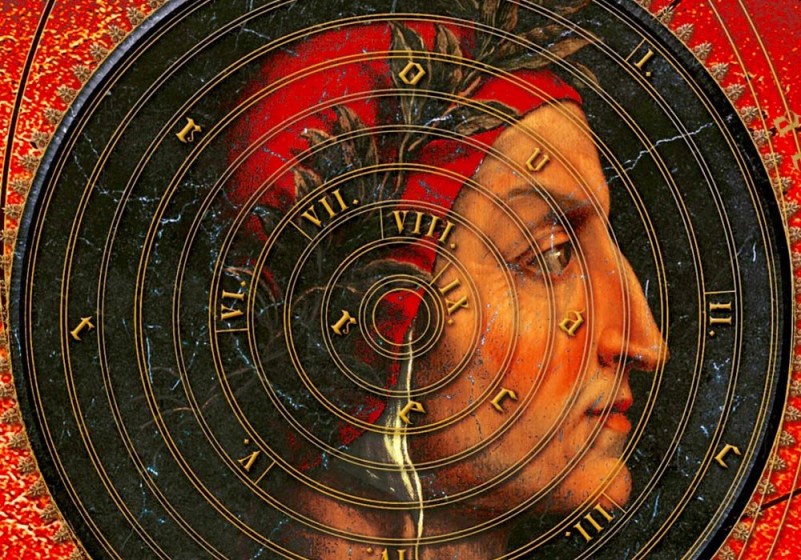
Blake’s Illustrations of Dante’s Hell, by Eric Pyle

Entering Psychological Hell: The Dark Side of Christianity 

image142 (1)

Updating Dante

‘Dear Sir, I am still far from recoverd & dare not get out in the cold air. Yet I lose nothing by it—Dante goes on the better, which is all I care about’ – William Blake


‘Do not think that I have come to abolish the Law or the Prophets; I have not come to abolish them but to fulfil them’ – Matthew 5:17


‘No thing can become manifest to itself without opposition’ – Boehme

Among William Blake’s last works was a series of illustrations to Dante’s Divine Comedy. It was an ambitious project for a man of 67 to begin, and he didn’t live to complete it. Even in its unfinished state, however, the series is a rich and fascinating work of art that can add to our understanding of Blake’s philosophy and artistic goals, and be enjoyed for its strange beauty.

Read More

Poetry and Madness: Blake, Eigen and the Psychotic God, by Peter Anderson

Ecstasy and Psychosis: Who We Really Are

ECSTASY-1

In many ways, I believe that Michael Eigen is attempting to restore to psychology a dimension suppressed by the scientistic ambitions of the academicized discipline, where the drastic attempt to reduce language to a vehicle for hard data makes of language itself nothing but an empty shell, good only to serve as a frame for the apparent objectivity of statistics. Where Freud could only grudgingly wonder at poetry as a form of psychological gnosis, Eigen understands that poetry—and, very possibly, therapy, too—has the function of revealing who we are. “Poetry”, he says, “is dusting off the true self”.

Read More

William Blake and the Radical Swedenborgians, by Robert Rix

Freemasonry, Illuminism, and the New Jerusalem

swedenborg-hypnosis

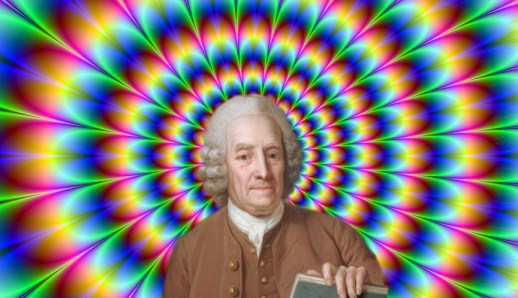
If the philosophy of Immanuel Kant is now studied worldwide, the current climate of philosophical investigation ignores the mystical thinker Emanuel Swedenborg – at best relegating him to footnote status. But towards the end of the eighteenth century, the interest in Swedenborg among intellectuals was immense; his writings “made a lot of noise in the speculative world,” as the leading journal on esoteric matters, The Conjuror’s Magazine, commented in 1791. Kant even felt compelled to respond to Swedenborg in Dreams of a Spirit-Seer (1766). Swedenborg’s teaching became the main substance of the occult revival in the late eighteenth century, and his ideas have had a lasting appeal as a source of inspiration to many intellectuals who were not converts, such as Lavater, Goethe, Coleridge, Emerson, Balzac, Baudelaire, Whitman, Melville, Henry James, and, not least, the poet and painter William Blake, on whom the essay at hand will focus. 

Read More

Anarchism and William Blake’s Idea of Jesus, by Christopher Z. Hobson

How to create and live in a free society

blake-A1

The English poet and painter William Blake (1757-1827) left a body of breathtaking art and stirring, sometimes obscure poetry, much of it concerned with religion and much with the revolutionary struggles of his time—the American and French revolutions, the British radical movement of the 1790s, and later, the growing British labour and constitutional movement in the years 1810-1820. Blake’s major poems—which are also beautiful artworks incorporating his own illustrations—include those collected in Songs of Innocence and of Experience (1789-1794); short narrative works like The Book of Urizen, America a Prophecy, and Europe a Prophecy, all written in the 1790s; and three long, complex narrative poems, The Four Zoas (1797-1807), Milton (1804-1818), and Jerusalem (1804-1820). This article is about Blake’s idea of Jesus and its relation to revolutionary anarchism.

Read More