A BLAKE NEW WORLD: The place of Sense Perception and Imagination in William Blake and Aldous Huxley

Aldous Huxley and the Doors of Perceiving
Screen Shot 2021-05-10 at 10.39.26

Introduction: Opening the Flower of Mescaline

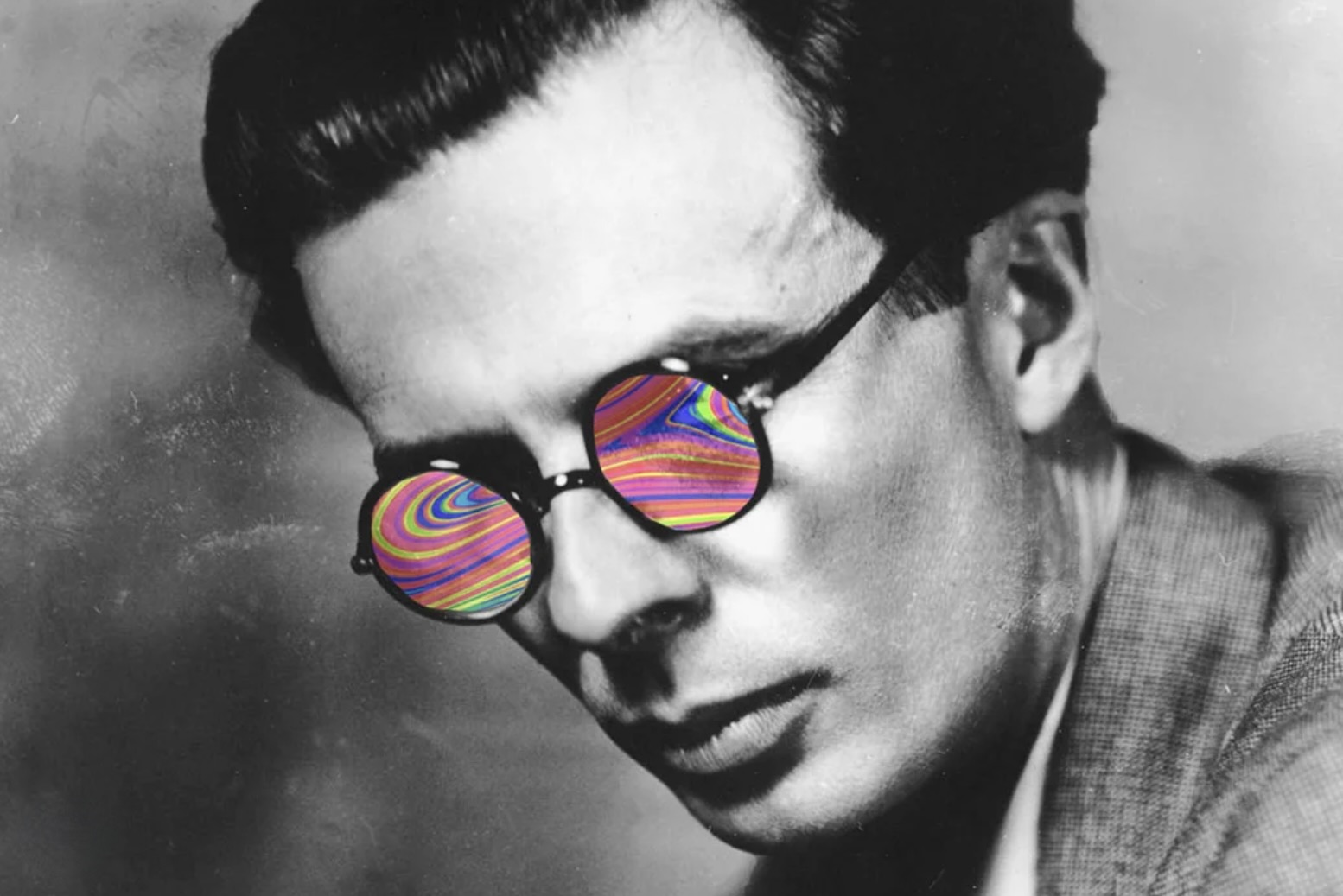
His interest piqued by psychological research on the drug, in 1953 Aldous Huxley swallowed four-tenths of a gram of mescaline with the hope that his experience would lead to a better understanding of the mind’s role in human perception.

Mescaline is a relatively innocuous hallucinogen found in several species of cacti, the most well-known being Peyote, a small plant that many of the native peoples of the American Southwest and Mexico respect as a divine gift. Western science has approached the drug’s effects more pragmatically, studying the chemical and psychological changes that accompany mescaline intoxication, but for the more personally-driven experimenter it has not lost its philosophical allure.

Heaven in a wild flower: Mescaline is a naturally occurring psychedelic that comes from the Mexican peyote cactus (Lophohora williamsii)
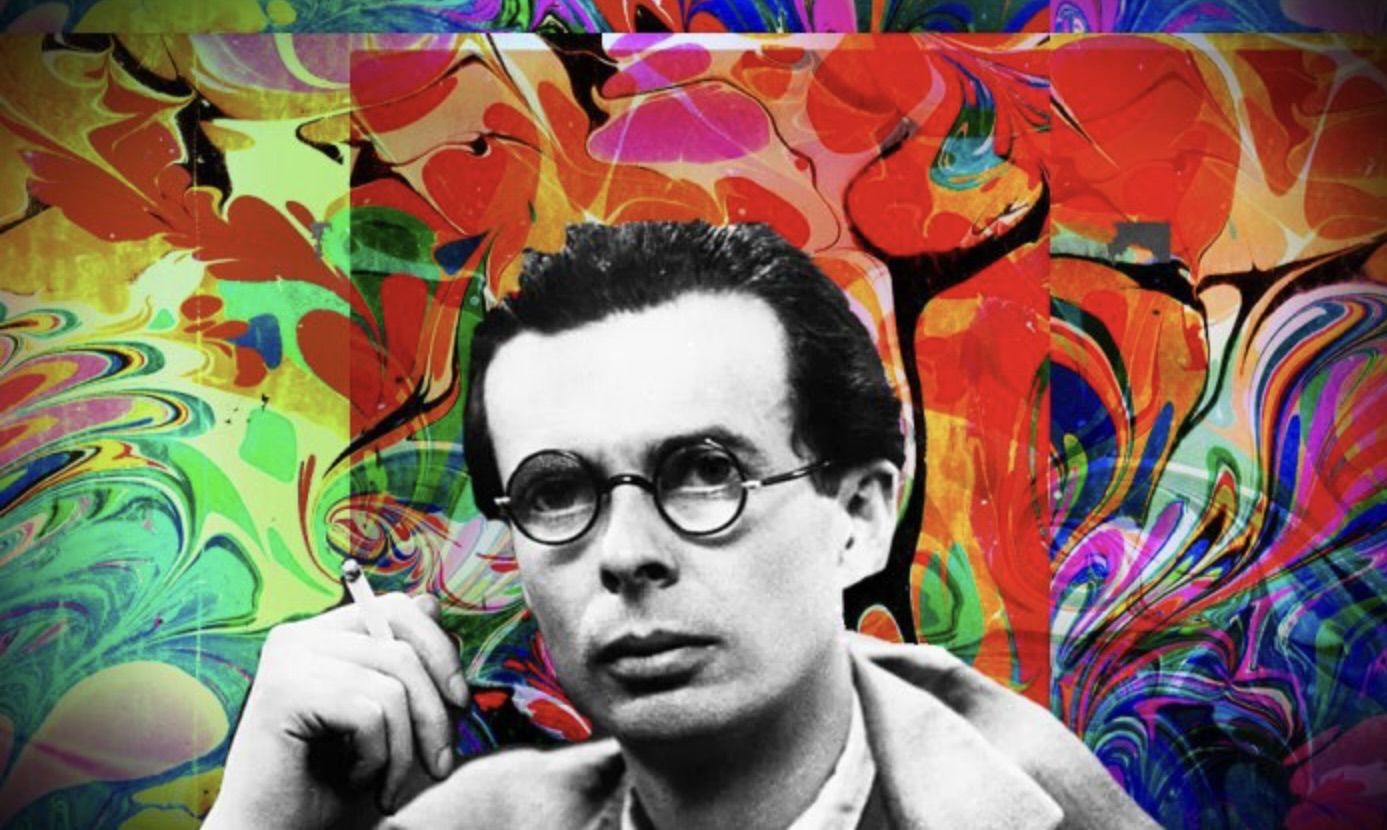
“This is how one ought to see, how things really are” – Aldous Huxley

Screen Shot 2021-05-10 at 10.39.26

Huxley approached his experiment conscious of both the scientific and philosophical issues surrounding the alteration of consciousness, and recorded his analysis of the experience in two short books, The Doors of Perception and Heaven and Hell. A discerning glance at the titles of these two works suggests a direct relationship with Blake’s The Marriage of Heaven and Hell, but the degree to which Blakean concepts actually form the foundation for Huxley’s reflections has not yet been thoroughly examined.
Read More

The Magic of William Blake, by Philip Pullman

Philip Pullman reflects on how Blake’s poetry has influenced and intoxicated him for more than 50 years

Screen Shot 2021-05-10 at 10.39.26

Introduction: Unlocking the doors of perception

Sometimes we find a poet, or a painter, or a musician who functions like a key that unlocks a part of ourselves we never knew was there. The experience is not like learning to appreciate something that we once found difficult or rebarbative, as we might conscientiously try to appreciate the worth of The Faerie Queene and decide that yes, on balance, it is full of interesting and admirable things. It’s a more visceral, physical sensation than that, and it comes most powerfully when we’re young. Something awakes that was asleep, doors open that were closed, lights come on in all the windows of a palace inside us, the existence of which we never suspected.

Read More

Through the Round Window: Review of Carol Leader’s ‘Blake and the Therapists’, by Rod Tweedy

A Review of ‘Unfolding the Mythological Unconscious: An Illuminated Talk’ by Carol Leader

Screenshot 2022-07-07 at 20.10.46

Screen Shot 2021-05-10 at 10.39.26

Introduction: William Blake and Therapy

“Was William Blake mad?” is the usual question that comes up in any discussion of Blake and therapy. What was fascinating about psychoanalytic psychotherapist Carol Leader’s talk at the Blake Society event at the Freud Museum was the way in which she explored this connection between ‘Blake and the Therapists’ on a new and much more profound level. Indeed, her presentation was so thought-provoking that it makes you wonder why more hasn’t been written on this connection. As Tim Heath noted in his introduction to the talk, “whenever you converse with William Blake, whenever you dive into his work, it immediately becomes apparent why Blake intimated the coming of therapy.”

Read More

Angels in Blake, by Mia Forbes

Unfolding Emissaries:  Angels and Devils as Dialectic

Screen Shot 2021-11-24 at 18.46.59

Screen Shot 2021-11-24 at 10.09.19-Blake

Screen Shot 2021-11-24 at 11.59.31

Screen Shot 2021-11-24 at 18.36.22 (1)

Just as Blake believed that angels are inter-relational and can interpenetrate many dimensions, a part of the divine fabric that constitutes human imagination and an extended field of gravity-like attraction and connection (“betweenness”), this piece weaves together the thought of three different but interrelated Blake commentators on angels – Mia Forbes, S. Foster Damon, and Northrop Frye – thus hoping to build, in a sense, the wings of mutual communion and flight, ones which constitute the true or ‘best’ sense of the angelic in Blake: wings enfolded within wings.

“Angel” is the Greek word for “messenger” or “emissary”.  Blake used the word in the specific sense only once, in expanding Matthew 1:20, where the Angel of the Lord appears to Joseph in a dream, bidding him marry Mary. In the Bible it is not always easy to be sure whether God himself may not be intended by the word. Blake combined the two: “I heard his voice in my sleep & his Angel in my dream” (Jerusalem). But anything that speaks of Eternity may be an angel; thus the tiny skylark is “a Mighty Angel” (Milton: 12; cf.L’Allegro).

“Every man’s leading propensity ought to be call’d his leading Virtue & his good Angel” (Blake, On Lavater). Blake had one (see ‘A Dream’, Songs of Innocence; or “The Angel that presided o’er my birth”, from Blake’s Notebook 1808-26); Milton had one (Milton); also the unfortunate heroine of ‘The Angel’ (Songs of Experience). Angels guard children and give them sleep (‘Night’, and ‘A Cradle Song’, Songs of Innocence).

Read More

William Blake and The Body of Vision, by Rosalind Atkinson

Vision and De-Vision: Sexuality, Slavery, and the Fall of Perception

Screen Shot 2021-05-10 at 10.33.55

Screen Shot 2021-05-10 at 10.33.33

Screen Shot 2021-05-10 at 13.52.03

Screen Shot 2021-05-10 at 10.39.26

Introduction to William Blake’s Visions of the Daughters of Albion

This essay examines how almost the entire critical discussion of Blake’s Visions of the Daughters of Albion enacts the exact dynamics (which we could anachronistically label ‘rape culture’) that the poem itself dramatises in order to dissect. I hope it can be of interest beyond Blake enthusiasts to anyone wanting to understand if being interested in ‘how we perceive’ affects our political and social ideas and positions, and to anyone interested in how dualistic ways of seeing (encompassing transcendence and materialism equally) abuse our bodies and the world.

Read More

Blake, Misunderstood? Review of Olga Tokarczuk’s ‘Drive Your Plow over the Bones of the Dead’

Josephine A. McQuail reviews Olga Tokarczuk’s award-winning Blakean novel Drive Your Plow over the Bones of the Dead (translated by Antonia Lloyd Jones. Riverhead Books, 2009; translation © 2018)

Images from Spoor, the 2017 Polish film directed by Agnieszka Holland, adapted from the novel Drive Your Plow Over the Bones of the Dead by Olga Tokarczuk. Above: Agnieszka Mandat and Miroslave Krobot (Photo: Palk Robert/Next Film); Below: poster for the film (Photo: (WP:NFCC#4).

Olga Tokarczuk won the 2018 Nobel Prize for Literature in 2019 (the prize was delayed, due to various scandals involving some members of the Nobel Prize Committee). Her 2007 novel Flights was translated into English finally in 2018, winning the Man Booker Prize, and paving the way for the Nobel Prize.

Tokarczuk’s novel Flights won the Man Booker Prize in 2018

Tokarczuk speculated, “Sometimes I wonder how my life would have worked out if my books had been translated into English sooner … because English is the language that’s spoken worldwide, and when a book appears in English it is made universal, it becomes a global publication” (quoted in Armitstead). 

As anyone who has read Blake’s Marriage of Heaven and Hell and remembers “The Proverbs of Hell” will recognize, the title of Tokarczuk’s 2009 novel is a quote from William Blake – or technically a paraphrase, as the actual quote is “Drive your cart and plow over the bones of the dead.”

Not to give anything away, but the quote has a lot of relevance to the plot of the novel, as it turns out. Tokarczuk’s protagonist Janina is an elderly woman who has a passion for horoscopes; a skill that comes into play when her neighbors turn up dead.  She lives full time in a country setting in rural Poland bordering on the Czech Republic (as Olga Tokarczuk herself does).  She lives on a plateau, with harsh weather, and pointedly, calls it “the world of Urizen” (p. 56) (Urizen in Blake, or “Your Reason” as it is sometimes pronounced, is a cold, repressive force).

Each of the seventeen chapters has an epigraph by William Blake – quotes (as vaguely indicated in the Author’s Note) taken from “the Proverbs of Hell, Auguries of Innocence, The Mental Traveller and the letters of William Blake” (p. 275). The misattribution of “The Proverbs of Hell” (and not Marriage of Heaven and Hell) is puzzling, and also the lack of mention of The Book of Urizen, which is specifically discussed and quoted in the novel (“What demon hath formed this adominable void?”, p. 71). Like the misquote of the Proverb of Hell in the title, are these subtle signals that we have not the “real” Blake alluded to here, but a “filtered” one?

Read More

The Eighth Eye: Prophetic Vision in Blake’s Poetry and Design, by Rachel V. Billigheimer

Apocalypse and Perception: Moving beyond Natural Perception

‘The Man Who Taught Blake Painting in his Dreams’ (c. 1825). This is a replica of one of Blake’s drawings of figures that appeared to him in visions. It has also been proposed that Blake’s image might be a ‘visionary self-portrait’, showing the artist himself at the moment of the inspiration. The strange form on the forehead may represent flames.

“Through the eighth Eye man is able to cast off the error of tradition and dogma and achieve individual inspiration”. Picture: ‘The Sun At His Eastern Gate’. Many people see the sun as a natural object in the sky, i.e., see it in terms of the dogmas of natural science, literality, and tradition, without the reality-based eight eye.


Prophetic Vision in Blake’s Poetry

In a previous study, Blake’s Eyes of God Cycles to Apocalypse and Redemption, the seven Eyes of God in Blake’s prophetic books were correlated with biblical and historical periods. Directed by the spirit of imagination, these cycles were seen as intrinsic to apocalypse. Here we examine the poetic inspiration of Blake’s eighth Eye and relate it to the prophetic vision in some of Blake’s designs.

Read More

Blake as Shaman: The Neuroscience of Hallucinations and Milton’s Lark, by David Worrall

The Mind in the Cave and the Cave in the Mind

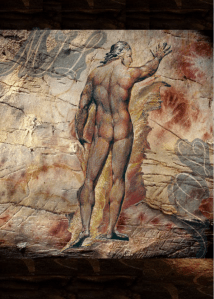
‘A nude male, almost certainly Milton or a compound of Blake and Milton, strides away from us and into his book, perhaps leading us forward into its depths. Milton may be entering his ‘Own Vortex’. His right arm and hand also cut his name in two, an action suggesting that the route to apocalypse is blocked by a ‘selfhood’ that must be self-annihilated’ – Essick & Viscomi

This essay argues that Blake’s illuminated poem, Milton a Poem in 2 Books (1804-1811), exhibits characteristics of the hallucinations also encountered in the archaeology of rock paintings made during shamanic trances in the prehistoric period. The essay will particularly focus on the trance-like episode referred to at the end of Milton and will link it to similar shamanic trances known to have occurred to southern African /Xam (San) bushmen in their practices of rock painting.

Read More

The God of This World, by Albert S. Roe

The Domination System of Urizenic Hierarchical HyperRationality

dsc06803-14

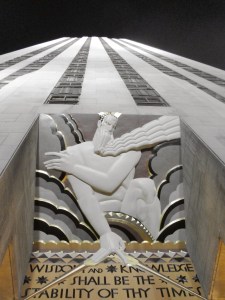
The entrance to the Rockefeller Centre New York draws on Blake’s image of ‘God’, but reversed so that he now divides with his ‘Right’ hand. Presumably Rockefeller didn’t realise that this figure actually represents a dissociated and psychopathic form of hyper-rationality dominating and dividing the world. Or perhaps he did.


I must Create a System or be enslav’d by another Man’s

In speaking of the basic aims of his art, Blake says: “The Nature of my Work is Visionary or Imaginative. This world of Imagination is the world of Eternity. There Exist in that Eternal World the Permanent Realities of Every Thing which we see reflected in this Vegetable Glass of Nature.”  Thus art was to him not only a means of communicating his own beliefs to others, but actually a primary source of knowledge concerning the divine plan. He defined poetry, painting, and music as “the three Powers in Man of conversing with Paradise, which the flood did not Sweep away.”

Read More

Blake and the Spiritual Body, by Northrop Frye

Awakening from the Material Body

0d8621c - we see the world not as it is but as how we are-we see the world not as it is but as we are (1)

The central idea of The Marriage of Heaven and Hell, to put it crudely, is that the unrest which has produced the French and American revolutions indicates that the end of the world might come at any time. The end of the world, the apocalypse, is the objective counterpart of the resurrection of man, his return to the titanic bodily form he originally possessed. When we say that man has fallen, we mean that his soul has collapsed into the form of the body in which he now exists.

Read More