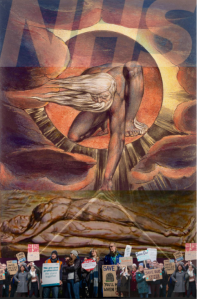
A BLAKE NEW WORLD: The place of Sense Perception and Imagination in William Blake and Aldous Huxley

Aldous Huxley and the Doors of Perceiving
Screen Shot 2021-05-10 at 10.39.26

Introduction: Opening the Flower of Mescaline

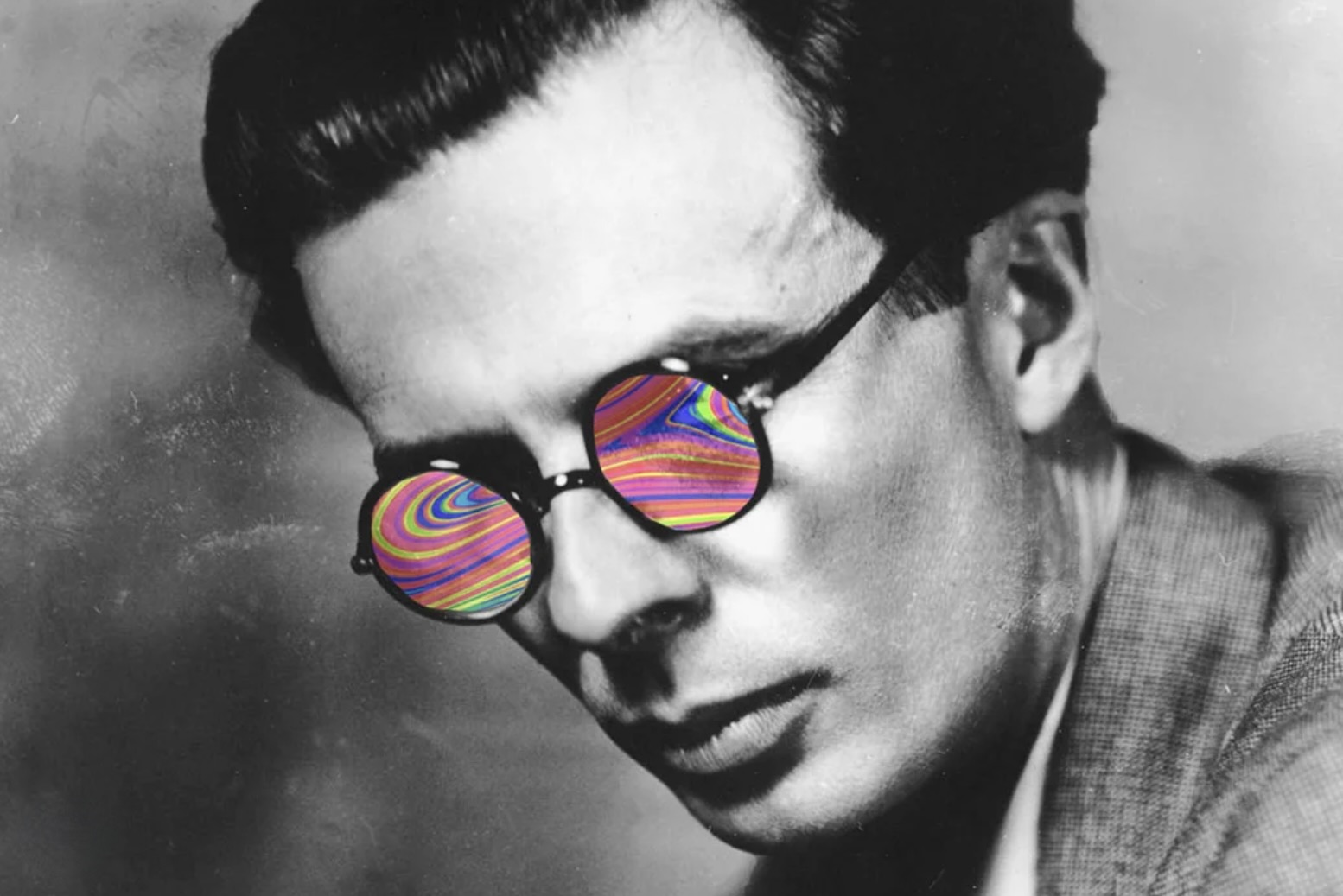
His interest piqued by psychological research on the drug, in 1953 Aldous Huxley swallowed four-tenths of a gram of mescaline with the hope that his experience would lead to a better understanding of the mind’s role in human perception.

Mescaline is a relatively innocuous hallucinogen found in several species of cacti, the most well-known being Peyote, a small plant that many of the native peoples of the American Southwest and Mexico respect as a divine gift. Western science has approached the drug’s effects more pragmatically, studying the chemical and psychological changes that accompany mescaline intoxication, but for the more personally-driven experimenter it has not lost its philosophical allure.

Heaven in a wild flower: Mescaline is a naturally occurring psychedelic that comes from the Mexican peyote cactus (Lophohora williamsii)
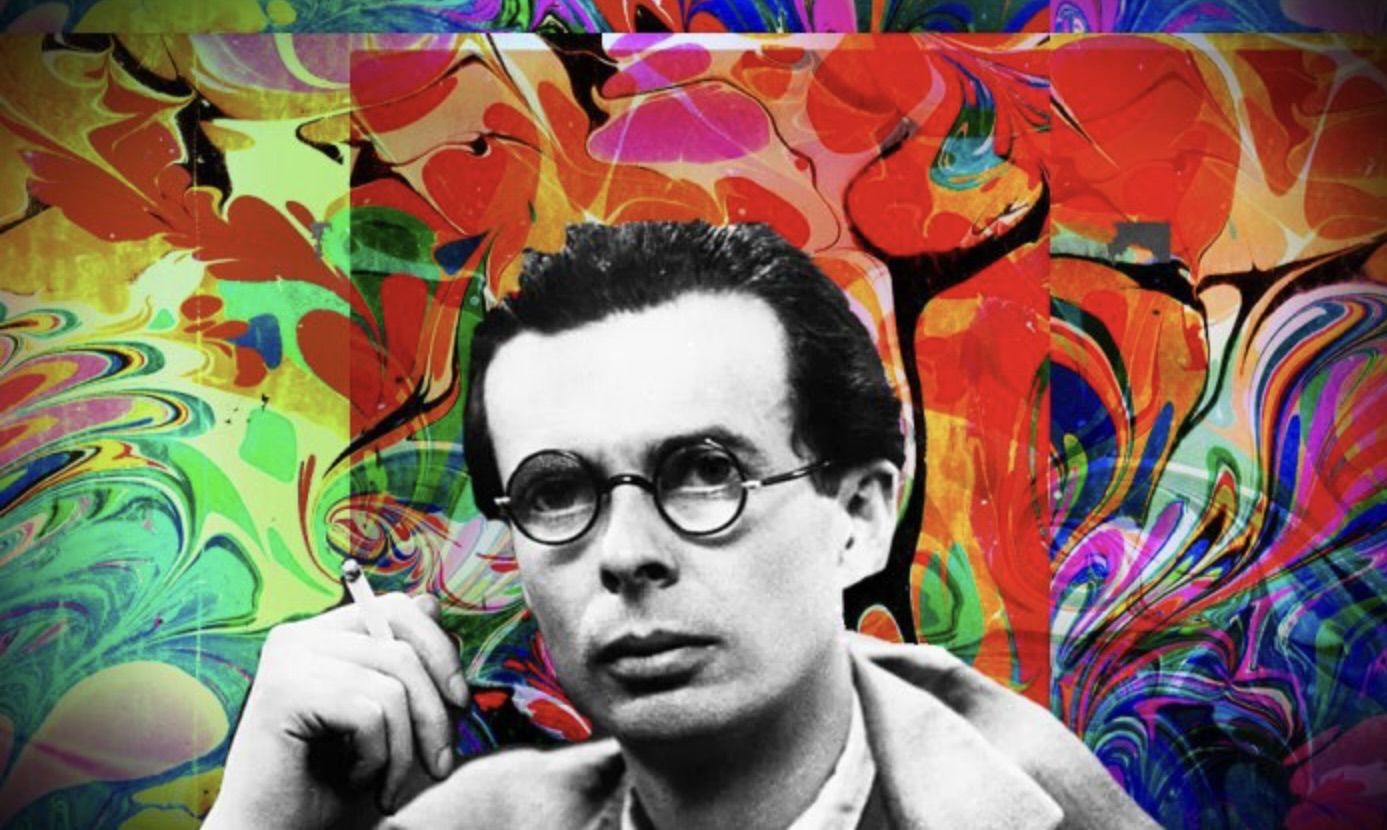
“This is how one ought to see, how things really are” – Aldous Huxley

Screen Shot 2021-05-10 at 10.39.26

Huxley approached his experiment conscious of both the scientific and philosophical issues surrounding the alteration of consciousness, and recorded his analysis of the experience in two short books, The Doors of Perception and Heaven and Hell. A discerning glance at the titles of these two works suggests a direct relationship with Blake’s The Marriage of Heaven and Hell, but the degree to which Blakean concepts actually form the foundation for Huxley’s reflections has not yet been thoroughly examined.


Read More

Blake’s Left Foot: William Blake and how to enter new States, by Jennifer Keith

“And did those Feet?” Radical incarnation and the Spirituality of Physiology in Blake’s Milton 

Screenshot 2022-06-23 at 15.41.09

Screen Shot 2021-05-10 at 10.39.26

Introduction: The Mental Traveller

In a work with the spiritual aspirations of Blake’s Milton, the pedestrian topic of feet may seem less than deserving of critical attention, but because Blake himself repeatedly focuses on the foot in his brief epic, surely the reader should attend to this lowest part of human anatomy.

As an anatomical feature, the foot automatically assumes importance given Blake’s declaration in Milton that “more extensive / Than any other earthly things, are Mans earthly lineaments.” In verses noted for their narrative convolutions and complex imagery, Blake’s poetic feet figure among Milton‘s most memorable fancies: “covered with Human gore,” Zelophehad’s Daughters’ feet treadle the loom (29.58); a “Vegetable World” appears on Blake’s left foot (21.12); and Albion’s enormous feet cover a good portion of southern England (39.36-40).

Read More

Revolution of the Psyche, by Krishnamurti

The Thinker and the Thought: “What you are, the world is. So your problem is the world’s problem”

Screenshot 2021-12-25 at 15.00.59

Screenshot 2022-02-20 at 16.45.17

Revolutions

Screen Shot 2021-05-10 at 10.39.26

Introduction

Screenshot 2022-02-20 at 16.31.23 3

Krishnamurti in 1910. The year before, theosophist Charles Webster Leadbeater, who claimed clairvoyance, had noticed Krishnamurti on the Society’s beach on the Adyar river and was amazed by the “most wonderful aura he had ever seen, without a particle of selfishness in it.” Leadbeater was convinced that the boy would become a spiritual teacher and a great orator; the likely “vehicle for the Lord Maitreya” in theosophical doctrine, an advanced spiritual entity periodically appearing on Earth as a World Teacher to guide the evolution of humankind. Krishnamurti later rejected this role, and indeed rejected the whole idea of following “roles”, after an intense spiritual experience in 1922.

Jiddu Krishnamurti was an Indian philosopher, speaker, and writer. In his early life, he was groomed to be the new ‘World Teacher’ (the Theosophical concept of Maitreya), but he later rejected this mantle and withdrew from the Theosophy organization behind it.

His interests included psychological revolution, the nature of mind, meditation, holistic inquiry, human relationships, and bringing about radical change in society. He stressed the need for a revolution in the psyche of every human being and emphasised that such revolution cannot be brought about by any external authority, be it religious, political, or social.

Krishnamurti was often seen as a spiritual master, although he interestingly mistrusted all religions and denounced the Eastern convention of deifying living spiritual masters. This gives some of his thinking an unusual and indeed at times devastating honesty. Perhaps nowhere is this more seen than in his critiques of the ego – the basis of both the modern personality and of most orthodox psychoanalytic thinking (the purpose of much Freudian and Jungian analysis is actually to strengthen the ego). The goal in Krishnamurti’s vision seems to be to go beyond both ‘self’ and beyond ‘mind’ (which, like Tolle, Krishnamurti equates with ego or what Blake calls “Selfhood”). “Judgement and comparison commit us irrevocably to duality”, he says – and we can never be happy therefore while we are in this state. And neither can those around us.

Read More

Embodying Heaven: The Body in Blake’s Dante, by Silvia Riccardi

Images of Transfiguration: Trasumanar and Transformation in Paradise

Screen Shot 2021-11-06 at 11.46.40

Screen Shot 2021-05-10 at 10.39.26

Introduction: Inside Blake’s Body

Dante’s journey in the otherworld has introduced generations of readers to the consequences of the divine judgment, the architecture of sin and salvation, the moral condemnation of materialism, and the pilgrim’s encounter with God. God is the “somma luce” (“eternal beam”), which cannot be grasped by means of human understanding. The blinding light of redemption thus remains a mystery untold in the Commedia.

Read More

William Blake and The Body of Vision, by Rosalind Atkinson

Vision and De-Vision: Sexuality, Slavery, and the Fall of Perception

Screen Shot 2021-05-10 at 10.33.55

Screen Shot 2021-05-10 at 10.33.33

Screen Shot 2021-05-10 at 13.52.03

Screen Shot 2021-05-10 at 10.39.26

Introduction to William Blake’s Visions of the Daughters of Albion

This essay examines how almost the entire critical discussion of Blake’s Visions of the Daughters of Albion enacts the exact dynamics (which we could anachronistically label ‘rape culture’) that the poem itself dramatises in order to dissect. I hope it can be of interest beyond Blake enthusiasts to anyone wanting to understand if being interested in ‘how we perceive’ affects our political and social ideas and positions, and to anyone interested in how dualistic ways of seeing (encompassing transcendence and materialism equally) abuse our bodies and the world.

Read More

Blake, Misunderstood? Review of Olga Tokarczuk’s ‘Drive Your Plow over the Bones of the Dead’

Josephine A. McQuail reviews Olga Tokarczuk’s award-winning Blakean novel Drive Your Plow over the Bones of the Dead (translated by Antonia Lloyd Jones. Riverhead Books, 2009; translation © 2018)

Images from Spoor, the 2017 Polish film directed by Agnieszka Holland, adapted from the novel Drive Your Plow Over the Bones of the Dead by Olga Tokarczuk. Above: Agnieszka Mandat and Miroslave Krobot (Photo: Palk Robert/Next Film); Below: poster for the film (Photo: (WP:NFCC#4).

Olga Tokarczuk won the 2018 Nobel Prize for Literature in 2019 (the prize was delayed, due to various scandals involving some members of the Nobel Prize Committee). Her 2007 novel Flights was translated into English finally in 2018, winning the Man Booker Prize, and paving the way for the Nobel Prize.

Tokarczuk’s novel Flights won the Man Booker Prize in 2018

Tokarczuk speculated, “Sometimes I wonder how my life would have worked out if my books had been translated into English sooner … because English is the language that’s spoken worldwide, and when a book appears in English it is made universal, it becomes a global publication” (quoted in Armitstead). 

As anyone who has read Blake’s Marriage of Heaven and Hell and remembers “The Proverbs of Hell” will recognize, the title of Tokarczuk’s 2009 novel is a quote from William Blake – or technically a paraphrase, as the actual quote is “Drive your cart and plow over the bones of the dead.”

Not to give anything away, but the quote has a lot of relevance to the plot of the novel, as it turns out. Tokarczuk’s protagonist Janina is an elderly woman who has a passion for horoscopes; a skill that comes into play when her neighbors turn up dead.  She lives full time in a country setting in rural Poland bordering on the Czech Republic (as Olga Tokarczuk herself does).  She lives on a plateau, with harsh weather, and pointedly, calls it “the world of Urizen” (p. 56) (Urizen in Blake, or “Your Reason” as it is sometimes pronounced, is a cold, repressive force).

Each of the seventeen chapters has an epigraph by William Blake – quotes (as vaguely indicated in the Author’s Note) taken from “the Proverbs of Hell, Auguries of Innocence, The Mental Traveller and the letters of William Blake” (p. 275). The misattribution of “The Proverbs of Hell” (and not Marriage of Heaven and Hell) is puzzling, and also the lack of mention of The Book of Urizen, which is specifically discussed and quoted in the novel (“What demon hath formed this adominable void?”, p. 71). Like the misquote of the Proverb of Hell in the title, are these subtle signals that we have not the “real” Blake alluded to here, but a “filtered” one?

Read More

FEARFUL SYMMETRY: William Blake and Sacred Geometry, by Rod Tweedy

The Human Form Divine: Sacred geometry and its relationship to our physiology


Section 1: The Nature of Sacred Geometry

Measuring Urizen: The geometry of geometry

This first section explores what is meant by “sacred geometry”, studying and measuring its terms in relation to the study of physiology, the ‘science of life’. It therefore provides a sort of “geometry of geometry”. This seems apposite: the very idea of measuring is after all embedded in the word “geometry”, which comes from the ancient Greek words Geos, meaning “Earth”, and Metron, meaning “to measure”. The act or assumption of measurement is therefore contained within the system that is used to measure reality. Urizen thereby inscribes itself in the very utensils it uses to explore the deep: as Neil Postman acutely observed, “within every technology there is embedded an ideology” (Technopoly: The Surrender of Culture to Technology). These sorts of isomorphic (or “fractal”) repetitions and self-reflections constitute one of the defining characteristics of sacred geometry.

Sacred geometry is usually understood as the science and study of the fundamental patterns, shapes, forms, proportions, and ratios that constitute the basic nature of physical, physiological, and psychological reality. In ancient traditions, these geometries were considered ‘sacred’ because they recurred with such remarkable frequency and on so many different levels, thereby seeming to suggest a ‘hidden order’ to the world. As Skinner notes, “geometry and numbers are sacred because they codify the hidden order behind creation”. As such, they were sometimes considered to reveal the “mind” of God: as Galileo succinctly put it, “Mathematics is the alphabet with which God has written the universe.”

Read More

Urizen in the NHS: Zizek, McGilchrist, and Left Brain Healthcare, by Malcolm Hanson

Can the Theories of McGilchrist and Žižek Help in Understanding and Responding to Ideological Influences on the Delivery of Psycho-Social Care?


Introduction: McGilchrist, Zizek and Healthcare

This article developed from my work as a psychotherapist and manager within the National Health Service (NHS) from 2008 to 2017. It is a response to the ideologies influencing those areas of health policy which are related to emotional wellbeing through the United Kingdom’s statutory health services.

My work has been based on the theory put forward by McGilchrist in The Master and His Emissary (2009) that traits associated with the natural functioning of the human brain’s left hemisphere, which have evolved to enable us to analyse and manipulate the world around us, also have a propensity to distort the ways in which people mutually interact with their cultures over time. McGilchrist’s book covers two main themes: the neurology of the brain hemispheres and the cultural influence that arises from this interaction. He proposes that when they are unchecked by the moderating effect of the right hemisphere, the left hemisphere traits have an undue influence which is reflected in deleterious effects upon people and their culture.
McGilchrist explores many cultural aspects but he does not include an overall sociological viewpoint from which to study the wider societal impact of his theory, and it is here that I turn to the work of Žižek, who writes extensively about ideology as well as many of the problems confronting societies today, such as subjectivity, capitalism, human migration and social exclusion.

Read More

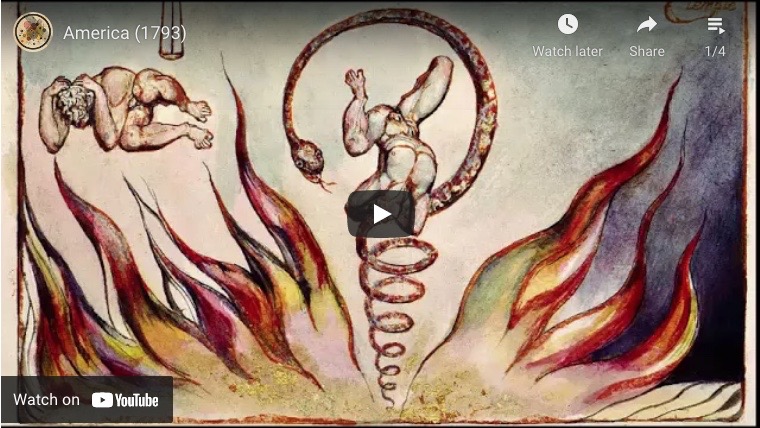
A Visual Commentary on Blake’s America: a Prophecy, by Jacob Rabinowitz

The Fall of Eternity into Materialism

Screen Shot 2021-05-12 at 16.26.21

America: An Essay in Art History, by Jacob Rabinowitz: please click on the video above

The following is a written transcript of the visual commentary above on Blake’s great poem America a Prophecy. The text is offered merely for the convenience of those who are interested in the video, or who would like to cite quotations directly from Rabinowitz’s illuminating take on this remarkable work, which as the video notes is one of “the most visually appealing of all his illuminated books”.

Read More