Rumi, Shams, and Whirling Dervishes
Screenshot
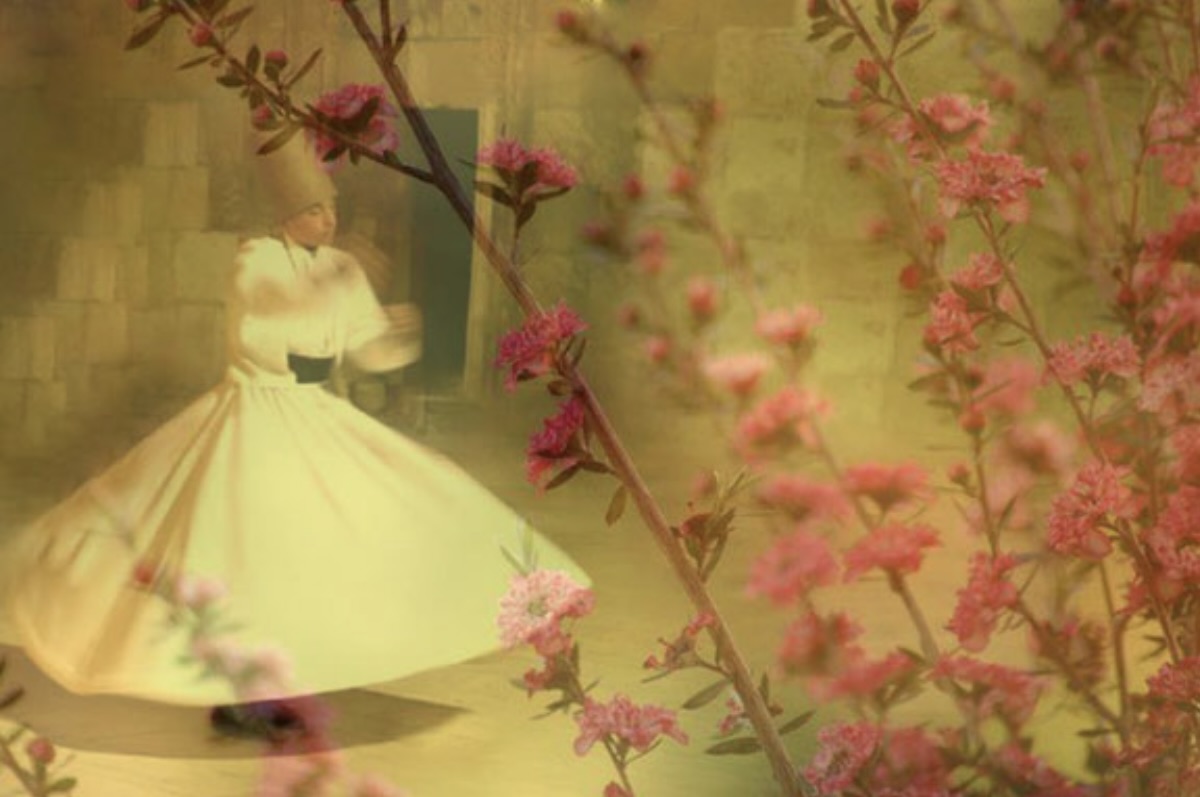
Shams of Tabriz was a Persian Sufi and roaming dervish who lived at the end of the twelfth/ early thirteenth century. He was the spiritual teacher and advisor of Rumi, and indeed it’s often said that Rumi was a professor who Shams transformed into a mystic, a lover, and a poet. There are many legends describing their meeting in Konya: Rumi was taught by Shams in seclusion for 40 days, and the period after this is described as Rumi’s ‘mysticism’, where sufis danced, played music (rabab), and drank wine. It is in this time, that the concept of “whirling dervishes” originated.
One day, according to legend, Rumi was reading next to a large stack of books. Shams Tabriz, passing by, asked him, “What are you doing?” Rumi scoffingly replied, “Something you cannot understand” (i.e. knowledge that cannot be understood by the unlearned.) On hearing this, Shams threw the stack of books into a nearby pool of water. Rumi hastily rescued the books and to his surprise they were all dry. Rumi then asked Shams, “What is this?” To which Shams replied, “Mowlana, this is what you cannot understand” (i.e. knowledge that cannot be understood by the learned.) Shams’ forty observations about the nature of love and God, the first ten of which are illustrated here, can be read together (fine but a bit left brain, a bit “learned” as Shams might say) or discretely, each a starting-point for reflection (more right brain, letting the mind wander laterally and make connections). Like life, and love, learning is not a race to the finish, but a voyage to the start.
Please note: this page has now moved to my new website: please click on this link to read the first ten of Shams’ forty illustrated observations about the nature of love and God:
Rumi, Shams, and the Path of the Heart
Thank you.


 thehumandivinedotorg