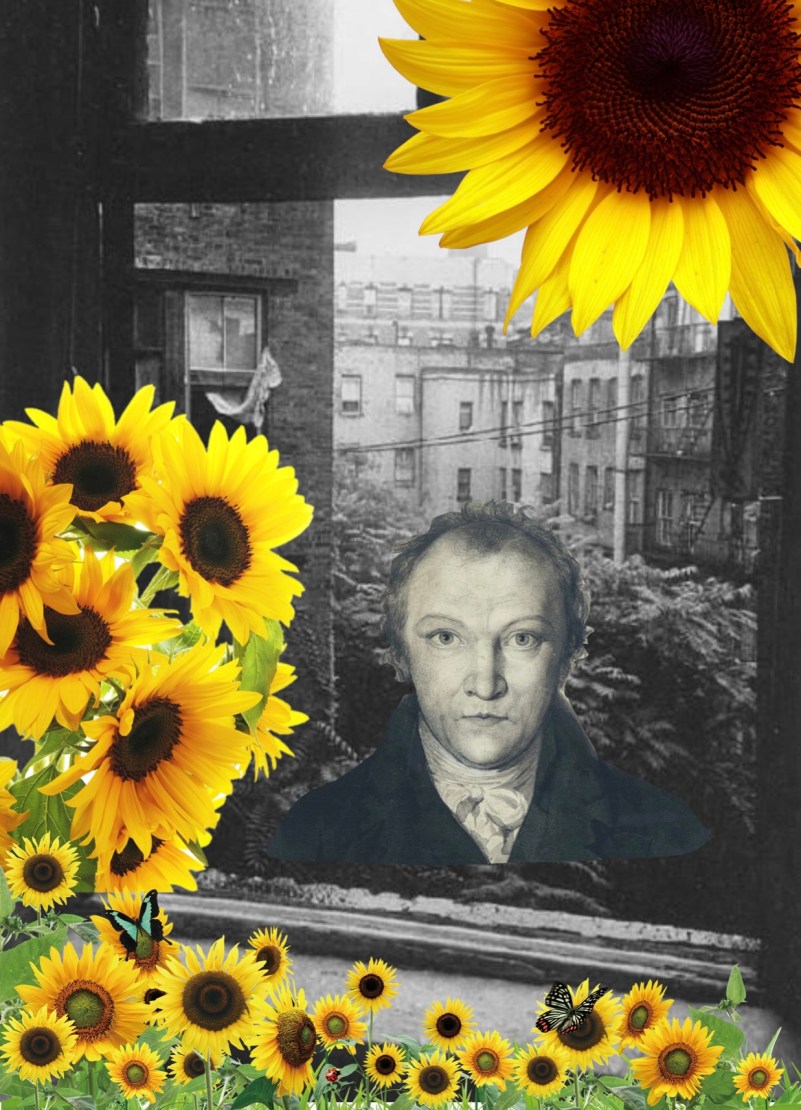
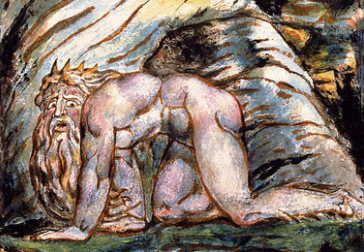
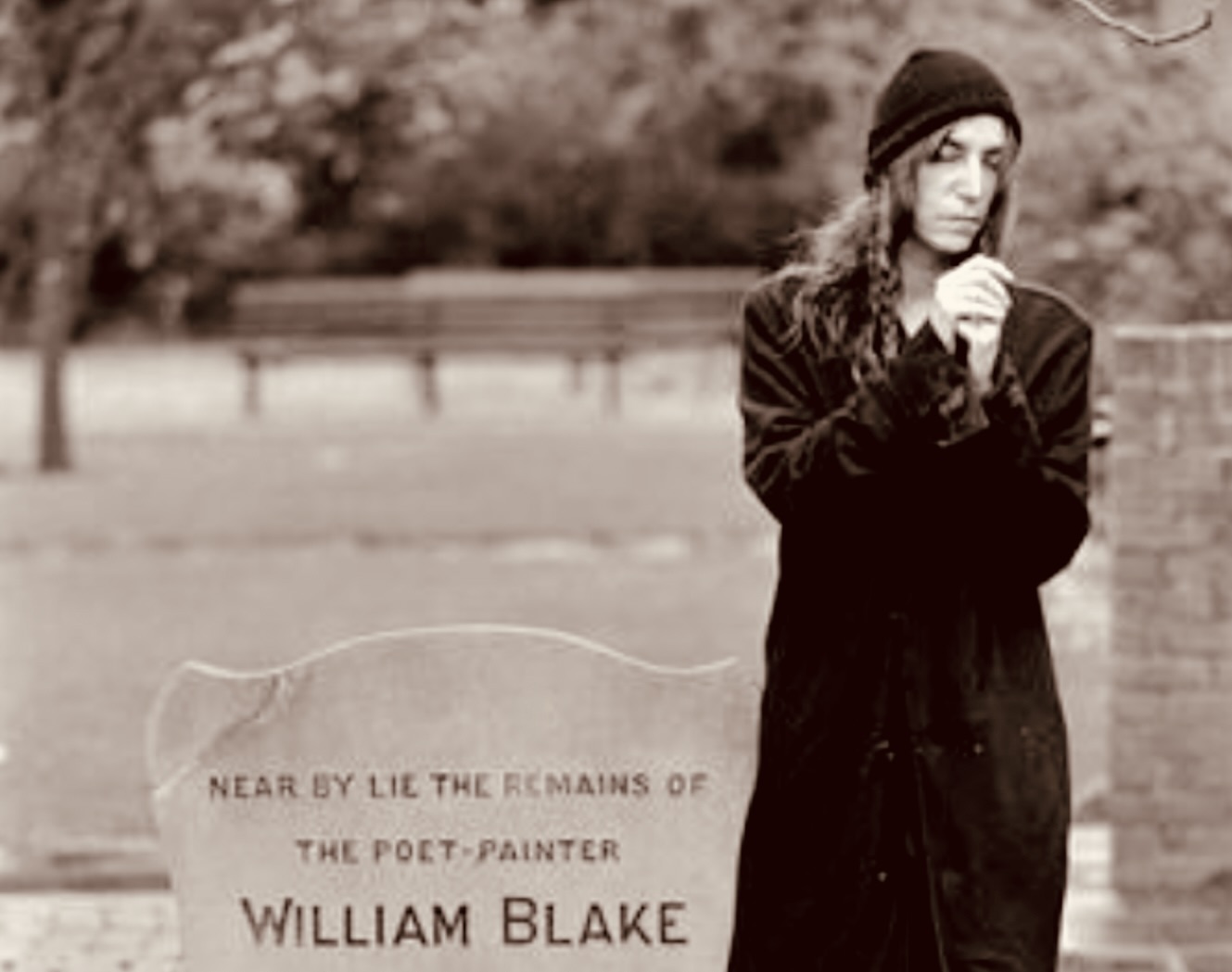
William Blake and Me, by Patti Smith

Embrace what you Fear: Being with Blake
Screen Shot 2021-05-10 at 10.39.26

My Introduction to Blake

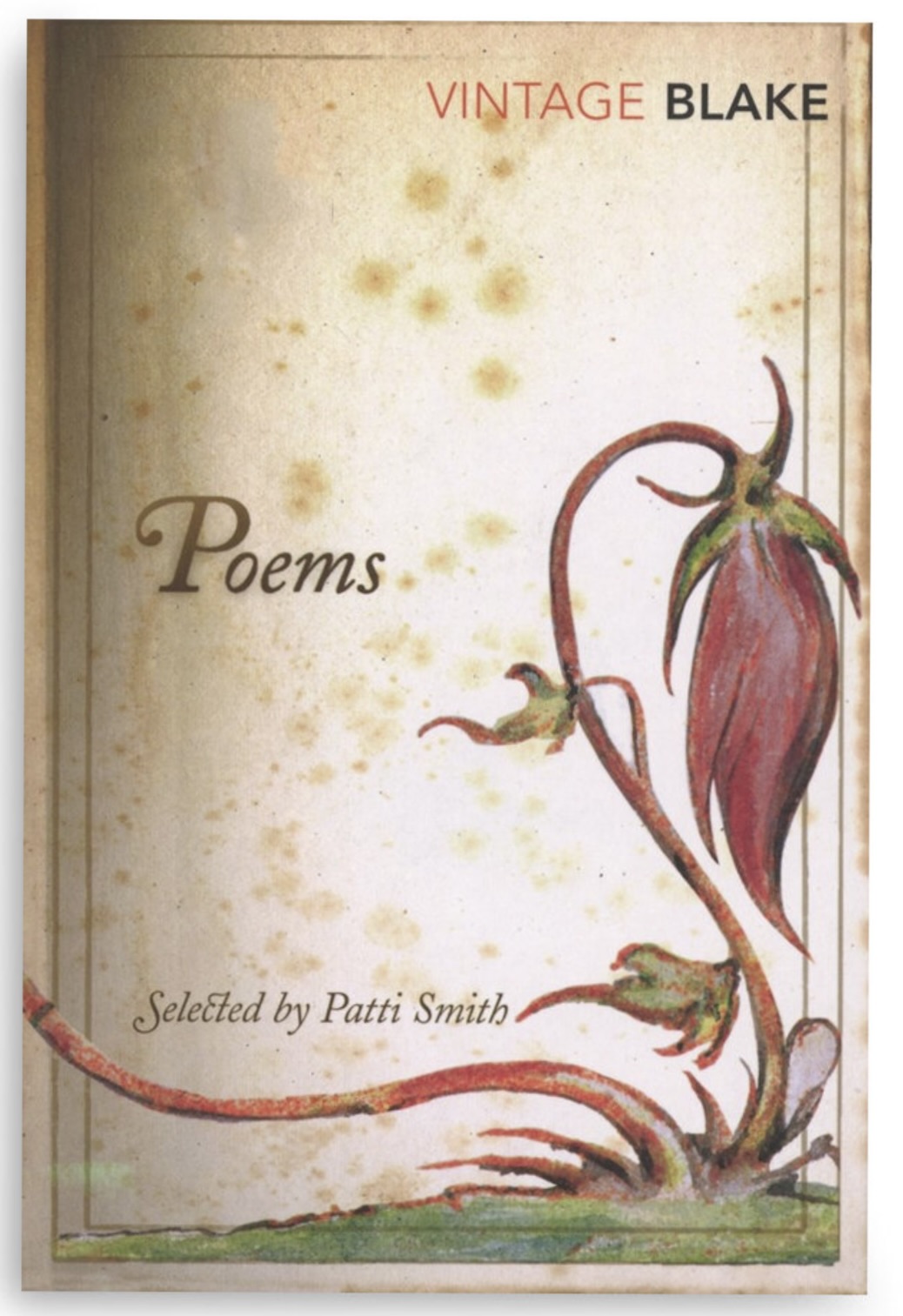
“I can’t imagine my childhood without him. His poems were my companions, my friends. I had pneumonia, I contracted TB, scarlet fever, every childhood disease. And my two favourite books were William Blake’s Songs of Innocence and Experience, and the children’s poems of Robert Louis Stevenson.” In 2007, to celebrate the 250th anniversary of Blake’s birth, Smith edited a selection of his verses simply titled Poems — “a bit of Blake, designed as a bedside companion or to accompany a walk in the countryside, to sit beneath a shady tree and discover a portal into his visionary and musical experience.”

My mother gave me Blake. In a church bazaar she found Songs of Innocence, a lovely 1927 edition faithful to the original. I spent long hours deciphering the calligraphy and contemplating the illustrations entwined with the text. I was fascinated by the possibility that one creates both word and image as did Blake, with copperplate, linen and rag, walnut oils, a simple pencil.

My father helped me comprehend this childless man who seemed to me the ultimate friend of children, who bemoaned their fate as chimney sweeps, labourers in the mills, berating the exploitation of their innocence and beauty.

Through my life I have returned to him.

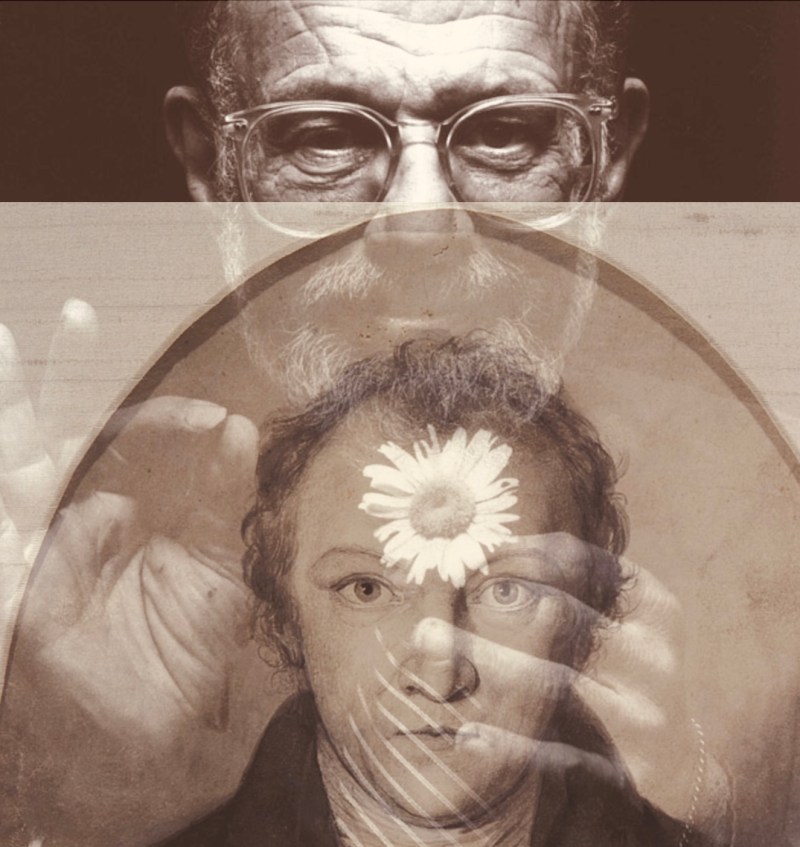
When Allen Ginsberg lay dying, I was among those who sat vigil by his bedside. I wandered into his library and randomly chose a book, a volume of Blake in blood-red binding. Each poem was deeply annotated in Allen’s hand, just as Blake had annotated Milton. I could imagine these prolific, complex men discoursing; the angels, mute, admiring.

William Blake felt that all men possessed visionary power. He cited from Numbers 11:29: “Would to God that all the Lord’s people were prophets’. He did not jealously guard his vision; he shared it through his work and called upon us to animate the creative spirit within us.
Read More

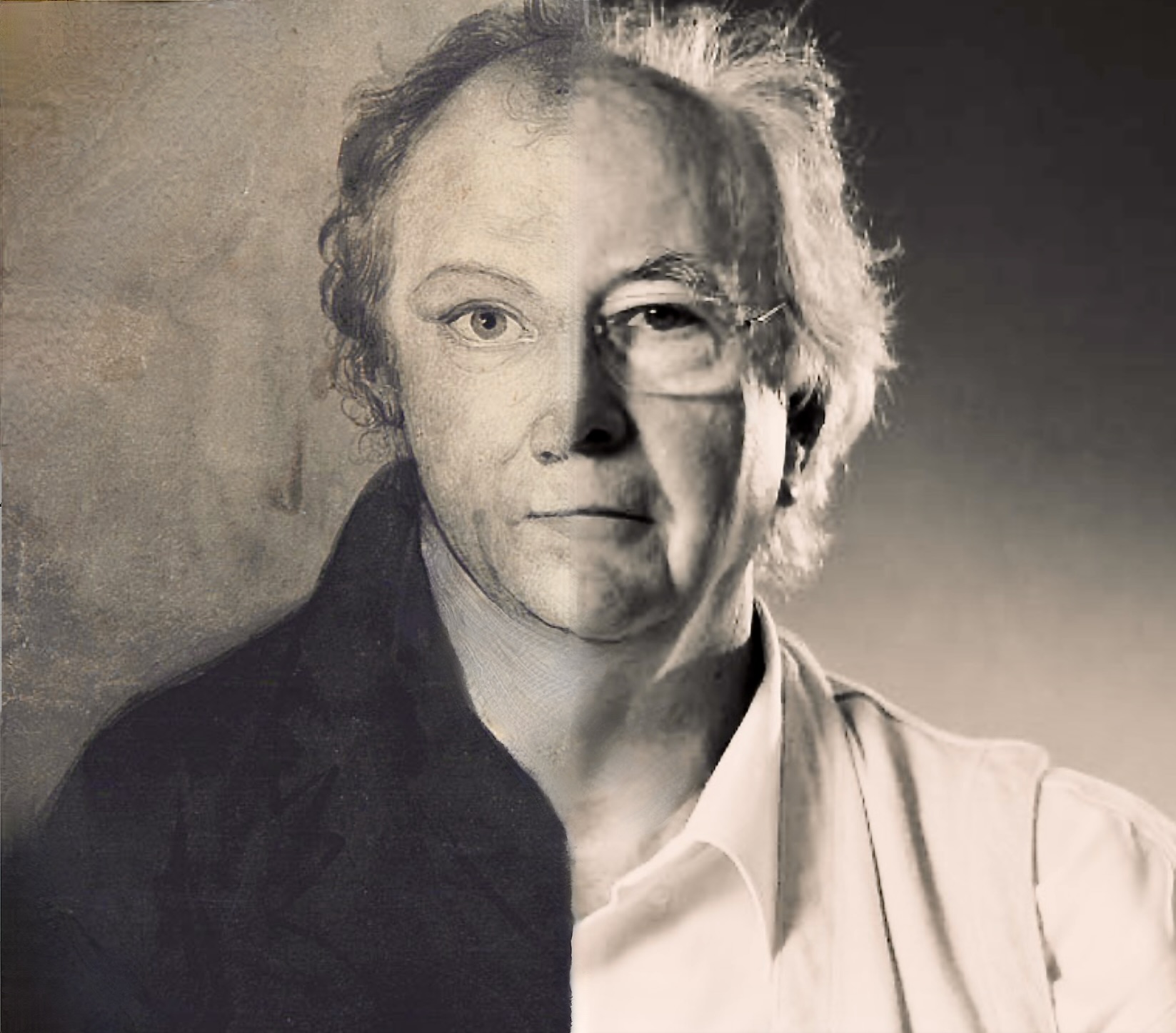
The Magic of William Blake, by Philip Pullman

Philip Pullman reflects on how Blake’s poetry has influenced and intoxicated him for more than 50 years

Screen Shot 2021-05-10 at 10.39.26

Introduction: Unlocking the doors of perception

Sometimes we find a poet, or a painter, or a musician who functions like a key that unlocks a part of ourselves we never knew was there. The experience is not like learning to appreciate something that we once found difficult or rebarbative, as we might conscientiously try to appreciate the worth of The Faerie Queene and decide that yes, on balance, it is full of interesting and admirable things. It’s a more visceral, physical sensation than that, and it comes most powerfully when we’re young. Something awakes that was asleep, doors open that were closed, lights come on in all the windows of a palace inside us, the existence of which we never suspected.

Read More

Logic and Mysticism: William Blake, Bertrand Russell, and Allen Ginsberg

The Way to Truth: The Lamb or the Tyger?

Screenshot 2022-03-01 at 12.30.31

The Ancient of Days over Bikini Atoll, where America exploded a massive hydrogen bomb in 1954. It was a thousand times more powerful than the atomic bomb dropped on Hiroshima. On witnessing the first detonation of a nuclear weapon on July 16, 1945, a piece of Hindu scripture ran through the mind of scientist Robert Oppenheimer: “Now I am become Death, the destroyer of worlds”

Screen Shot 2021-05-10 at 10.39.26

Introduction: Blake and Bertrand Russell

Screenshot 2022-03-01 at 14.50.18

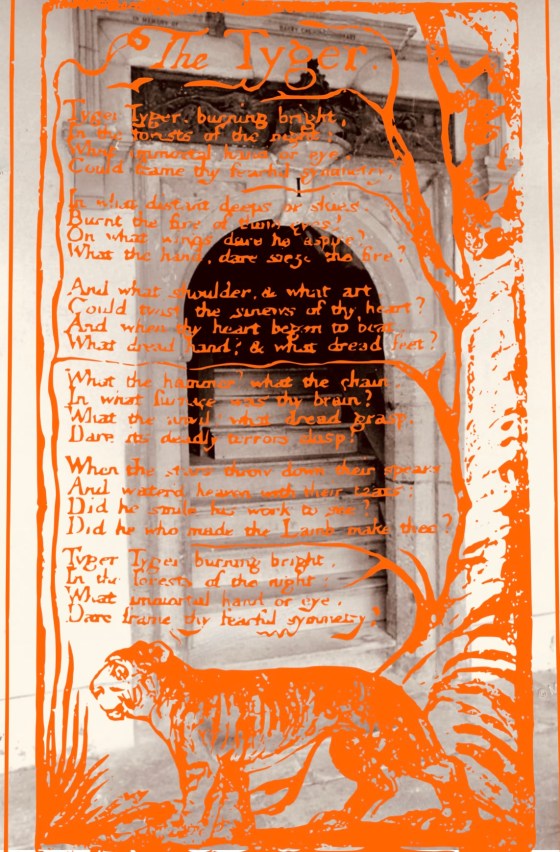
Entrance to the rooms Russell occupied as a Fellow of Trinity College, Cambridge University, where he first heard the sound of Blake’s Tyger.

In the first volume of his autobiography, Nobel Prize laureate Bertrand Russell recalled being stopped dead in his tracks while trying to descend a staircase in Trinity College Cambridge by his friend Crompton reciting Blake’s poem The Tyger. He wrote:

One of my earliest memories of Crompton is of meeting him in the darkest part of a winding College staircase and his suddenly quoting, without any previous word, the whole of “Tyger, Tyger, burning bright.” I had never, till that moment, heard of Blake, and the poem affected me so much that I came dizzy and had to lean against the wall.

The encounter with Blake’s Tyger seems to have made a lasting impression on the mathematician and philosopher. Russell returned to him again in his 1918 essay Mysticism and Logic, where he suggested that the search for truth could be reached both through hard science and pure speculation. In the essay Russell contrasts two “great men,” Enlightenment philosopher David Hume, whose “scientific impulse reigns quite unchecked,” and poet William Blake, in whom “a strong hostility to science co-exists with profound mystic insight.” It’s interesting that Russell chooses Blake for an example.

Read More

Opening the Doors: William Blake, Jack Kerouac, Allen Ginsberg, and the Beat Generation

Howl: The War of this World against Vision and Imagination

Screenshot 2022-02-27 at 16.13.12 4

Screenshot 2022-02-23 at 09.39.58

Old New York

Screenshot 2022-02-23 at 12.18.27-OK

Screen Shot 2021-05-10 at 10.39.26

Introduction: Blake & the Beats

Screenshot 2022-02-23 at 10.35.06 2

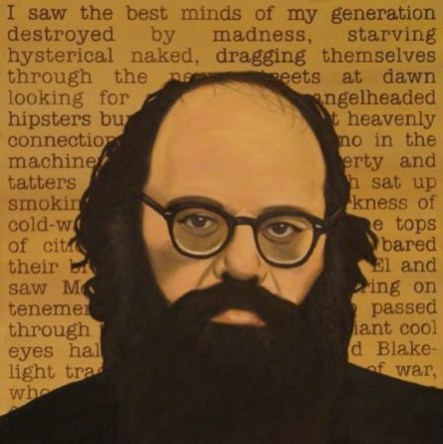
Allen Ginsberg (1926–1997) in front of the opening lines of Howl, referencing Blake in its opening section

William Blake’s influence on the Beat Generation is arguably more significant than that of any other writer or artist. Most notably he was Ginsberg’s “guru” and the “catalyst” for his poetry, and even warranted a mention in “Howl”. Blake supposedly appeared to Ginsberg in 1945 and read “Ah Sun-flower”, and again in 1948 when Ginsberg was reading “The Sick Rose”. He explained,

I was never able to figure out whether I was having a religious vision, a hallucinatory experience, or what, but it was the deepest ‘spiritual’ experience I had in my life, and determined my karma as poet. That’s the-key pivotal turnabout of my own existence. That’s why I was hung up on setting Blake to music.

Visions were important to Blake, who claimed that his poetry was not necessarily a work that he created, but something channeled through him. He referred to himself as a “true Orator” and claimed that poetry came from a voice that he simply wrote down.

Read More

The Sleep of Imagination: William Blake and Edward Young’s ‘Night Thoughts’, by Michael Farrell

How the Sleep of Imagination produces Nature

Screen Shot 2021-07-13 at 14.42.56

Screen Shot 2021-07-13 at 14.42.35

Screen Shot 2021-05-10 at 10.39.26


Introduction: The Apocalypse of Reason 

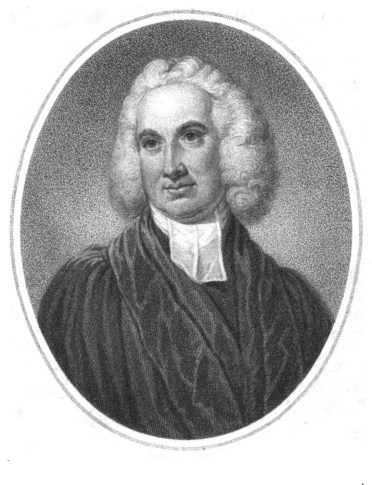
Edward Young (1683–1765)

Blake worked on illustrations for an edition of Edward Young’s Night Thoughts between 1795 and 1797, though he engraved only forty three of the five hundred and thirty seven water-colour designs he made for the poem. The first part of Young’s illustrated text, containing forty three of Blake’s engravings, was published in 1797. The enterprise was a commercial failure and the subsequent ‘Nights’ were never published.

Read More

Burning Bright: Meteoric imagery in the works of William Blake, by A. McBeath

The alignment of meteoric imagery and political and spiritual events in Blake’s work


Introduction: Blake’s meteoric imagination

According to old Chinese belief, William Blake (1757– 1827) was cursed, since there is no question he lived in ‘interesting times’. Blake was a visionary English poet and artist. He was fascinated by apocalyptic biblical beliefs and prophecies, and worked elements of these even into artworks commissioned of him to illustrate the texts of other poets.

Raphael, ‘Astronomy’, from the Stanza della Segnatura (1509)

He studied widely in the literature and art of the past. His lifelong artistic heroes were Milton, Raphael and Michelangelo. As a result, his works are suffused with flowing forms and astronomical imagery, including meteors and comets.

Read More