Through the Round Window: Review of Carol Leader’s ‘Blake and the Therapists’, by Rod Tweedy
A Review of ‘Unfolding the Mythological Unconscious: An Illuminated Talk’ by Carol Leader


Introduction: William Blake and Therapy
“Was William Blake mad?” is the usual question that comes up in any discussion of Blake and therapy. What was fascinating about psychoanalytic psychotherapist Carol Leader’s talk at the Blake Society event at the Freud Museum was the way in which she explored this connection between ‘Blake and the Therapists’ on a new and much more profound level. Indeed, her presentation was so thought-provoking that it makes you wonder why more hasn’t been written on this connection. As Tim Heath noted in his introduction to the talk, “whenever you converse with William Blake, whenever you dive into his work, it immediately becomes apparent why Blake intimated the coming of therapy.”

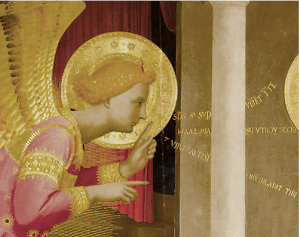


 Blake’s art speaks in symbols. But what exactly are symbols? And why are all of the deepest ancient esoteric truths always communicated through symbol and image? Pike suggests that symbols are the most powerful way to mediate and convey a “truth” that lies beyond ordinary conscious, “rational” thought programmes and parameters: “The first learning in the world consisted chiefly in symbols. The wisdom of the Chaldæans, Phœnicians, Egyptians, Jews; of Zoroaster, Sanchoniathon, Pherecydes, Syrus, Pythagoras, Socrates, Plato, of all the ancients, that is come to our hand, is symbolic. It was the mode, says Serranus on Plato’s Symposium, of the Ancient Philosophers, to represent truth by certain symbols and hidden images.”
 thehumandivinedotorg