Opening the Doors: William Blake, Jack Kerouac, Allen Ginsberg, and the Beat Generation
Howl: The War of this World against Vision and Imagination

Introduction: Blake & the Beats
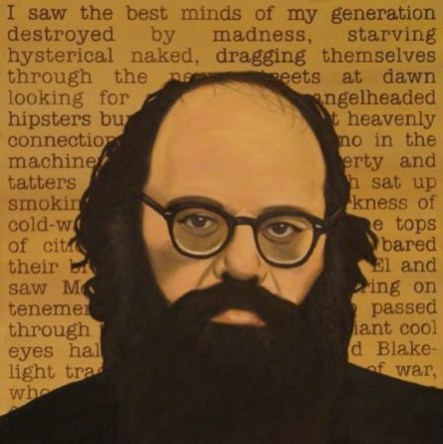
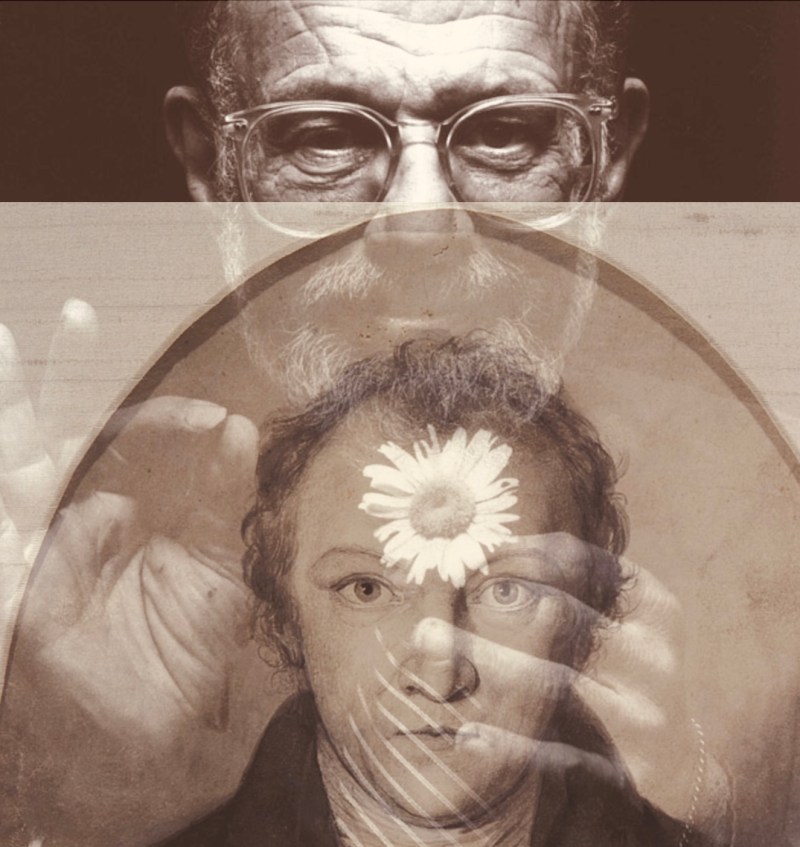
Allen Ginsberg (1926–1997) in front of the opening lines of Howl, referencing Blake in its opening section
William Blake’s influence on the Beat Generation is arguably more significant than that of any other writer or artist. Most notably he was Ginsberg’s “guru” and the “catalyst” for his poetry, and even warranted a mention in “Howl”. Blake supposedly appeared to Ginsberg in 1945 and read “Ah Sun-flower”, and again in 1948 when Ginsberg was reading “The Sick Rose”. He explained,
I was never able to figure out whether I was having a religious vision, a hallucinatory experience, or what, but it was the deepest ‘spiritual’ experience I had in my life, and determined my karma as poet. That’s the-key pivotal turnabout of my own existence. That’s why I was hung up on setting Blake to music.
Visions were important to Blake, who claimed that his poetry was not necessarily a work that he created, but something channeled through him. He referred to himself as a “true Orator” and claimed that poetry came from a voice that he simply wrote down.

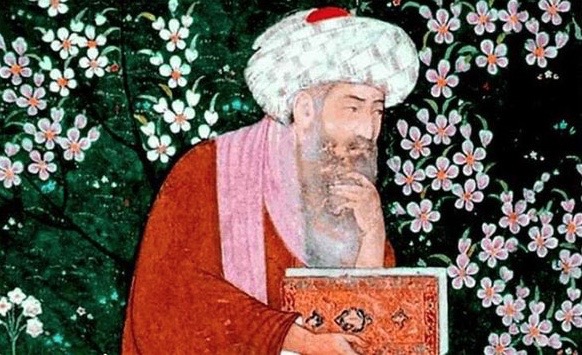 According to Professor Henry Corbin, o

 Blake’s art speaks in symbols. But what exactly are symbols? And why are all of the deepest ancient esoteric truths always communicated through symbol and image? Pike suggests that symbols are the most powerful way to mediate and convey a “truth” that lies beyond ordinary conscious, “rational” thought programmes and parameters: “The first learning in the world consisted chiefly in symbols. The wisdom of the Chaldæans, Phœnicians, Egyptians, Jews; of Zoroaster, Sanchoniathon, Pherecydes, Syrus, Pythagoras, Socrates, Plato, of all the ancients, that is come to our hand, is symbolic. It was the mode, says Serranus on Plato’s Symposium, of the Ancient Philosophers, to represent truth by certain symbols and hidden images.”
  thehumandivinedotorg