A BLAKE NEW WORLD: The place of Sense Perception and Imagination in William Blake and Aldous Huxley

Aldous Huxley and the Doors of Perceiving
Screen Shot 2021-05-10 at 10.39.26

Introduction: Opening the Flower of Mescaline

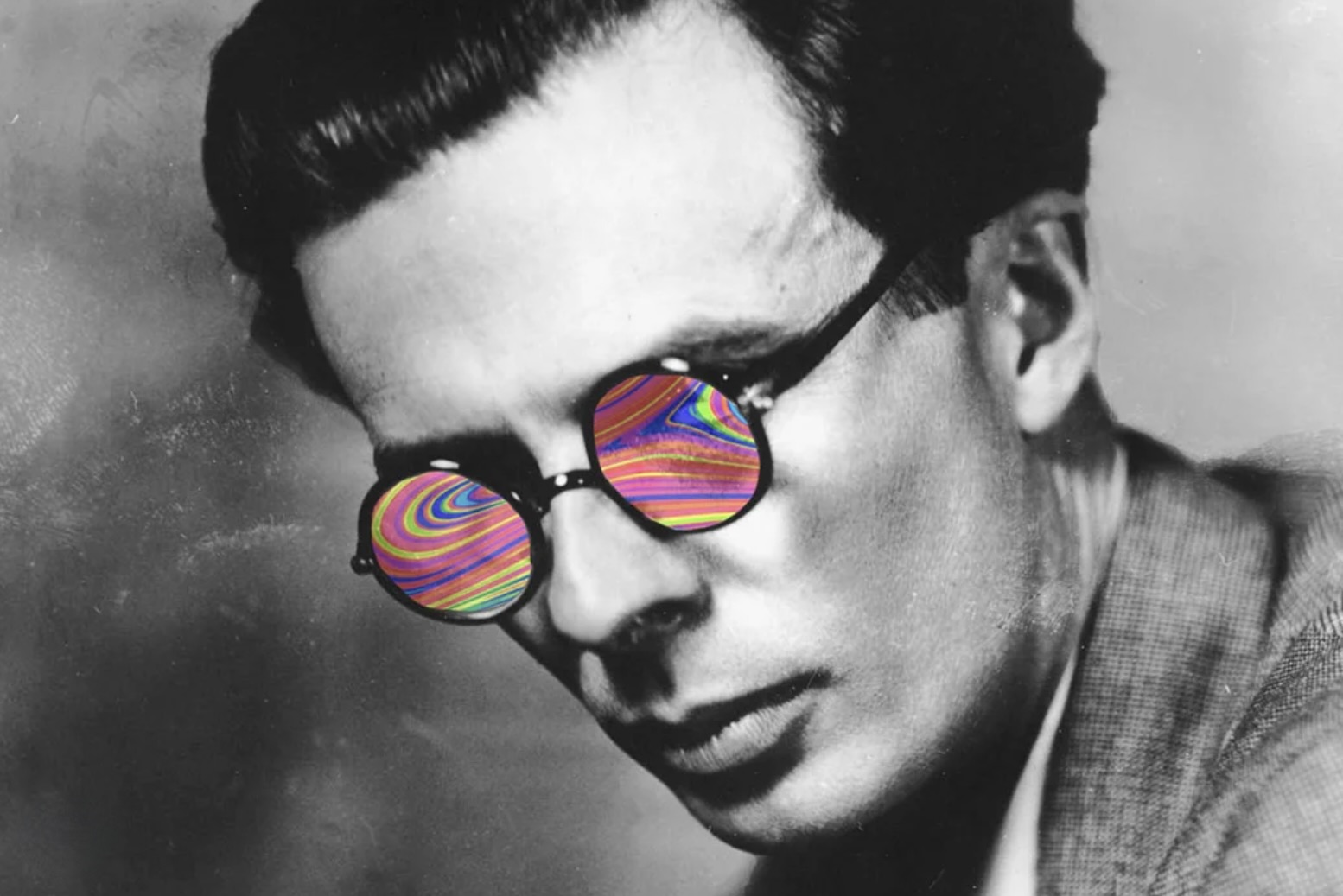
His interest piqued by psychological research on the drug, in 1953 Aldous Huxley swallowed four-tenths of a gram of mescaline with the hope that his experience would lead to a better understanding of the mind’s role in human perception.

Mescaline is a relatively innocuous hallucinogen found in several species of cacti, the most well-known being Peyote, a small plant that many of the native peoples of the American Southwest and Mexico respect as a divine gift. Western science has approached the drug’s effects more pragmatically, studying the chemical and psychological changes that accompany mescaline intoxication, but for the more personally-driven experimenter it has not lost its philosophical allure.
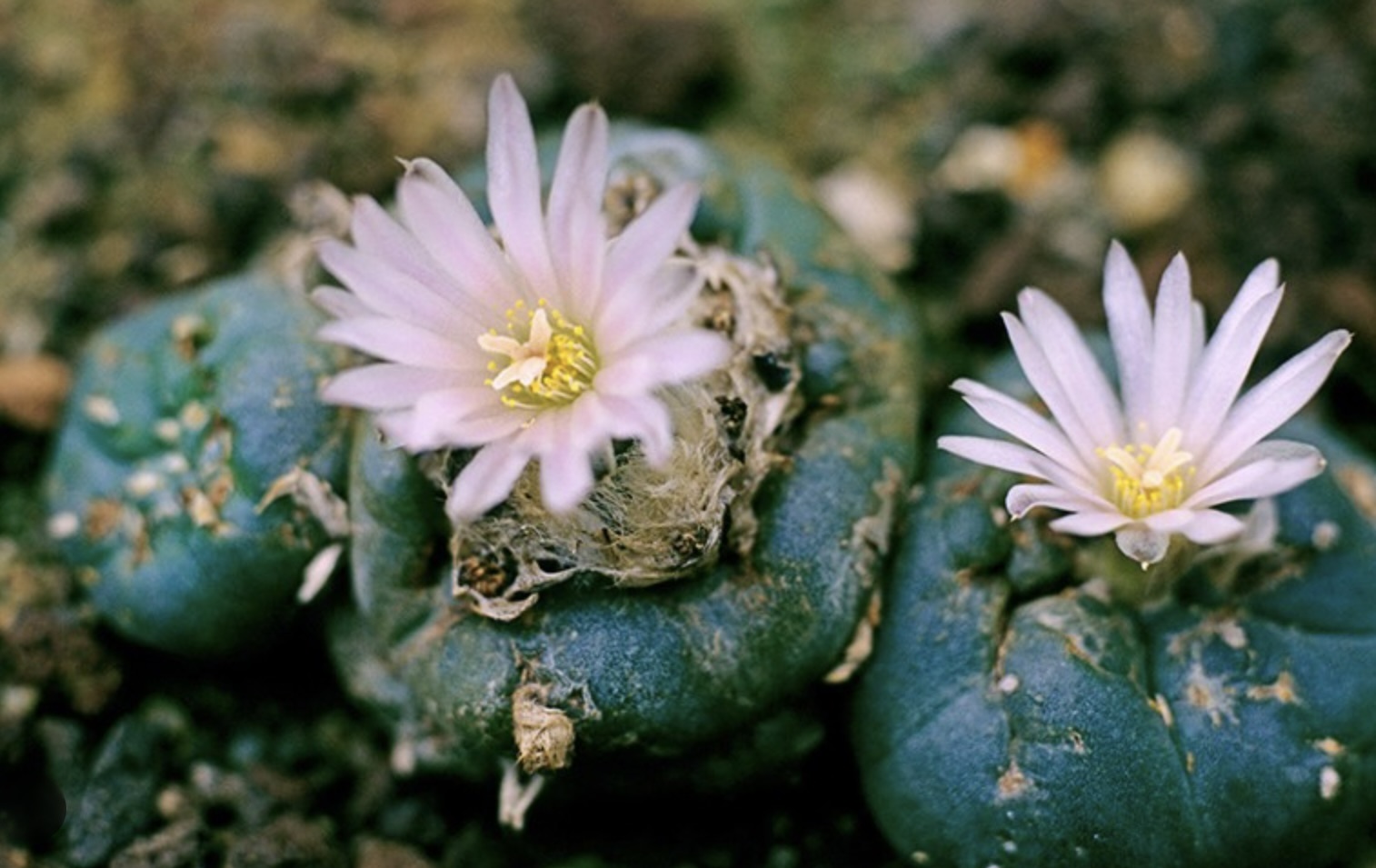
Heaven in a wild flower: Mescaline is a naturally occurring psychedelic that comes from the Mexican peyote cactus (Lophohora williamsii)
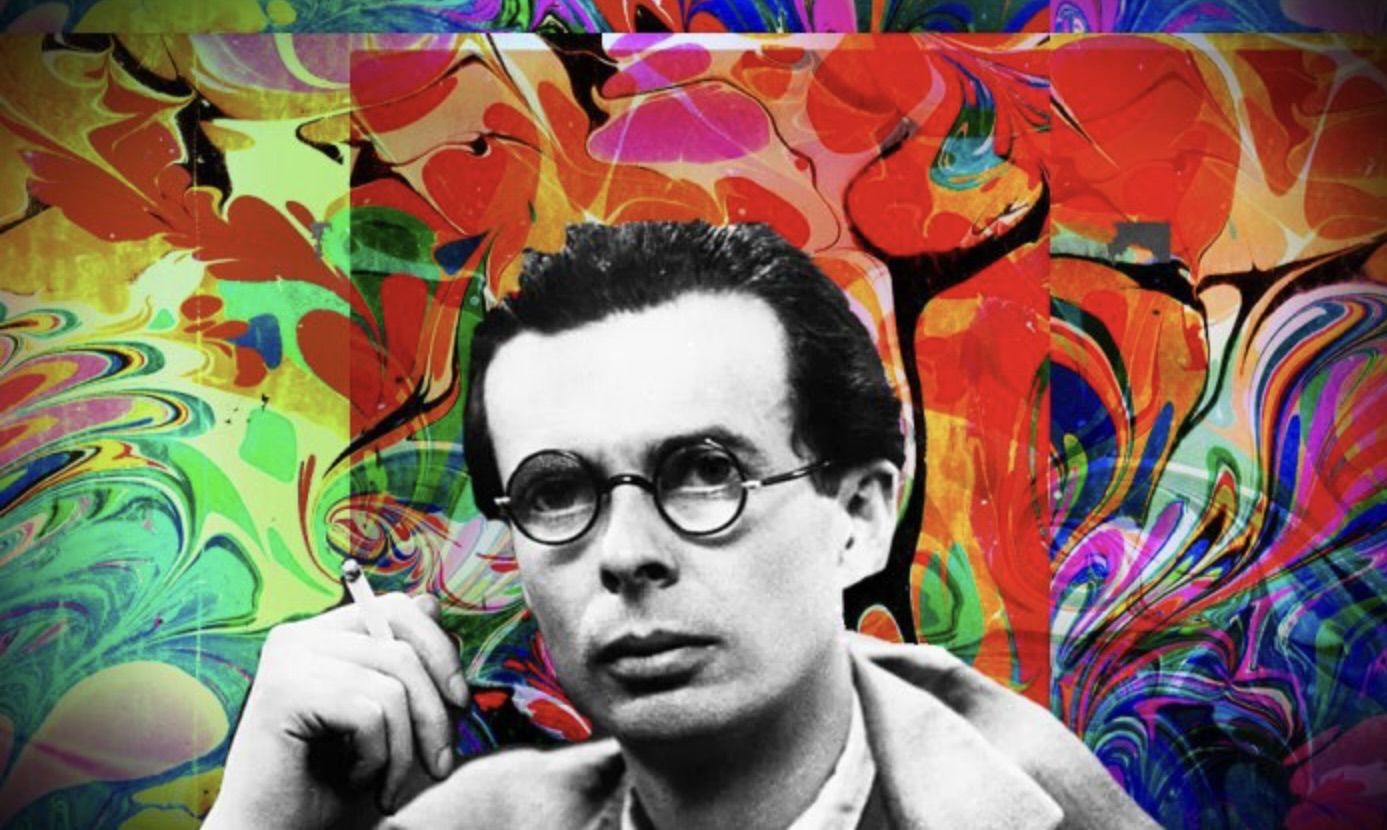
“This is how one ought to see, how things really are” – Aldous Huxley

Screen Shot 2021-05-10 at 10.39.26

Huxley approached his experiment conscious of both the scientific and philosophical issues surrounding the alteration of consciousness, and recorded his analysis of the experience in two short books, The Doors of Perception and Heaven and Hell. A discerning glance at the titles of these two works suggests a direct relationship with Blake’s The Marriage of Heaven and Hell, but the degree to which Blakean concepts actually form the foundation for Huxley’s reflections has not yet been thoroughly examined.

Read More

Blake’s Erotic Apocalypse: The Androgynous Ideal in ‘Jerusalem’, by Diane Hoeveler

From the Hermaphrodite to the Androgynous: Reintegrating the Male and Female

Screenshot 2022-08-25 at 12.11.11 2 2 2Screenshot 2022-08-26 at 11.13.23


Screen Shot 2021-05-10 at 10.39.26

Introduction: Sexual Warfare: The Origins of the Battles of the Sexes

marriageofheavenandhell1

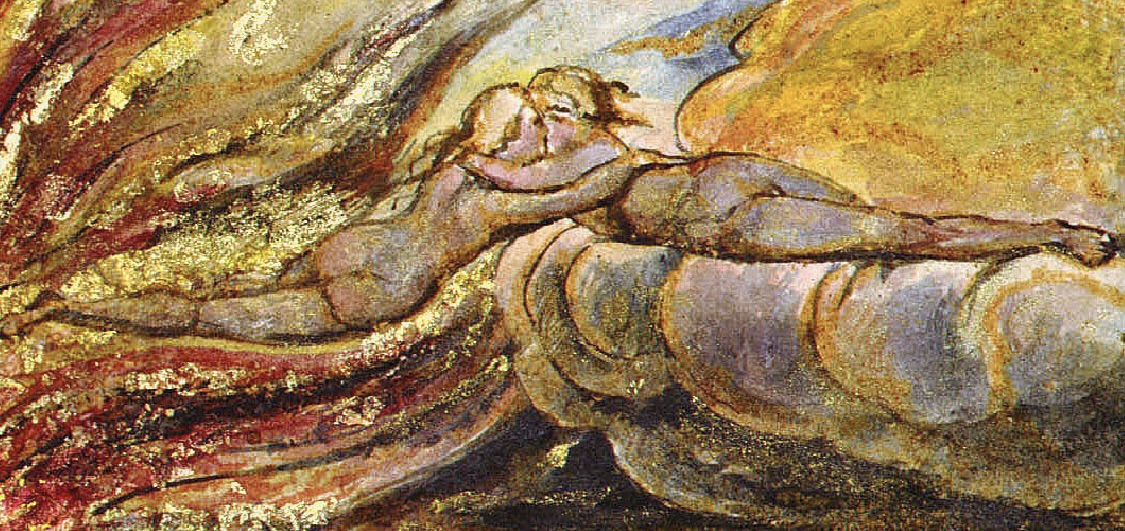
Detail from Blake’s The Marriage of Heaven and Hell. Which is also a marriage of Male and Female – not understood externally, inter-psychically, in the fallen and projected way, but intra-psychically – to overcome the divisions and separations within oneself. Note that the figures here are themselves androgynous.

The imagery of sexual warfare is central to the vision of apocalypse which Blake proclaims as his poetic mission. The political apocalypse of the earlier work, such as The French Revolution, fades as the spiritual gains prominence, for Blake’s vision of the natural world seems to have darkened over the years so that by the time he was writing Jerusalem the only apocalypse he could endorse was one in which the ”sexes must cease and vanish” in the psyche so that humanity can assume its spiritualized “body.” It became clear to Blake that political reform of society could not be effected until an individual and spiritual redemption took place in every heart. To become androgynous, to overcome the flaws inherent in each sex, emerges as the central challenge for all Blake’s characters. 

Read More

Meeting Blake for the First Time, by Henry Crabb Robinson

Seeing Blake Plain

3382-576643-1-flip

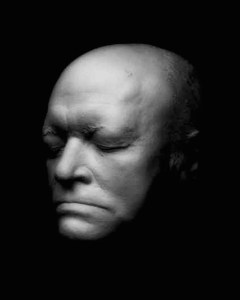
Life mask of Blake, taken in 1823

“Of all the records of his latter years,” the poet and critic Swinburne once noted of Blake, “the most valuable, perhaps, are those furnished by Mr. Crabb Robinson, whose cautious and vivid transcription of Blake’s actual speech is worth more than much vague remark, or than any commentary now possible to give.” Others may have understood Blake better than Crabb Robinson – by profession a lawyer and journalist – but no one else was so attentive to his speech, which he carefully recorded in his private diaries (eventually published in 1869 as Diary, Reminiscences, and Correspondence).

The extraordinary accounts of his meetings with Blake help to answer some key questions: What did Blake sound like? How did he engage with others – what was it like to be in Blake’s company? Thanks to Crabbe Robinson’s remarkable and meticulously recorded entries, we can gain entry and access into Blake’s private world – a sense of what it was like to be the same room as Blake. And also to hear his thoughts – “on art, and on poetry, and on religion” as Crabb Robinson summarises it – including Blake’s view of the nature of imagination, the two Suns, having met Socrates, why there is suffering as well as joy in heaven, his criticism of Jesus, the prelapsarian union of the sexes, Wordsworth’s atheism, and why education is the great sin.

Read More