William Blake and Georg Groddeck: Symbols as Symptoms

Giving Error a Form: The role of the Unconscious Imagination
Screenshot 2022-11-04 at 17.51.12Screenshot 2022-11-04 at 18.41.10 4

Screenshot 2022-11-04 at 17.52.02

Screen Shot 2021-05-10 at 10.39.26

Introduction: The Myth of Creation
Screenshot 2022-11-01 at 18.09.11 2

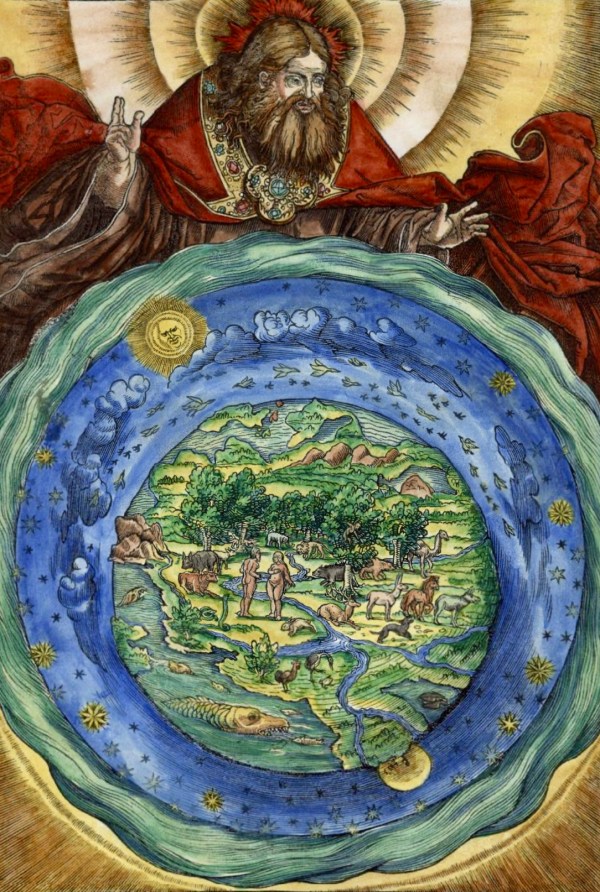
“The materialization of Error, or the ‘Creation’ as its popularly called”. Image: The Sixth Day of Creation, by Lucas Cranach the Younger (1634). What is true of the body on a particular scale is equally true of the body on a cosmic scale: it is the “visible portion”, as Blake would say, of inner processes that have become “objectified” or dissociated, in order to reveal their dysfunction to the perceiver of that body, like all diseases – in order to then integrate and heal them, and return to eternity. In Kabbalah this process of recognition and re-integration is called tikkun olam (literally “repair of the world”), and human consciousness is considered essential to the process of repair.

According to Blake, the materialization of Error, or the “Creation” as its popularly called, is the result of a dissociative split within consciousness itself, emanating from the radical alienation of the rationalizing and “objecting” (or objectifying) portion of consciousness from Being, perceiver from perceived (“it is the Reasoning Power/ An Abstract objecting power,” Jerusalem 10:13-14).

In mythology, this division or dissociation is embodied in the story of the separation of “Eve” from “Adam”. These aspects, as the Book of Genesis carefully notes, were originally portions or “likenesses” of ‘God’.

In the day that God created humankind (“adam”), in the likeness of God made he him; Male and female created he them; and blessed them, and called their name Adam, in the day when they were created. (Book of Genesis 5: 2-3)

As a result of this emerging state of Urizenic or “Spectre” psychology, the abstracted, instrumental ego perceives itself as being ‘in here’ and the world as ‘out there’, and it also then perceives the externalized world as being ‘natural’ (that is, beyond its imaginative control, and determining the now “passive” psyche) rather than as imaginative, the perceived form of its particular mode of experiencing reality.

But like all Errors, this externalized sense of world and reality has a positive part to play in the eventual liberation and self-realization of Man: it is an attempt to heal the internal and traumatized nature of the divide psyche. “Error is Created  Truth is Eternal   Error or Creation will be Burned Up & then & not till then Truth or Eternity will appear  It is Burnt up the Moment Men cease to behold it” (LJ 95).

Read More

William Blake and The Body of Vision, by Rosalind Atkinson

Vision and De-Vision: Sexuality, Slavery, and the Fall of Perception

Screen Shot 2021-05-10 at 10.33.55

Screen Shot 2021-05-10 at 10.33.33

Screen Shot 2021-05-10 at 13.52.03

Screen Shot 2021-05-10 at 10.39.26

Introduction to William Blake’s Visions of the Daughters of Albion

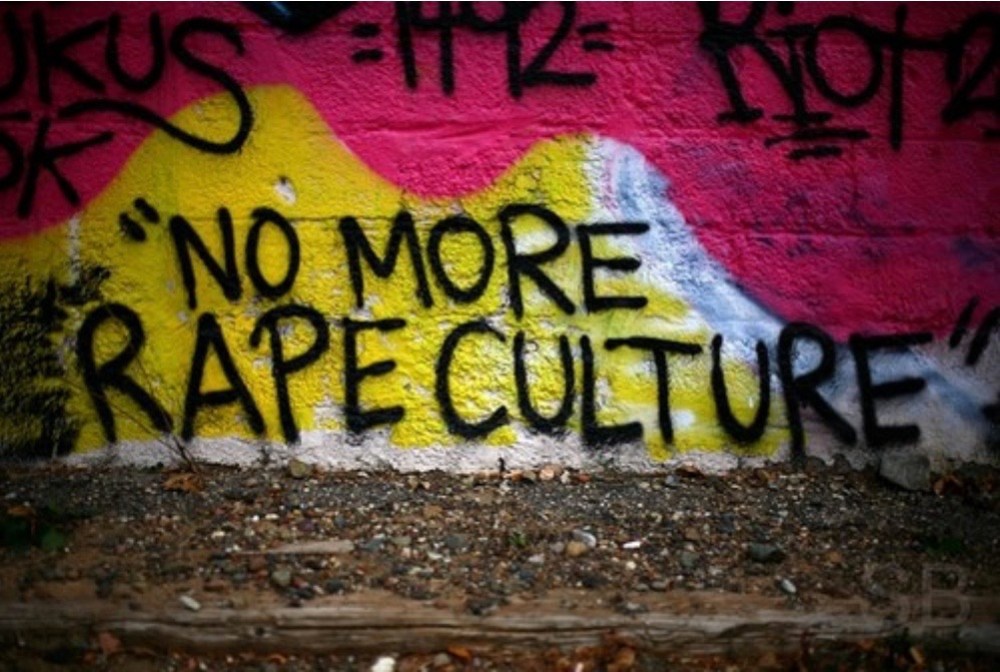
This essay examines how almost the entire critical discussion of Blake’s Visions of the Daughters of Albion enacts the exact dynamics (which we could anachronistically label ‘rape culture’) that the poem itself dramatises in order to dissect. I hope it can be of interest beyond Blake enthusiasts to anyone wanting to understand if being interested in ‘how we perceive’ affects our political and social ideas and positions, and to anyone interested in how dualistic ways of seeing (encompassing transcendence and materialism equally) abuse our bodies and the world.

Read More

Blake, Misunderstood? Review of Olga Tokarczuk’s ‘Drive Your Plow over the Bones of the Dead’

Josephine A. McQuail reviews Olga Tokarczuk’s award-winning Blakean novel Drive Your Plow over the Bones of the Dead (translated by Antonia Lloyd Jones. Riverhead Books, 2009; translation © 2018)

Images from Spoor, the 2017 Polish film directed by Agnieszka Holland, adapted from the novel Drive Your Plow Over the Bones of the Dead by Olga Tokarczuk. Above: Agnieszka Mandat and Miroslave Krobot (Photo: Palk Robert/Next Film); Below: poster for the film (Photo: (WP:NFCC#4).

Olga Tokarczuk won the 2018 Nobel Prize for Literature in 2019 (the prize was delayed, due to various scandals involving some members of the Nobel Prize Committee). Her 2007 novel Flights was translated into English finally in 2018, winning the Man Booker Prize, and paving the way for the Nobel Prize.

Tokarczuk’s novel Flights won the Man Booker Prize in 2018

Tokarczuk speculated, “Sometimes I wonder how my life would have worked out if my books had been translated into English sooner … because English is the language that’s spoken worldwide, and when a book appears in English it is made universal, it becomes a global publication” (quoted in Armitstead). 

As anyone who has read Blake’s Marriage of Heaven and Hell and remembers “The Proverbs of Hell” will recognize, the title of Tokarczuk’s 2009 novel is a quote from William Blake – or technically a paraphrase, as the actual quote is “Drive your cart and plow over the bones of the dead.”

Not to give anything away, but the quote has a lot of relevance to the plot of the novel, as it turns out. Tokarczuk’s protagonist Janina is an elderly woman who has a passion for horoscopes; a skill that comes into play when her neighbors turn up dead.  She lives full time in a country setting in rural Poland bordering on the Czech Republic (as Olga Tokarczuk herself does).  She lives on a plateau, with harsh weather, and pointedly, calls it “the world of Urizen” (p. 56) (Urizen in Blake, or “Your Reason” as it is sometimes pronounced, is a cold, repressive force).

Each of the seventeen chapters has an epigraph by William Blake – quotes (as vaguely indicated in the Author’s Note) taken from “the Proverbs of Hell, Auguries of Innocence, The Mental Traveller and the letters of William Blake” (p. 275). The misattribution of “The Proverbs of Hell” (and not Marriage of Heaven and Hell) is puzzling, and also the lack of mention of The Book of Urizen, which is specifically discussed and quoted in the novel (“What demon hath formed this adominable void?”, p. 71). Like the misquote of the Proverb of Hell in the title, are these subtle signals that we have not the “real” Blake alluded to here, but a “filtered” one?

Read More

The Rise of Eco-fascism: Nature, Nazis, and Green Ideology, by Janet Biehl and Peter Staudenmaier

Vala’s Reich: The Idealisation of Nature and the Denigration of Humanity

It may come as a surprise to learn that the history of ecological politics has not always been inherently and necessarily progressive and benign. In fact, ecological ideas have a history of being distorted and placed in the service of highly regressive ends — even of fascism itself. As this article shows, important tendencies in German “ecologism,” which has long roots in nineteenth-century nature mysticism, fed into the rise of Nazism in the twentieth century.

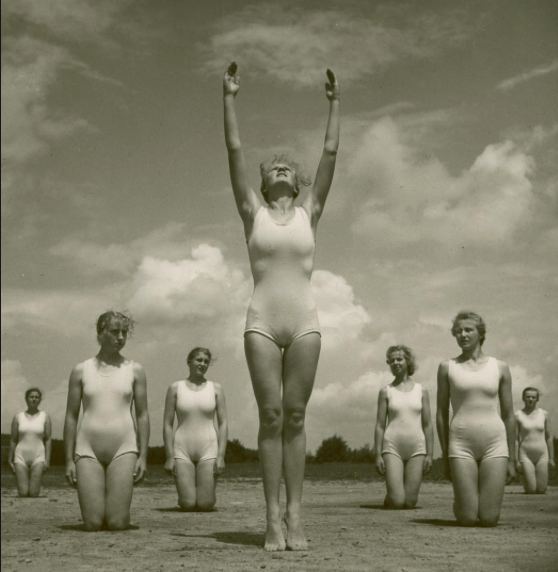
During the Third Reich, Nazi “ecologists” even made organic farming, vegetarianism, nature worship, and related themes into key elements not only in their ideology but in their governmental policies. Moreover, Nazi “ecological” ideology was used to justify the destruction of European Jewry. Yet some of the themes that Nazi ideologists articulated bear an uncomfortably close resemblance to themes familiar to ecologically concerned people today.

Read More

The End of Nature:  Blake and Pantheism, by Rod Tweedy

Babylon, Nature-worship, and the Sleep of Albion 

OLYMPUS DIGITAL CAMERA

‘Awake! awake O sleeper of the land of shadows, wake! expand!’

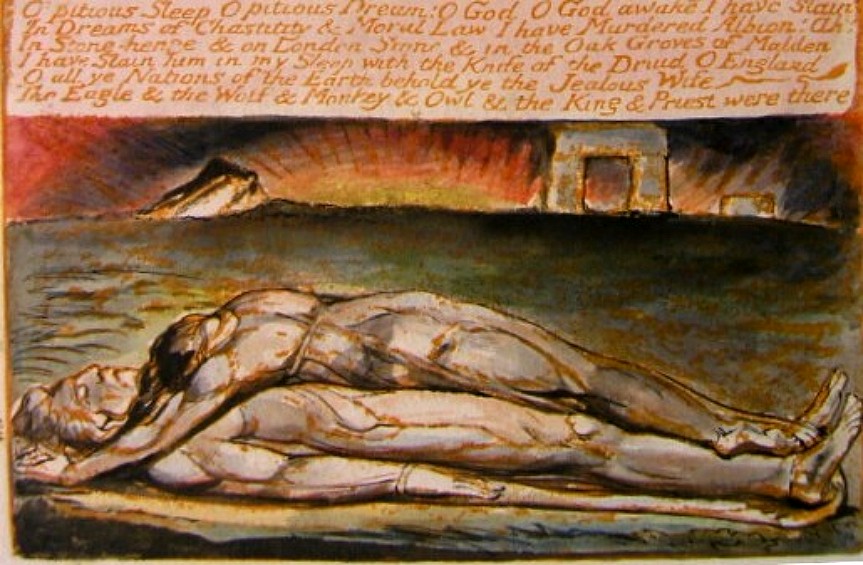
As Kathleen Raine has noted, “the sleep of Albion is in a word the materialist mentality of the modern West.” However, this “materialist mentality”, for Blake, denotes not only the belief in the Newtonian universe of orthodox Science, which many are now questioning, but also the belief in “Nature” itself. For Blake, the “Creation” – the emergence of an apparently objective, natural, and material world – and Albion’s fall into “Sleep” were one and the same event.

Read More