Brandpsycho: The Hidden Psychology of Brands, by Max Jakob Lusensky

Jung, Magic, and the Manipulation of Eros: How Capitalism Controls Us

Screenshot 2022-03-01 at 20.44.52

Screenshot 2022-03-01 at 20.38.54

Screenshot 2022-03-06 at 18.40.44 2

Screen Shot 2021-05-10 at 10.39.26

Introduction

Screenshot 2022-03-06 at 21.01.38

Bernay’s classic work, Propaganda (1928) explored the psychology behind manipulating masses and the ability to use symbolic action and propaganda to influence politics and effect social change. Bernays’ thesis is that “invisible” people who create knowledge and propaganda rule over the masses, with a monopoly on the power to shape thoughts, values, and citizen response. “Engineering consent” of the masses, he argued, would be vital for the survival of capitalism.

In this post we explore how the psychology of Carl Gustav Jung and Sigmund Freud’s psychoanalysis have been used by the marketplace to transform products into magical brands that we subconsciously connect with. 

What (Freud’s nephew) Edward Bernays and his fellow marketers did was to introduce eros to the marketplace and to explore a new technique to infuse products with its energy. Products started to transmute into pseudo-symbols when charged with psyche, libido, emotional appeal, and the promise to still the desires constantly stirring within the consumer’s unconscious. 

Influenced by the insights of psychoanalysis, a new method of marketing was born, one that would reshape the field of advertising and form a psychological framework for the industry that today is referred to as branding.

The word brand derives from Old Norse, a Viking language spoken in Scandinavia until the fifteenth century. Brandr meant ‘to burn’. Later in history, the word came to identify the process of marking cattle, criminals, and slaves using a hot iron, a precursor to the logo.

Brands today are more than mirrors for our unspoken, often unconscious, psychological wants and desires. 
Read More

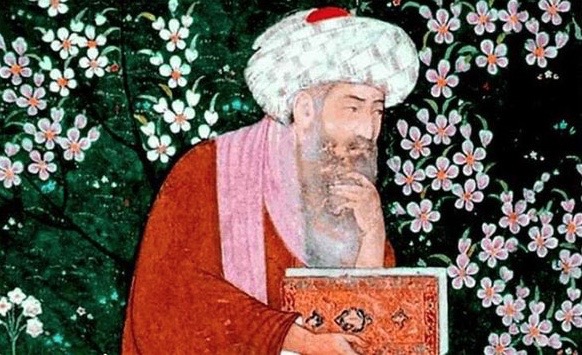
Creative Imagination and Mystical Experience in the Sufism of Ibn ‘Arabî, by Henry Corbin

God as Imagination: the Image and the Imaginer in the Sufism of Ibn ‘Arabî

Screen Shot 2021-04-21 at 14.31.08

Screen Shot 2021-04-21 at 12.19.30

Screen Shot 2021-04-21 at 14.14.50

screen-shot-2021-04-21-at-17.33.55

.

Introduction: Ibn ‘Arabî and Islamic mysticism

Screen Shot 2021-04-21 at 12.13.24According to Professor Henry Corbin, one of the 20th century’s most prolific scholars of Islamic mysticism, Ibn ‘Arabî (1165–1240) was “a spiritual genius who was not only one of the greatest masters of Sufism in Islam, but also one of the great mystics of all time.”

Imagination (khayâl), as Corbin has shown, plays a major role in Ibn ‘Arabî’s writings. In the Openings, for example, he says about it, “After the knowledge of the divine names and of self-disclosure and its all-pervadingness, no pillar of knowledge is more complete”.

Read More

FEARFUL SYMMETRY: William Blake and Sacred Geometry, by Rod Tweedy

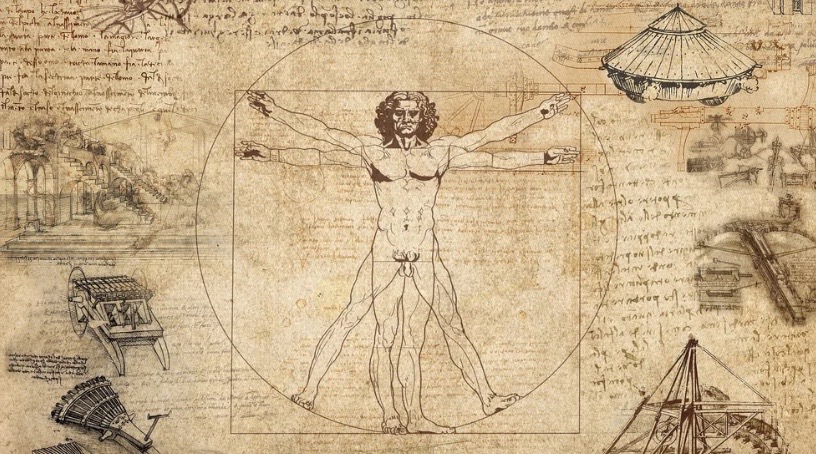
The Human Form Divine: Sacred geometry and its relationship to our physiology


Section 1: The Nature of Sacred Geometry

Measuring Urizen: The geometry of geometry

This first section explores what is meant by “sacred geometry”, studying and measuring its terms in relation to the study of physiology, the ‘science of life’. It therefore provides a sort of “geometry of geometry”. This seems apposite: the very idea of measuring is after all embedded in the word “geometry”, which comes from the ancient Greek words Geos, meaning “Earth”, and Metron, meaning “to measure”. The act or assumption of measurement is therefore contained within the system that is used to measure reality. Urizen thereby inscribes itself in the very utensils it uses to explore the deep: as Neil Postman acutely observed, “within every technology there is embedded an ideology” (Technopoly: The Surrender of Culture to Technology). These sorts of isomorphic (or “fractal”) repetitions and self-reflections constitute one of the defining characteristics of sacred geometry.

Sacred geometry is usually understood as the science and study of the fundamental patterns, shapes, forms, proportions, and ratios that constitute the basic nature of physical, physiological, and psychological reality. In ancient traditions, these geometries were considered ‘sacred’ because they recurred with such remarkable frequency and on so many different levels, thereby seeming to suggest a ‘hidden order’ to the world. As Skinner notes, “geometry and numbers are sacred because they codify the hidden order behind creation”. As such, they were sometimes considered to reveal the “mind” of God: as Galileo succinctly put it, “Mathematics is the alphabet with which God has written the universe.”

Read More