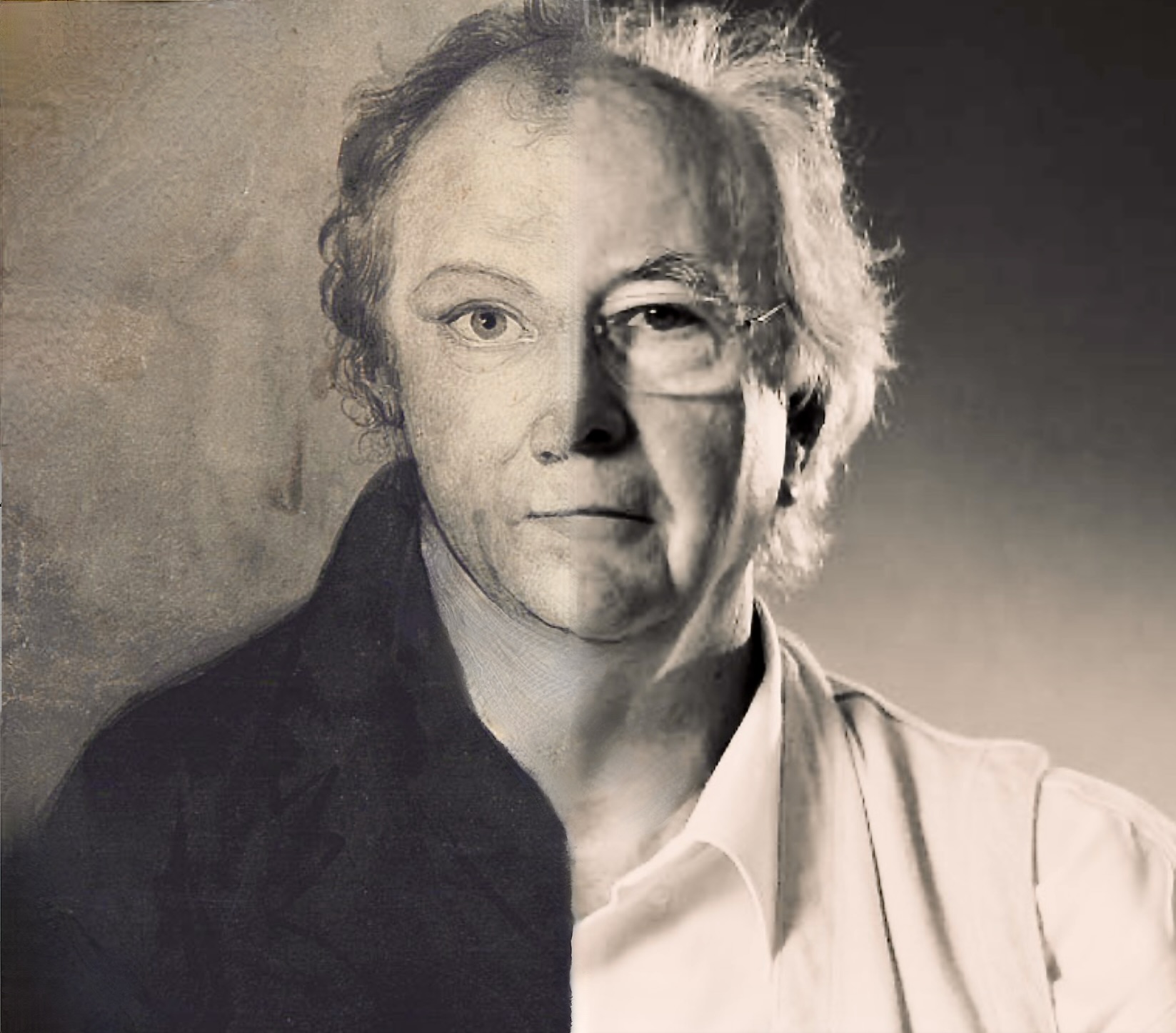
The Magic of William Blake, by Philip Pullman

Philip Pullman reflects on how Blake’s poetry has influenced and intoxicated him for more than 50 years

Screen Shot 2021-05-10 at 10.39.26

Introduction: Unlocking the doors of perception

Sometimes we find a poet, or a painter, or a musician who functions like a key that unlocks a part of ourselves we never knew was there. The experience is not like learning to appreciate something that we once found difficult or rebarbative, as we might conscientiously try to appreciate the worth of The Faerie Queene and decide that yes, on balance, it is full of interesting and admirable things. It’s a more visceral, physical sensation than that, and it comes most powerfully when we’re young. Something awakes that was asleep, doors open that were closed, lights come on in all the windows of a palace inside us, the existence of which we never suspected.

Read More

Revolution of the Psyche, by Krishnamurti

The Thinker and the Thought: “What you are, the world is. So your problem is the world’s problem”

Screenshot 2021-12-25 at 15.00.59

Screenshot 2022-02-20 at 16.45.17

Revolutions

Screen Shot 2021-05-10 at 10.39.26

Introduction

Screenshot 2022-02-20 at 16.31.23 3

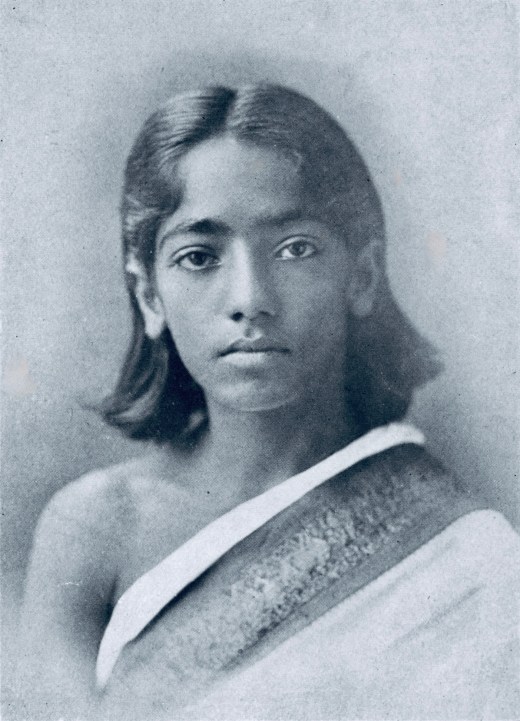
Krishnamurti in 1910. The year before, theosophist Charles Webster Leadbeater, who claimed clairvoyance, had noticed Krishnamurti on the Society’s beach on the Adyar river and was amazed by the “most wonderful aura he had ever seen, without a particle of selfishness in it.” Leadbeater was convinced that the boy would become a spiritual teacher and a great orator; the likely “vehicle for the Lord Maitreya” in theosophical doctrine, an advanced spiritual entity periodically appearing on Earth as a World Teacher to guide the evolution of humankind. Krishnamurti later rejected this role, and indeed rejected the whole idea of following “roles”, after an intense spiritual experience in 1922.

Jiddu Krishnamurti was an Indian philosopher, speaker, and writer. In his early life, he was groomed to be the new ‘World Teacher’ (the Theosophical concept of Maitreya), but he later rejected this mantle and withdrew from the Theosophy organization behind it.

His interests included psychological revolution, the nature of mind, meditation, holistic inquiry, human relationships, and bringing about radical change in society. He stressed the need for a revolution in the psyche of every human being and emphasised that such revolution cannot be brought about by any external authority, be it religious, political, or social.

Krishnamurti was often seen as a spiritual master, although he interestingly mistrusted all religions and denounced the Eastern convention of deifying living spiritual masters. This gives some of his thinking an unusual and indeed at times devastating honesty. Perhaps nowhere is this more seen than in his critiques of the ego – the basis of both the modern personality and of most orthodox psychoanalytic thinking (the purpose of much Freudian and Jungian analysis is actually to strengthen the ego). The goal in Krishnamurti’s vision seems to be to go beyond both ‘self’ and beyond ‘mind’ (which, like Tolle, Krishnamurti equates with ego or what Blake calls “Selfhood”). “Judgement and comparison commit us irrevocably to duality”, he says – and we can never be happy therefore while we are in this state. And neither can those around us.

Read More

The Political Self: Understanding the Social Context for Mental Illness

Integrating the Inner and the Outer: How Society Shapes Who We Are
Banksy-artwork-collage

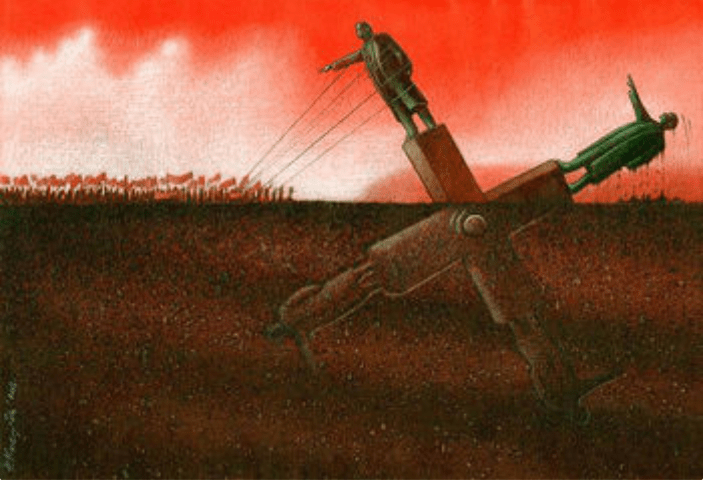
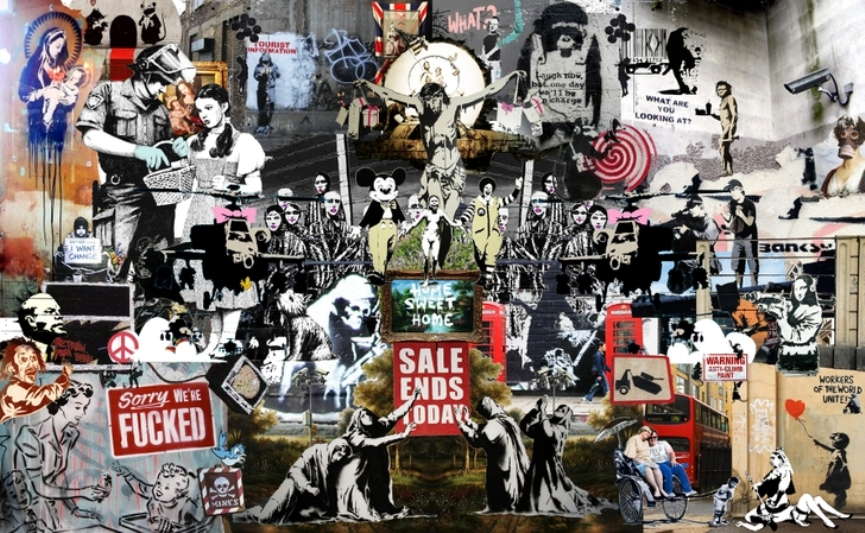
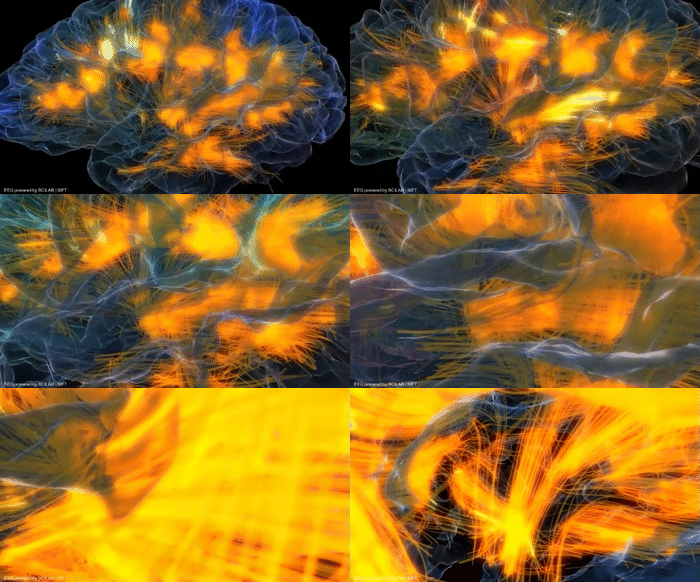
In my 2017 book, The Political Self: Understanding the Social Context for Mental Illness (Routledge), I explore how our social and economic contexts profoundly affect our mental health and well-being, and how modern neuroscientific and psychodynamic research has significantly developed our understanding of these wider discussions. The book therefore looks both inside and outside—indeed one of the main themes of the volume is that the conceptually discrete categories of “inner” and “outer” in reality constantly interact, shape, and inform each other. Severing these two worlds, it suggests, has led both to a devitalised and dissociated form of politics, and to a disengaged and disempowering form of therapy and analysis.
brain-glass

“Rather than separating our understanding of economic and social practices from our understanding of affective development and human development, we need to bring them together, to align them: we need to realise that politics, the external world, is not a world without an ‘inner’.”

Drawing on a number of leading figures in these fields, including Iain McGilchrist, Sue Gerhardt, David Smail, Nick Totton, Joel Bakan, Nick Duffell, Dave Grossman, Joel Kovel, Jonathan Rowson, and James Hillman, the book argues that we need to understand people and their psychological distress in an essentially social and environmental context. Rather than separating our understanding of economic and social practices from our understanding of affective development and human development, we need to bring them together, to align them: we need to realise that politics, the external world, is not a world without an “inner”. And for this to happen, we need a new integrated model for mental health, and a new politics: we need a new dialogue between the political and personal worlds, and a recognition of how psychotherapeutic practice and the psyche both shape and are powerfully shaped by existing structures and interests.

Read More
Dynasties: A Review, by Rod Tweedy

How Late Capitalism Writes Itself Into Nature

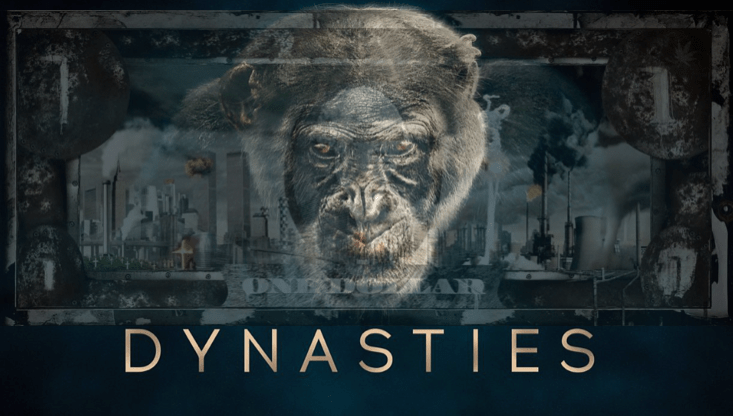
‘David’, an ageing patriarch whose time at the top is nearly over and who is clearly anxious about challenges from his younger rivals and concerned with his legacy, narrates this compelling programme about ‘David’, an ageing patriarch whose time at the top is nearly over and who is clearly anxious about challenges from his younger rivals and concerned with his legacy.

The BBC’s new block-buster, Dynasties, can perhaps best be seen as an impressive and timely reflection of the unconscious concerns and obsessions of late capitalism – as Marx presciently observed, ‘The ideas of the ruling class are in every epoch the ruling ideas’ (e.g. ideas of power, dominance, hierarchy, survival as telos, become ‘naturalised’), and nowhere is this unconscious dynamic seen more clearly than in the dominant ideas of environmentalism.

Read More

David Bowie: Alienation and Stardom, by Rod Tweedy

Schizophrenia, Spaceboys, and the Spiders from Mars

The death of David Bowie in 2016 revived both intense media interest in his work and astonishing creative legacy and also a plethora of unthinking and misleading cliches about who he was and what he signified. Foremost amongst these was the description of him as some kind of alien being, or “mysterious extraterrestrial”: “40 years ago, in millions of living rooms across the British isles,” one hagiographic BBC documentary started, “a strange alien creature was beamed onto our television screens”. Online and newspaper headlines were full of references to Starmen, Spaceboys, The Man who Fell to Earth – but there was very little attempt to explore or decode these references or to consider their psychological significance.

Read More

WILLIAM BLAKE and JACOB BOEHME, by Kevin Fischer

This essay will examine how Jacob Boehme and William Blake understood and valued imagination, and how imagination is quite distinct from fantasy. Both men saw it as rooted in living experience, and as such necessary for a fuller knowledge and understanding of reality. For both, abstract reasoning alone gives only a partial view, one that can distort and limit our understanding and the world that we do experience. By contrast, the creative embodied imagination places us more fully in existence, in ourselves and in the world; it makes possible true Reason; it reveals all the profound potential that is too often unexplored and unrealised in us; and by doing so it affords us a vital living understanding of and relationship with the Divine.

Read More

William Blake and the Divided Brain, by Iain McGilchrist

The Infinite Brain and the Narrow Circle

The Blake Society Annual Lecture was this year given by Iain McGilchrist, whose remarkable book The Master and His Emissary: The Divided Brain and the Making of the Western World is widely regarded as one of the most important texts of the twenty-first century.

His extraordinary talk on William Blake shows how a profound understanding of contemporary neuroscience and hemispheric difference can illuminate and reveal hidden dimensions of Blake’s thought, a writer and thinker so at home with contraries, asymmetries, and the deep processes of the human brain. It is quite simply the best talk on Blake that has ever been given or is ever likely to be given. Prepare to have your hemispheres altered!

Read More

The End of Nature:  Blake and Pantheism, by Rod Tweedy

Babylon, Nature-worship, and the Sleep of Albion 

OLYMPUS DIGITAL CAMERA

‘Awake! awake O sleeper of the land of shadows, wake! expand!’

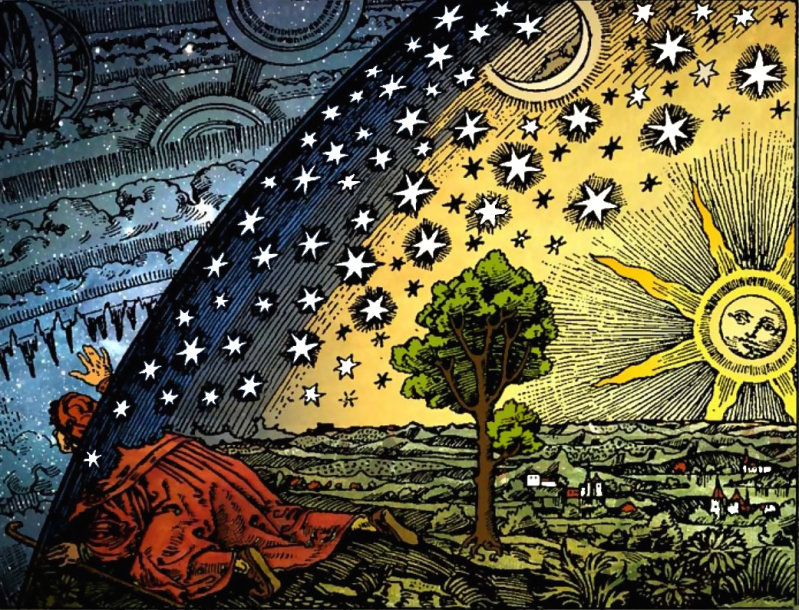
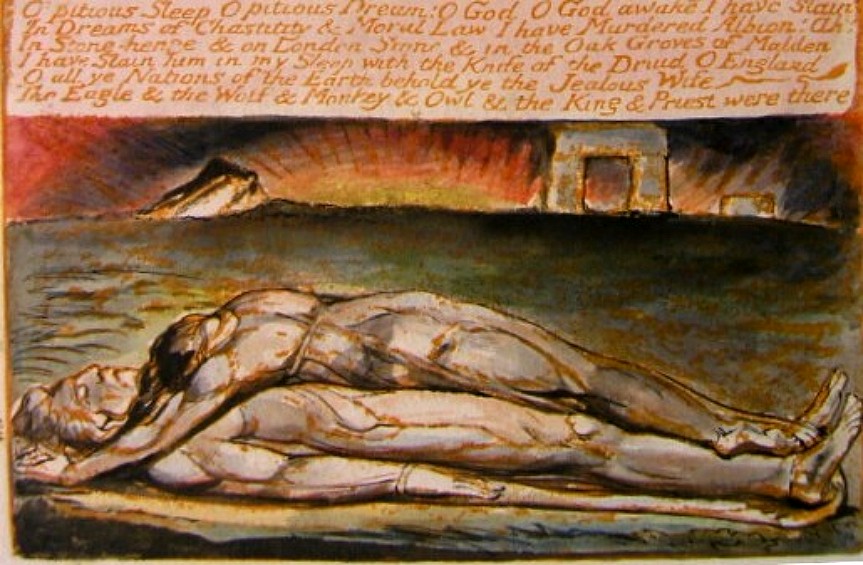
As Kathleen Raine has noted, “the sleep of Albion is in a word the materialist mentality of the modern West.” However, this “materialist mentality”, for Blake, denotes not only the belief in the Newtonian universe of orthodox Science, which many are now questioning, but also the belief in “Nature” itself. For Blake, the “Creation” – the emergence of an apparently objective, natural, and material world – and Albion’s fall into “Sleep” were one and the same event.

Read More