Divine Imagination: Correlations Between the Kabbalah and the Works of William Blake, by Mikell Waters Brown

Screen Shot 2021-05-10 at 10.39.26

Introduction: Adam Kadmon

The Dance or Albion, also called Glad Day and Albion Rose, is arguably William Blake’s most recognizable image, at least in terms or his pictorial output. It is a potent and joyous evocation of spiritual ascendancy and as such it provides an excellent starting place for our examination of Blake’s visionary and often obscure iconography.

Read More

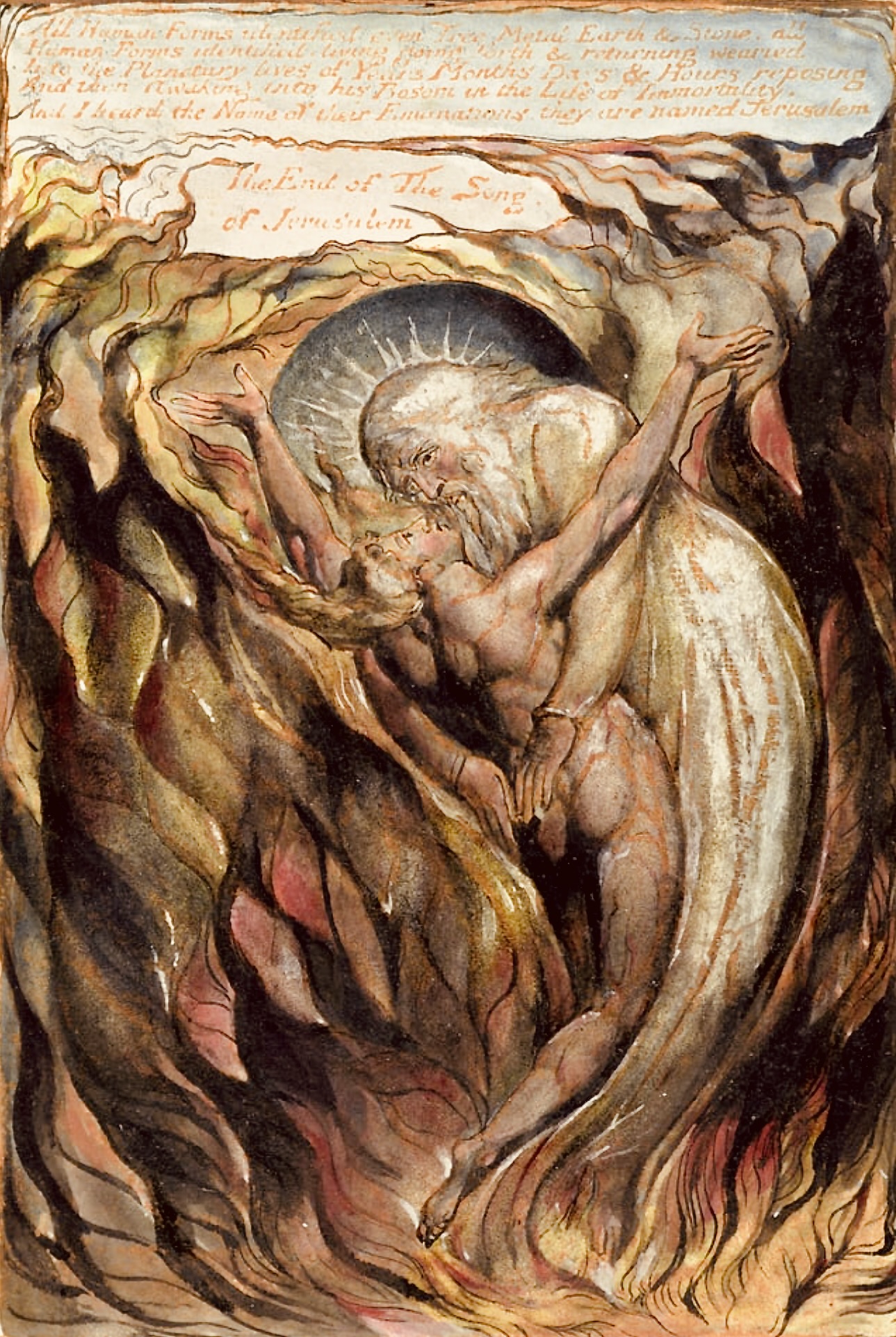
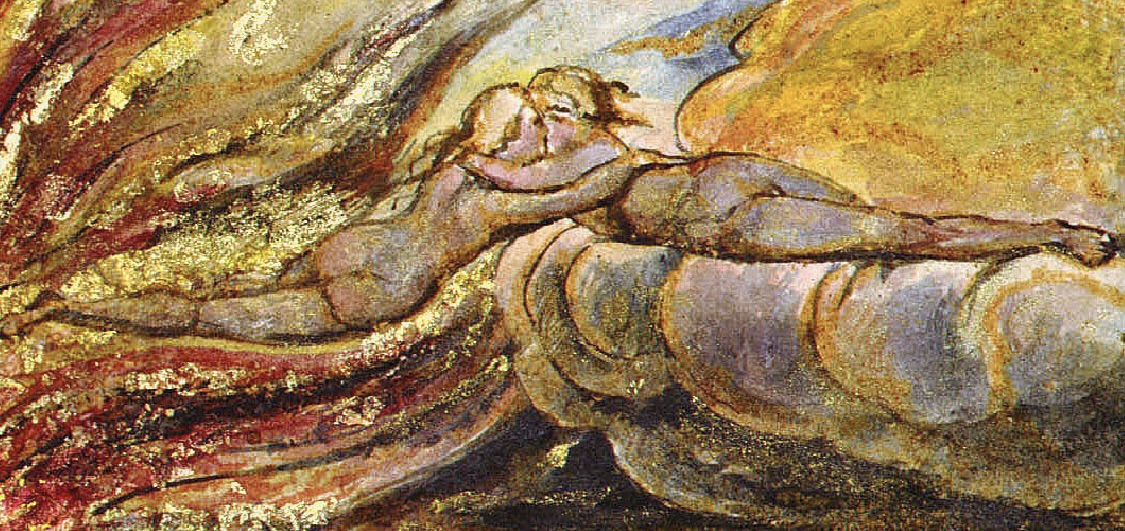
Blake’s Erotic Apocalypse: The Androgynous Ideal in ‘Jerusalem’, by Diane Hoeveler

From the Hermaphrodite to the Androgynous: Reintegrating the Male and Female

Screenshot 2022-08-25 at 12.11.11 2 2 2Screenshot 2022-08-26 at 11.13.23


Screen Shot 2021-05-10 at 10.39.26

Introduction: Sexual Warfare: The Origins of the Battles of the Sexes

marriageofheavenandhell1

Detail from Blake’s The Marriage of Heaven and Hell. Which is also a marriage of Male and Female – not understood externally, inter-psychically, in the fallen and projected way, but intra-psychically – to overcome the divisions and separations within oneself. Note that the figures here are themselves androgynous.

The imagery of sexual warfare is central to the vision of apocalypse which Blake proclaims as his poetic mission. The political apocalypse of the earlier work, such as The French Revolution, fades as the spiritual gains prominence, for Blake’s vision of the natural world seems to have darkened over the years so that by the time he was writing Jerusalem the only apocalypse he could endorse was one in which the ”sexes must cease and vanish” in the psyche so that humanity can assume its spiritualized “body.” It became clear to Blake that political reform of society could not be effected until an individual and spiritual redemption took place in every heart. To become androgynous, to overcome the flaws inherent in each sex, emerges as the central challenge for all Blake’s characters. 

Read More

William Blake and the Sexual Basis of Spiritual Vision, by Marsha Keith Schuchard

How to Enter the Kingdom of Heaven: William Blake and the Erotic Imagination
When I first Married you, I gave you all my whole Soul

I thought that you would love my loves & joy in my delights

Seeking for pleasures in my pleasures, O Daughter of Babylon

Then thou wast lovely, mild & gentle, now thou art terrible

In jealousy & unlovely in my sight, because thou hast cruelly

Cut off my loves in fury till I have no love left for thee.

Thy love depends on him thou lovest & on his dear loves

Depend thy pleasures which thou hast cut off by jealousy.

— Milton (1804-10), plate 33

In 1863 Alexander Gilchrist corrected the claim made by J.T. Smith, a friend of Blake, that the artist and “his beloved Kate” lived in “uninterrupted harmony”. Such harmony there really was; but it had not always been unruffled. There had been stormy times in years long past, when both were young; discord by no means trifling while it lasted. But with the cause (jealousy on her side, not wholly unprovoked), the strife had ceased also. Read More

The Sleep of Albion and the Fall into Division, by Northrop Frye

How the Sleep of Imagination Produces Dissociation 

sleep2-jpeg

Any attempt to explain Blake’s symbolism will involve explaining his conception of symbolism. To make this clear we need Blake’s own definition of poetry:

Allegory addressed to the Intellectual powers, while it is altogether hidden from the Corporeal Understanding, is My Definition of the Most Sublime Poetry; it is also somewhat in the same manner defined by Plato.

The “corporeal understanding”, according to Blake, cannot do more than elucidate the genuine obscurities, the things requiring special knowledge to understand (such as the contemporary allusions in Dante), or the literal mechanics of a poem (meter, structure, general themes etc). The “intellectual powers” go to work rather differently: they start with the hypothesis that the poem in front of them is an imaginative whole, a unique and irreplaceable event, and work out the implications of that hypothesis. The way that poetry is generally taught in schools therefore, by converting it into “corporeal understanding” – into a form of machinery – completely misses its whole point, like explaining a joke or analysing a dead body to find out what makes it tick.

‘Excrement’: John Keating’s apt description of the corporeal understanding’s approach to poetry

Read More