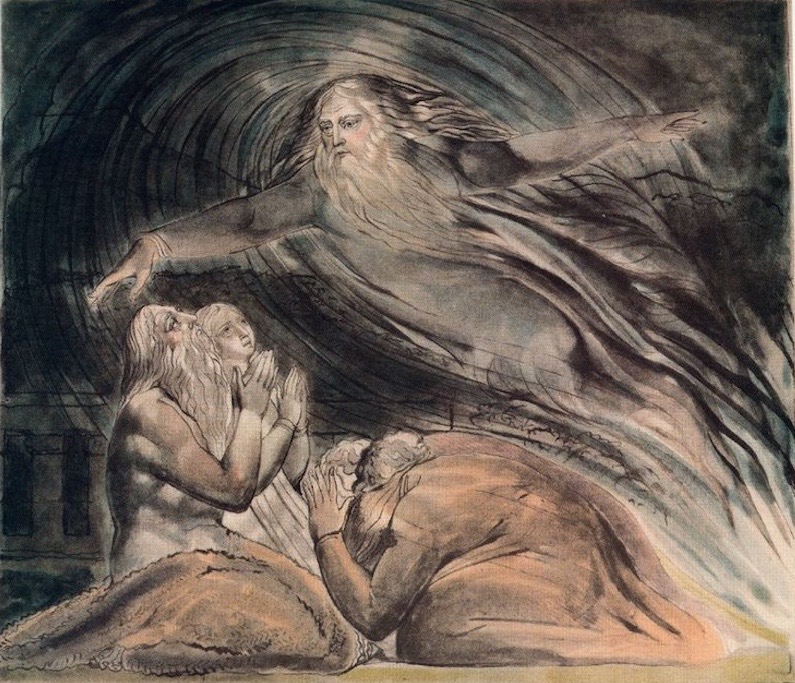
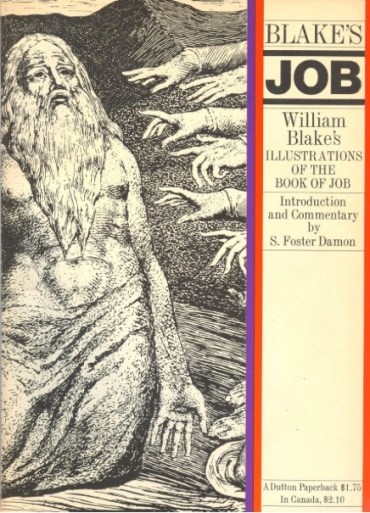
FEARFUL SYMMETRY: William Blake and Sacred Geometry, by Rod Tweedy

The Human Form Divine: Sacred geometry and its relationship to our physiology


Section 1: The Nature of Sacred Geometry

Measuring Urizen: The geometry of geometry

This first section explores what is meant by “sacred geometry”, studying and measuring its terms in relation to the study of physiology, the ‘science of life’. It therefore provides a sort of “geometry of geometry”. This seems apposite: the very idea of measuring is after all embedded in the word “geometry”, which comes from the ancient Greek words Geos, meaning “Earth”, and Metron, meaning “to measure”. The act or assumption of measurement is therefore contained within the system that is used to measure reality. Urizen thereby inscribes itself in the very utensils it uses to explore the deep: as Neil Postman acutely observed, “within every technology there is embedded an ideology” (Technopoly: The Surrender of Culture to Technology). These sorts of isomorphic (or “fractal”) repetitions and self-reflections constitute one of the defining characteristics of sacred geometry.

Sacred geometry is usually understood as the science and study of the fundamental patterns, shapes, forms, proportions, and ratios that constitute the basic nature of physical, physiological, and psychological reality. In ancient traditions, these geometries were considered ‘sacred’ because they recurred with such remarkable frequency and on so many different levels, thereby seeming to suggest a ‘hidden order’ to the world. As Skinner notes, “geometry and numbers are sacred because they codify the hidden order behind creation”. As such, they were sometimes considered to reveal the “mind” of God: as Galileo succinctly put it, “Mathematics is the alphabet with which God has written the universe.”

Read More

Zodiacal Physiognomy: William Blake’s friendship with astrologer John Varley

The Zoas and the Zodiac


Blake and Varley

Blake and Varley: Portrait of Blake by Thomas Phillips (1807), and portrait of Varley by John Linnell (1820)

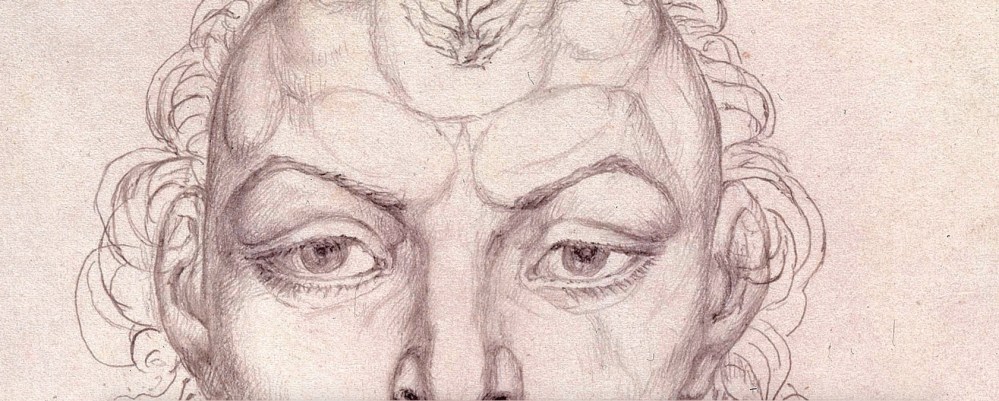
Blake’s friendship with the artist and astrologer John Varley (1778–1842) is one of the most unusual and intriguing of all Blake’s unusual and intriguing friendships. They first met in 1818, when they were living as near-neighbours in London, and it is Varley we have to thank for the remarkable series of drawings of ‘Visionary Heads’ that Blake made, in the company of Varley, over a number of late-night (or rather early morning) meetings – or ‘seances’ as some people called them – that they had, usually at Varley’s house, 10 Great Titchfield Street, off Oxford Street, which was near to Blake’s in South Molton Street. These drawings included the famous image of ‘The Ghost of The Flea’; it is a rather remarkable fact that this Ghost arose out of their discussions about astrology and the possible influence of the position of the planets on both our psychology and physiognomy. The Ghost (or Spiritual Form) of the Flea, apparently, denoted ‘Gemini’. 

Blake’s drawings (including that of the Flea) were used by Varley for his 1828 book A Treatise on Zodiacal Physiognomy – the only time that Blake collaborated with someone else on the production of a book. And what an fascinating book it is: ‘Zodiacal Physiognomy’ is surely one of the most intriguing titles for a book ever.  But what exactly was zodiacal physiognomy?

Read More

Christmas and William Blake by Harriet Monroe

Revolutions in Being: The Meaning of the Nativity in Blake’s Vision
Screenshot 2021-12-24 at 11.48.14

Screen Shot 2021-05-10 at 10.39.26

Introduction

It is strange how the worship of the Christ-child penetrated the hard old Roman-built world. It was like the perfume of a lily, of a mass of lilies, whose roots have broken rocky soil, whose shining whiteness enchants the air. An infant conquered the nations; the human race lifted up its eyes and sang a new song.
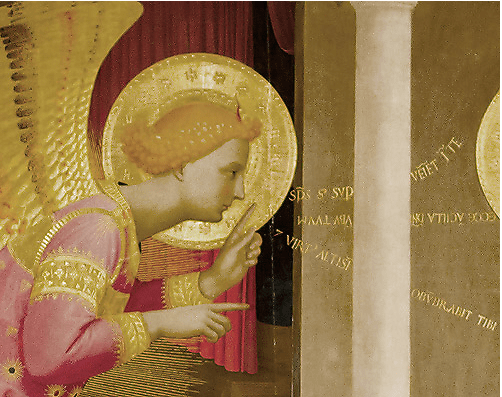
“Slowly the perfume, the song reacted in beauty in men’s minds, and the beauty took to itself form and colour and rhythm, became incarnate in churches and statues, gorgeous in tapestries and paintings, vocal in poetry and music.” (Image: detail from Fra Angelico’s Annunciation of Cortona,1433–1434).

Slowly, through those centuries of a crumbling empire and a resilient faith, the perfume, the song reacted in beauty in men’s minds, and the beauty took to itself form and colour and rhythm, became incarnate in churches and statues, gorgeous in tapestries and paintings, vocal in poetry and music. The human spirit passed from Caesar to Saint Francis, from the Colosseum to Chartres Cathedral, from pagan frescoes to Fra Angelico, from Greek choruses to Palestrina, from Virgil and the cynical later poets of a disillusioned autocracy to Dante and the epics and lyrics of new languages seeded and nourished by the old.
Read More

The Gnostic Eve: William Blake and The Secret Doctrine, by H. P. Blavatsky

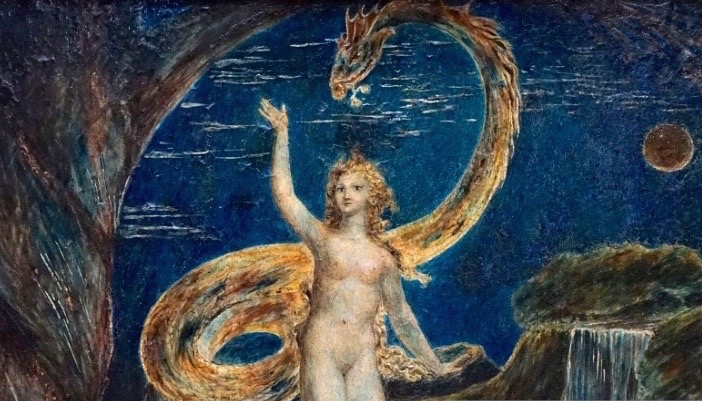
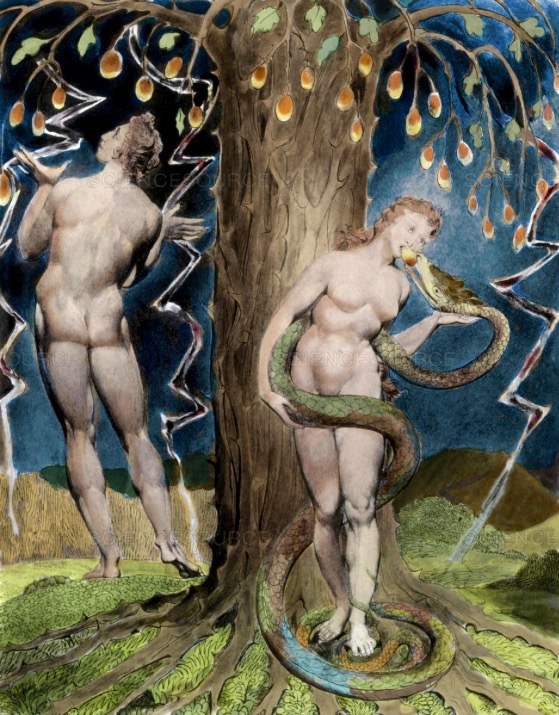
The Worship of the Serpent: The Awakening of Eve and the Generation of Nature


The Symbol of the Serpent: Introduction to Blavatsky’s work

Blake’s art speaks in symbols. But what exactly are symbols? And why are all of the deepest ancient esoteric truths always communicated through symbol and image?  Pike suggests that symbols are the most powerful way to mediate and convey a “truth” that lies beyond ordinary conscious, “rational” thought programmes and parameters: “The first learning in the world consisted chiefly in symbols. The wisdom of the Chaldæans, Phœnicians, Egyptians, Jews; of Zoroaster, Sanchoniathon, Pherecydes, Syrus, Pythagoras, Socrates, Plato, of all the ancients, that is come to our hand, is symbolic. It was the mode, says Serranus on Plato’s Symposium, of the Ancient Philosophers, to represent truth by certain symbols and hidden images.”  
And one of the most powerful, and recurrent, of all these ancient symbols, he notes, is that of the serpent or dragon. “This will be found to be confirmed by an examination of some of the Symbols used in the Mysteries. One of the most famous of these was THE SERPENT. The Cosmogony of the Hebrews and that of the Gnostics designated this reptile as the author of the fate of Souls. It was consecrated in the Mysteries of Bacchus and in those of Eleusis. Pluto overcame the virtue of Proserpine under the form of a serpent; and, like the Egyptian God Serapis, was always pictured seated on a serpent, or with that reptile entwined about him.”

Read More

Man’s fall into Division and his Resurrection to Unity, by Rod Tweedy

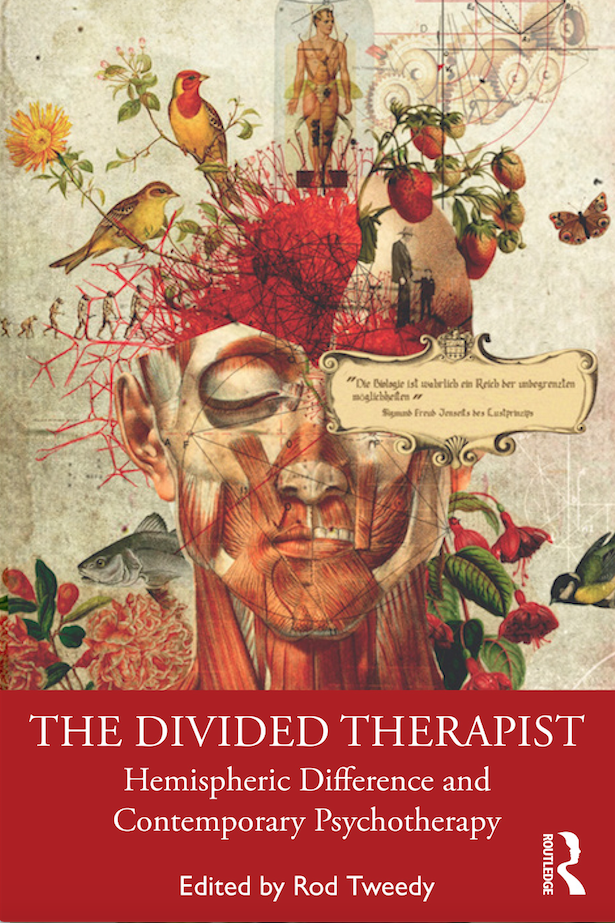
The Divided Therapist: Hemispheric Difference and Contemporary Psychotherapy

In The God of the Left Hemisphere I explored the remarkable connections between the activities and functions of the human brain that writer William Blake termed ‘Urizen’ and the powerful complex of rationalising and ordering processes which modern neuroscience identifies as ‘left hemisphere’ brain activity. In The Divided Therapist I extend this analysis, exploring its implications for our mental health and the practice of therapy itself – the regeneration and reintegration of the psyche. If the first book was about the “fall into Division”, this book is about the “Resurrection to Unity”: the restoration of psychic wholeness.

Read More

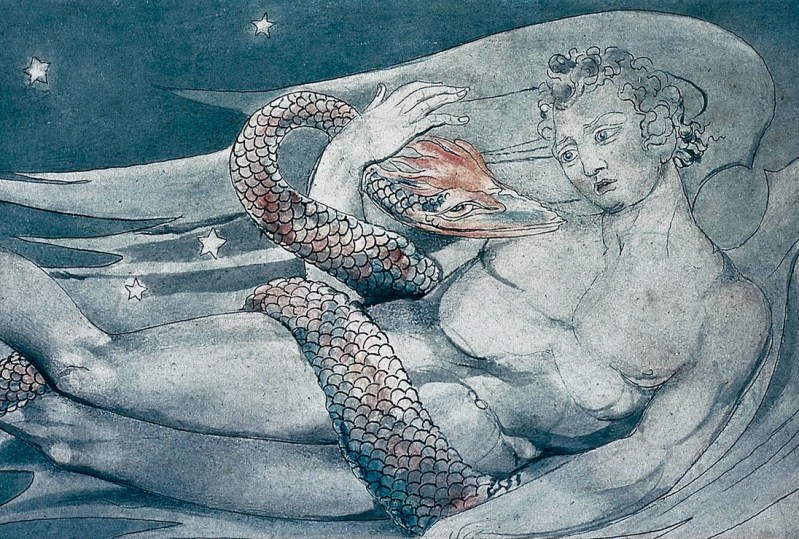
Blake’s Snakes: The Image of the Serpent in Blake’s Vision

The Symbol of Symbolism: Unravelling the form and nature of the underlying Energy


Introduction: Entering the Serpent

Sometimes it’s good just to look at Blake’s images, and let them approach you, without any verbal text, theory, or explanation.  An encounter with their other-ness. Over the next few weeks this site will be posting a number of articles exploring the meaning and importance of the symbol of the serpent in Blake’s work, which weaves throughout his vision, and twists and turns throughout his images. 

Read More

John Milton’s Devil-Deities in William Blake’s Illustrations to the Nativity Ode, by David McIrvine

Milton’s Dark Materials: the Dissociations of the Human Brain

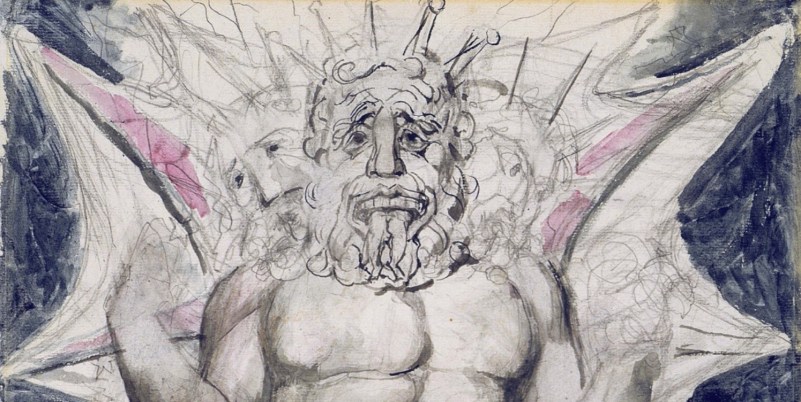
One of the aims of Blake’s work is to encourage integration of the various disconnected aspects of the human brain and body. Under Urizenic (left brain dominant) systems, these often become split off and psychotic – a form of dissociative identity disorder, presented in the Bible, Dante, and Milton as separate-headed ‘demons’ – the compulsive and obsessive nature of processes that are not properly integrated. The cause of this is usually a form of hyper-rationalisation, which McGilchrist and Louis Sass associate both with schizo-phrenia and modern forms of madness.

Read More

The Social Hell of William Blake: Industrialisation and Dante’s Hell, by Myat Aung 

Exploring the Impact of the Industrial Revolution on Blake’s Illustrations of Dante’s Inferno 

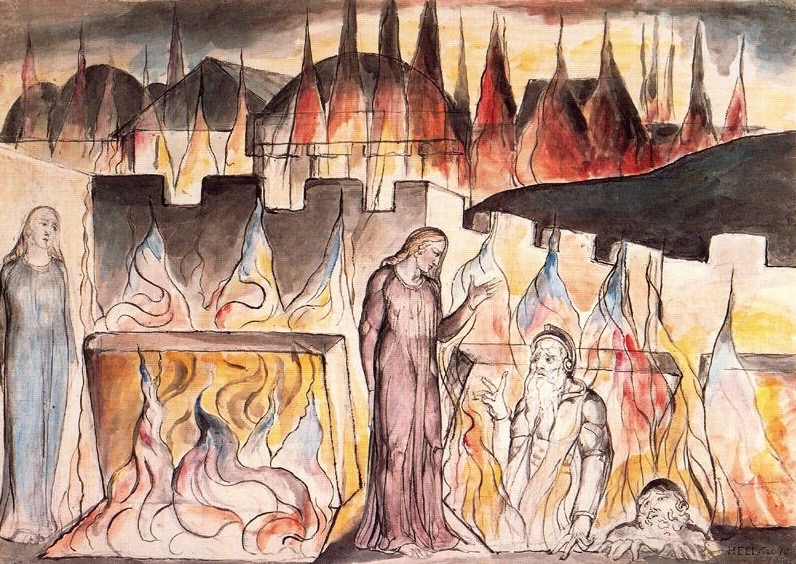
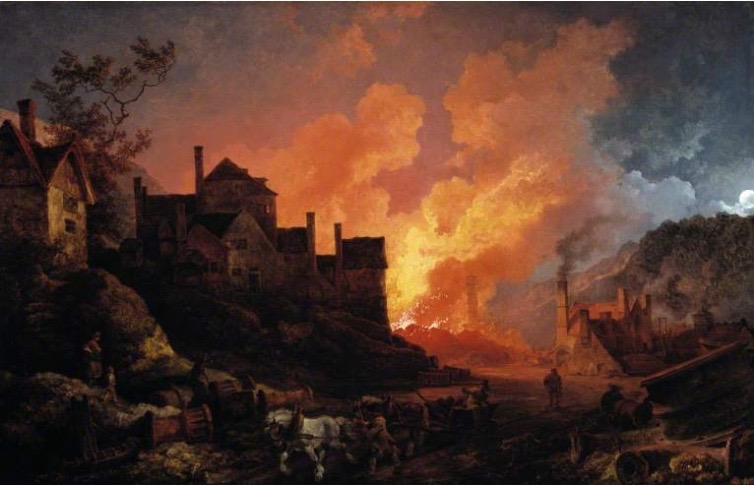
Dark Satanic Mills … Images: (top) Blake’s illustration to Dante’s Inferno, Canto X; (middle): the burning of the Albion Flour Mill on Blackfriars Road, London in 1791. Interestingly, Blake lived very nearby at the time, and the east wind that night would have blown smoke towards his house in Lambeth. The Albion Mill was unpopular and ran several of the local wind-driven mills in Lambeth out of business; (bottom): Coalbrookdale by Night, by Philip James Loutherbourg (1801).

Read More

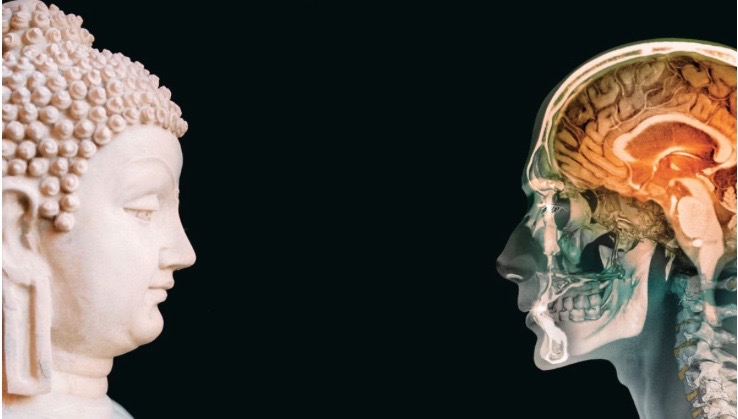
The Left Brain Buddha, by Leonard Shlain

Against Attachment: The anti-body, anti-sex, anti-feminine nature of Buddhist ‘Enlightenment’


Introduction: The Wheel of Birth/Death

On ignorance depends karma;
On karma depends consciousness;
On consciousness depend name and form;
On name and form depend the six organs of sense;
On the six organs of sense depends contact;
On contact depends sensation;
On sensation depends desire;
On desire depends attachment;
On attachment depends existence;
On existence depends birth;
On birth depend old age and death, sorrow, lamentation, misery, grief, and despair.- The Buddha’s twelvefold concatenation of cause and effect

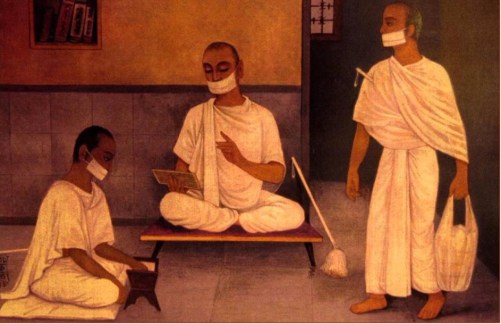
“The Jains were an ascetic sect that advocated the denial of all bodily wants as the highest form of spirituality.” They cover their mouths in order not to inadvertently swallow and kill any small insects and thereby perpetuate their place on this karmic wheel of suffering bodily life.

The sixth century BC saw the rise of rational philosophers, who used withering arguments to discredit Vedic rites and beliefs. Paralleling the surge in logic was the appearance of super-rigorous practices whose aim was to help the individual achieve union with the god-head by bypassing the priesthood. The Jains were an ascetic sect that advocated the denial of all bodily wants as the highest form of spirituality. The more extreme adherents believed it was a triumph to die of starvation.

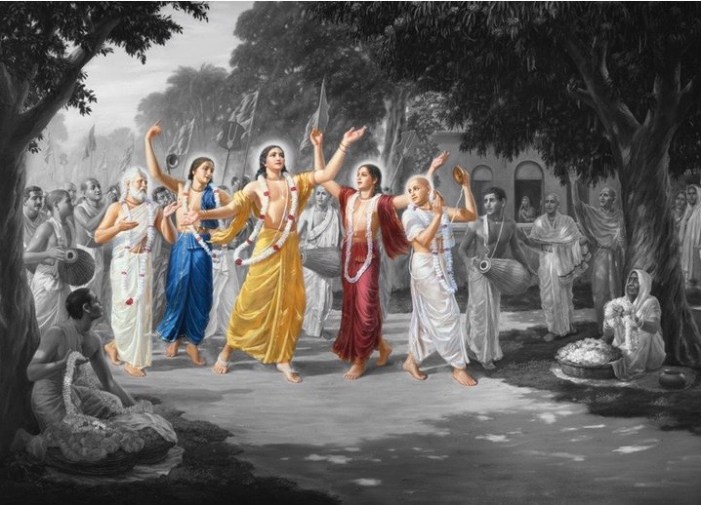
Despite its austere creed, Jainism gained many followers. Counterbalancing the ascetics was the increasingly popular Bhakti cult, which proclaimed that a communion with the divine could be only achieved through the senses. Worshippers chose a god or goddess upon whom to project their feelings, then used right-brained experiential pathways to achieve a state of ecstasy. Dance, chanting, shouting, and unbridled sexuality accompanied Bhakti rituals.

The Bhakti cult, on the other hemisphere, proclaimed that a communion with the divine could be only achieved through the senses.

The hypertrophy of reason that results from the introduction of alphabet literacy inevitably galvanises a countermovement that seeks to exalt the wisdom of the senses. I would suggest that alphabet literacy was the impetus behind Rationalism, Jainism, and Bhakti in India. It also prepared the ground for a new religion – Buddhism.

Read More

Frozen Children: Devitalisation, Ice-olation, and Zero Degrees Princesses, by Rod Tweedy

Rod Tweedy explores the pathology of contemporary Disney

Frozen is now the second highest-grossing animated film of all time, and one of the highest-grossing films in any medium ($1.3 billion in worldwide box office sales). 676 million youngsters have viewed and sung along to the YouTube clip of it’s hit song Let It Go, and as Dorian Lynskey notes, “it’s shaped the imagination of a generation”. Beyond the sparkle and CGI patina something about the movie clearly resonates powerfully with children and young people, and I think it’s secret – and what lies at the heart of its appeal – is its potent exploration of themes of childhood anger, ‘ice-olation’, inner devitalisation and self-absorption, which the film both addresses and amplifies.

Read More