
William Blake and the Radical Swedenborgians, by Robert Rix

Freemasonry, Illuminism, and the New Jerusalem

swedenborg-hypnosis

If the philosophy of Immanuel Kant is now studied worldwide, the current climate of philosophical investigation ignores the mystical thinker Emanuel Swedenborg – at best relegating him to footnote status. But towards the end of the eighteenth century, the interest in Swedenborg among intellectuals was immense; his writings “made a lot of noise in the speculative world,” as the leading journal on esoteric matters, The Conjuror’s Magazine, commented in 1791. Kant even felt compelled to respond to Swedenborg in Dreams of a Spirit-Seer (1766). Swedenborg’s teaching became the main substance of the occult revival in the late eighteenth century, and his ideas have had a lasting appeal as a source of inspiration to many intellectuals who were not converts, such as Lavater, Goethe, Coleridge, Emerson, Balzac, Baudelaire, Whitman, Melville, Henry James, and, not least, the poet and painter William Blake, on whom the essay at hand will focus. 

Read More

Anarchism and William Blake’s Idea of Jesus, by Christopher Z. Hobson

How to create and live in a free society

blake-A1

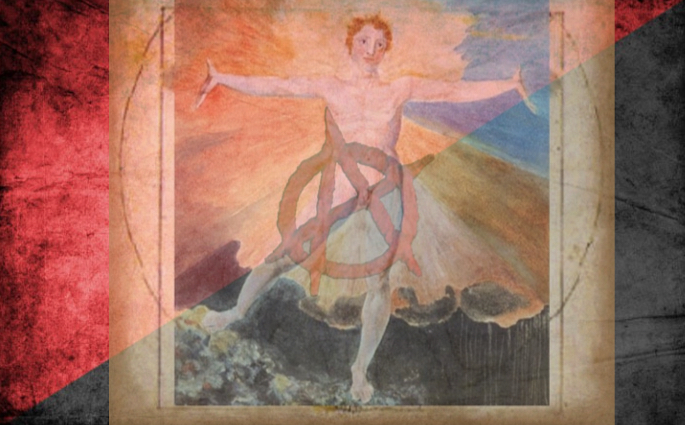
The English poet and painter William Blake (1757-1827) left a body of breathtaking art and stirring, sometimes obscure poetry, much of it concerned with religion and much with the revolutionary struggles of his time—the American and French revolutions, the British radical movement of the 1790s, and later, the growing British labour and constitutional movement in the years 1810-1820. Blake’s major poems—which are also beautiful artworks incorporating his own illustrations—include those collected in Songs of Innocence and of Experience (1789-1794); short narrative works like The Book of Urizen, America a Prophecy, and Europe a Prophecy, all written in the 1790s; and three long, complex narrative poems, The Four Zoas (1797-1807), Milton (1804-1818), and Jerusalem (1804-1820). This article is about Blake’s idea of Jesus and its relation to revolutionary anarchism.

Read More

Blake and the Book of Job, by Andrew Solomon

Re-Writing The God Program

f871a112f5d41fa84f675e8ee395f11c

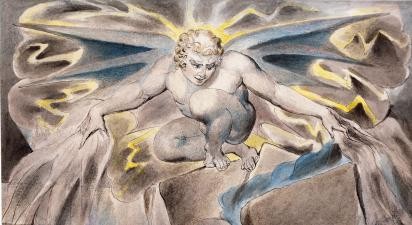
As a work of art, William Blake’s famous set of engravings illustrating the Book of Job is undoubtedly one of his finest achievements. But he made it very clear that his art was never an end in itself. Its purpose was to communicate his visionary perceptions for the benefit of mankind:  “To open the Eternal Worlds, to open the immortal Eyes/Of man inwards into the Worlds of Thought”.  Similarly, I shall keep throughout to a psychological rather than a theological interpretation.

Read More

Building Golgonooza: Christiania Freetown, an alternative community

Copenhagen’s alternative self-governing society

Christiania9 (1)Founded in 1971 when a brigade of young squatters and artists took over an abandoned military base on the edge of town and proclaimed it a “free zone” beyond the reach of Danish law, Christiania (or Christiania Freetown) is a self-proclaimed autonomous neighbourhood bang in the centre of Copenhagen. There are bars, cafés, grocery shops, a building-supply store, yoga centre, a lake, cobblestone roads (no cars allowed), a museum, art galleries, a concert hall, a skateboard park, a recycling centre, even a recording studio. It’s also the only place where the the sale of cannabis (though no hard drugs) is officially tolerated. The people of Christiania fly their own flag and use their own currency.
Read more ➵ 

The End of Nature:  Blake and Pantheism, by Rod Tweedy

Babylon, Nature-worship, and the Sleep of Albion 

OLYMPUS DIGITAL CAMERA

‘Awake! awake O sleeper of the land of shadows, wake! expand!’

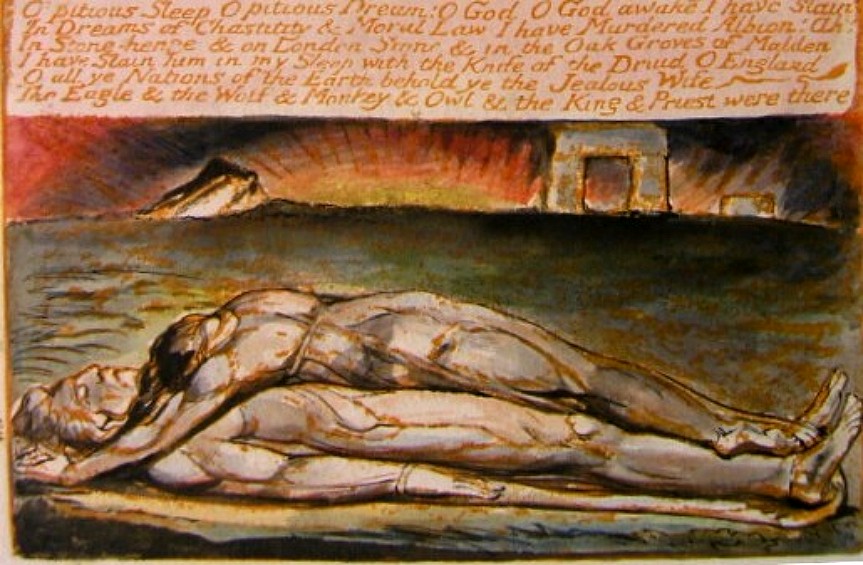
As Kathleen Raine has noted, “the sleep of Albion is in a word the materialist mentality of the modern West.” However, this “materialist mentality”, for Blake, denotes not only the belief in the Newtonian universe of orthodox Science, which many are now questioning, but also the belief in “Nature” itself. For Blake, the “Creation” – the emergence of an apparently objective, natural, and material world – and Albion’s fall into “Sleep” were one and the same event.

Read More

Jesus and Nonviolent Resistance (Mental Fight)

Love your Enemies

police-kiss_2765048b

You have heard that it was said, ‘You shall love your neighbour and hate your enemy,’ but I say to you, Love your enemies and pray for those who persecute you, so that you may be children of your Father in heaven. [Matt v: 38-48]

Commentary by Marcus J. Borg

There is a habitual conventual way of reading this chapter of sayings as commending passive acceptance of wrongdoing: don’t resist somebody who beats you; go the extra mile; don’t insist on your own rights. Colloquially, be a doormat – let people walk all over you. Moreover, it has most commonly been understood to refer to personal relationships, not to the political realm. Most Christians have not thought of this passage as prohibiting participation in war or capital punishment. Official violence is okay. But all of this is a misunderstanding of the passage whose effect is to domesticate it politically. The powers that be are pleased with the doormat reading.

Read more ➵ 


William Blake, Thomas Paine and the Bible

Blake’s Annotations to Bishop Watson’s An Apology for the Bible

Bishop Richard Watson’s An Apology for the Bible (1796) was written as a response to Thomas Paine’s trenchant attack on Christianity in The Age of Reason (1794/1795), which had attracted huge popular attention and become a best-seller in America. Paine had challenged both the historical accuracy of the Bible and its morality, and offered as an alternative the more ‘rational’ (and therefore more eighteenth-century) religion of ‘Deism’.

Read More

Jesus and the Politics of Compassion

Jesus’s Attack on the Purity System, by Marcus J. Borg

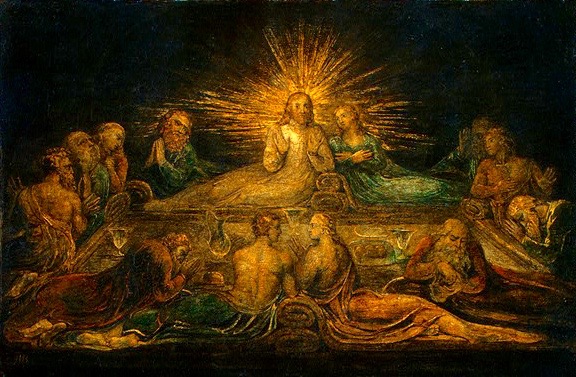
4b-one-of-you-will-betray-me-blake (2)-MAIN

The open table fellowship of Jesus embodied his alternative vision of an inclusive community

For Jesus, compassion was more than a quality of God and an individual virtue: it was a social paradigm, the core value for life in community. To put it boldly: compassion for Jesus was political. He directly and repeatedly challenged the dominant sociopolitical paradigm of his social world and advocated instead what might be called a politics of compassion. This conflict and this social vision continue to have striking implications for the life of the church today.

Read More