Blake’s Jerusalem as Visionary Theatre, by Susanne M. Sklar

Entering the Divine Body, the Human Imagination

door-jpeg (2)

William Blake created Jerusalem: The Emanation of the Giant Albion between 1804 and 1820. Since its conception this epic poem, compromised of one hundred illuminated plates divided into four chapters, has baffled many good readers. In 1811 Robert Southey thought it was “perfectly mad”; in 1978 W. J. T. Mitchell called it “some species of antiform” whose “narrative goes nowhere”; Robert Essick more recently wondered if “it is more than a curiosity shop with some treasures hidden amidst the clutter?” Many reasonable readers think the poem makes no sense.

Read More

Blake and Milton: Paradise Reloaded, by Jackie DiSalvo

Prophecy and Class Consciousness
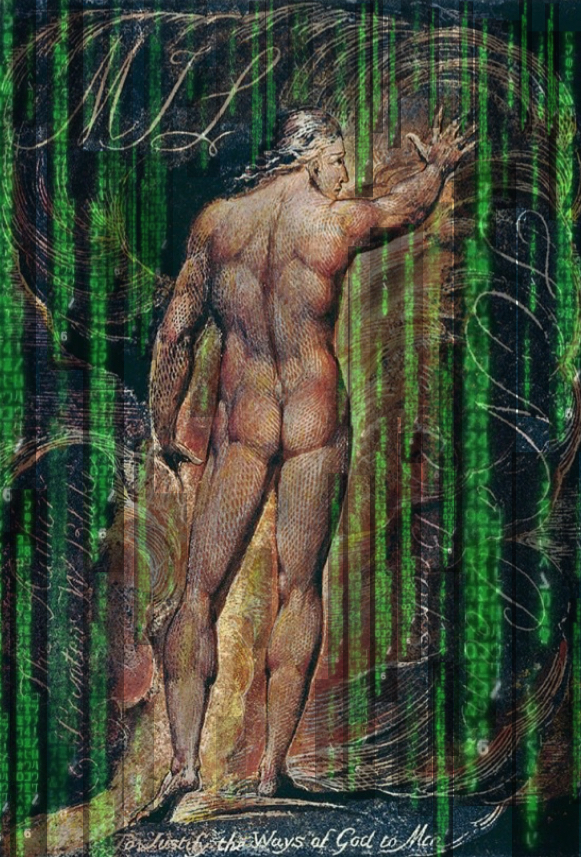
reloaded-jpeg3

Behind Blake’s particular conception of prophecy there is another which arises from Milton’s but goes beyond it. Henry Parker had enunciated it in the Puritan revolution when he proclaimed that “vox populi was ever reverenced as Vox Dei”. This tradition was related also to a belief that “God hath chosen the weak things of this world to confound the things that are mighty” (1. Cor). When Milton interprets this text, as in his Treatise of Civil Power, it becomes a metaphor, a contrast between a laity’s conscience and the political authority of a state church.

Read More

Are You Experienced? Timothy Morton on William Blake

Cynicism versus Revolution

Timothy Morton’s great series of podcasts (taken from his live lectures at Rice University) explore and unpack the deeper meanings of Blake’s Songs of Innocence and of Experience. As he says, “the trouble for Blake is not what you think, but how you think it. You could be thinking the most hifalutin, noble, moral, thoughts – but the way you think those thoughts could be politically regressive. So the real target of a Blake poem, is you.”

Read More

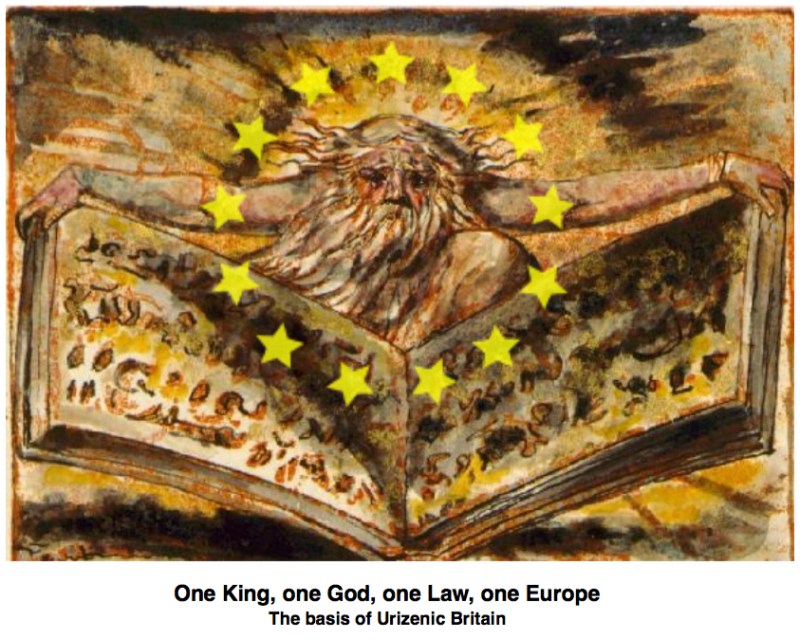
William Blake, Brexit and the Re-Awakening of Albion, by Rod Tweedy

Albion versus Britain PLC: The Political Dimension of Albion’s Awakening

1-brexit

In a remarkable article in the Guardian last year, associate editor Martin Kettle argued that “English radicalism needs to recapture the spirit of Blake” – that in a political world dominated by bureaucracy, think-tanking, consumerism, and a small-minded, reductive sense of cultural identity we need a re-infusion of imagination, passion, vision, and integrity. Indeed, he ended his piece with the provocative question, “Without the dream of Albion, how can England arise and Britain come together again in the common cause?” (Guardian)

Read More

Blake, Nietzsche, and the Death of God, by Jenny Hollander

How Blake Views The Sacred ‘Fall’ Of Judeo-Christianity As Triggering A Sacrilegious ‘Fall Of Man’

ar (3)

To make use of the term ‘fall of man’ is perhaps ironic; it is associated with a Miltonic, Judeo-Christian ‘fall’, which has a semantic implication of the sort against which Nietzsche battles when he begs for the ‘death of God’ to be absorbed into society’s reasoning. The sacred theological ‘fall’ of man from the faultless prelapsarian Eden to the fallible realism of Earth is far from how Blake, and indeed Nietzsche, understands man’s sacrilegious ‘fall’ to his present state.

Read More

William Blake’s Spiritual Visions, by Iain Sinclair

The Spiritual and the Radical

“I think it’s impossible to detach Blake’s radical spiritual beliefs from the radical political beliefs, because they all grew out of the same soil.”

Iain Sinclair’s terrific short introduction to Blake’s life and work, showing how his spirituality and clarity of vision emerge from being “dissident and difficult”. Sinclair is a writer, film-maker, and ‘psychogeographer’ whose work often centres on London, as in Lud Heat and London Orbital. His book Ghost Milk criticized the British government for using the 2012 Summer Olympics as an excuse to militarize London while forcing the poorest citizens out of their homes.