William Blake

Are You Experienced? Timothy Morton on William Blake
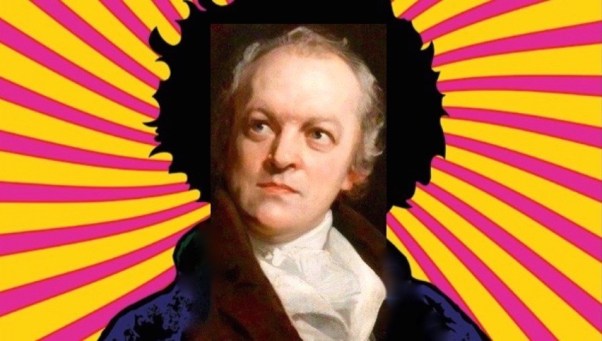
Timothy Morton’s great series of podcasts (taken from his live lectures at Rice University) explore and unpack the deeper meanings of Blake’s Songs of Innocence and of Experience. As he says, “the trouble for Blake is not what you think, but how you think it. You could be thinking the most hifalutin, noble, moral, thoughts – but the way you think those thoughts could be politically regressive. So the real target of a Blake poem, is you.”
William Blake, Brexit and the Re-Awakening of Albion, by Rod Tweedy
Albion versus Britain PLC: The Political Dimension of Albion’s Awakening
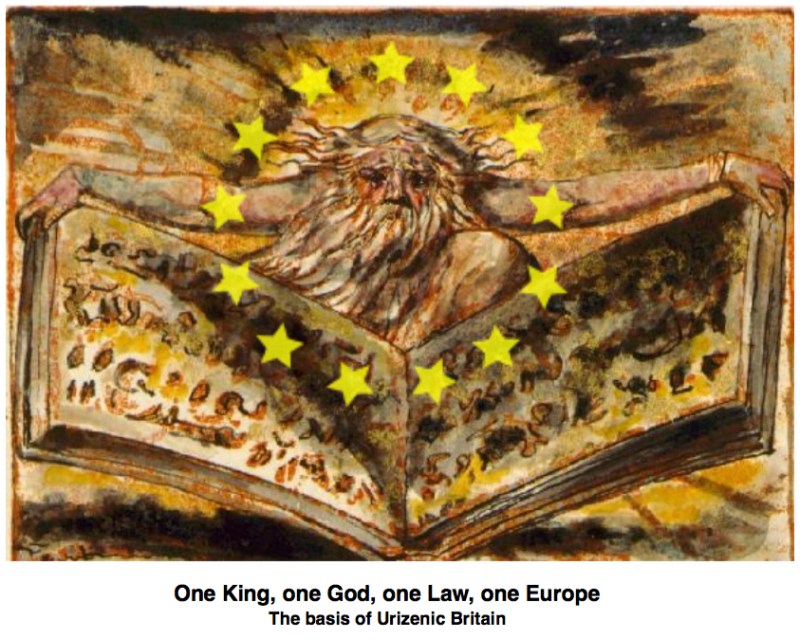
In a remarkable article in the Guardian last year, associate editor Martin Kettle argued that “English radicalism needs to recapture the spirit of Blake” – that in a political world dominated by bureaucracy, think-tanking, consumerism, and a small-minded, reductive sense of cultural identity we need a re-infusion of imagination, passion, vision, and integrity. Indeed, he ended his piece with the provocative question, “Without the dream of Albion, how can England arise and Britain come together again in the common cause?” (Guardian)
Blake, Nietzsche, and the Death of God, by Jenny Hollander
How Blake Views The Sacred ‘Fall’ Of Judeo-Christianity As Triggering A Sacrilegious ‘Fall Of Man’

To make use of the term ‘fall of man’ is perhaps ironic; it is associated with a Miltonic, Judeo-Christian ‘fall’, which has a semantic implication of the sort against which Nietzsche battles when he begs for the ‘death of God’ to be absorbed into society’s reasoning. The sacred theological ‘fall’ of man from the faultless prelapsarian Eden to the fallible realism of Earth is far from how Blake, and indeed Nietzsche, understands man’s sacrilegious ‘fall’ to his present state.
William Blake as Biological Visionary, by Ray Peat
Intensification through Opposition: Without Contraries is No Progression

Among all the published opinions about things that influenced Blake, I have seen only a few discussions of his treatment of scientific ideas, mainly his rejections of Newton’s mathematical and physical assumptions, and very few comments on Blake’s position on the major philosophical controversies of his time.
The Secret World and Sexual Rebellion of William Blake, by Andrei Burke
Some content on this page was disabled on May 9, 2017 as a result of a DMCA takedown notice from JASON F LOUV. You can learn more about the DMCA here:
William Blake’s Spiritual Visions, by Iain Sinclair
“I think it’s impossible to detach Blake’s radical spiritual beliefs from the radical political beliefs, because they all grew out of the same soil.”
Iain Sinclair’s terrific short introduction to Blake’s life and work, showing how his spirituality and clarity of vision emerge from being “dissident and difficult”. Sinclair is a writer, film-maker, and ‘psychogeographer’ whose work often centres on London, as in Lud Heat and London Orbital. His book Ghost Milk criticized the British government for using the 2012 Summer Olympics as an excuse to militarize London while forcing the poorest citizens out of their homes.
Blake’s attack on State Religion and Encoded Authority, by Saree Makdisi
Antinomianism, Patriarchy, and De-Coding the Matrix
No matter what difficulties he may have had with the Enlightenment discourse of liberty, Blake had no hesitation whatsoever in joining the radical attack on the patriarchal institutions of state religion and the political authority of the government: it is of course the established church where the little chimney sweeper’s parents “are gone to praise God & his Priest & King,/Who make up a heaven of our misery.”
Building Golgonooza: Marinaleda, the Spanish ‘Utopia for Peace’
Spain’s communist model village, Marinaleda
 The village Marinaleda, in impoverished Andalusia, used to suffer terrible economic and social hardships. Then in the 1970s, led by a charismatic mayor, Juan Manuel Sánchez Gordillo, the village declared itself a communist utopia and took farmland to provide for everyone. Could it be the answer to modern capitalism’s failings?
Sánchez Gordillo described Marinaleda – which has no municipal police and full employment – as a “utopia for peace”, acutely observing that “we have learned that it is not enough to define utopia, nor is it enough to fight against the reactionary forces. One must build it here and now, brick by brick, patiently but steadily, until we can make the old dreams a reality: that there will be bread for all, freedom among citizens, and culture; and to be able to read with respect the word ‘peace ‘. We sincerely believe that there is no future that is not built in the present.” Transforming human society “brick by brick”, for the betterment and wellbeing of every one of its citizens, is exactly what Blake’s vision of Golgonooza is all about.
Blake’s Illustrations of Dante’s Hell, by Eric Pyle
Entering Psychological Hell: The Dark Side of Christianity
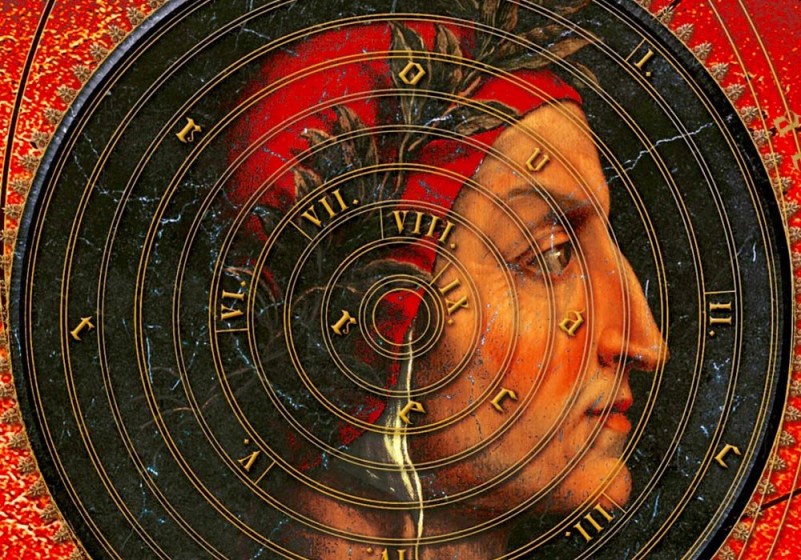
Updating Dante
‘Dear Sir, I am still far from recoverd & dare not get out in the cold air. Yet I lose nothing by it—Dante goes on the better, which is all I care about’ – William Blake
‘Do not think that I have come to abolish the Law or the Prophets; I have not come to abolish them but to fulfil them’ – Matthew 5:17
‘No thing can become manifest to itself without opposition’ – Boehme
Among William Blake’s last works was a series of illustrations to Dante’s Divine Comedy. It was an ambitious project for a man of 67 to begin, and he didn’t live to complete it. Even in its unfinished state, however, the series is a rich and fascinating work of art that can add to our understanding of Blake’s philosophy and artistic goals, and be enjoyed for its strange beauty.
 thehumandivinedotorg