Christmas and William Blake by Harriet Monroe
Revolutions in Being: The Meaning of the Nativity in Blake’s Vision

Introduction
It is strange how the worship of the Christ-child penetrated the hard old Roman-built world. It was like the perfume of a lily, of a mass of lilies, whose roots have broken rocky soil, whose shining whiteness enchants the air. An infant conquered the nations; the human race lifted up its eyes and sang a new song.
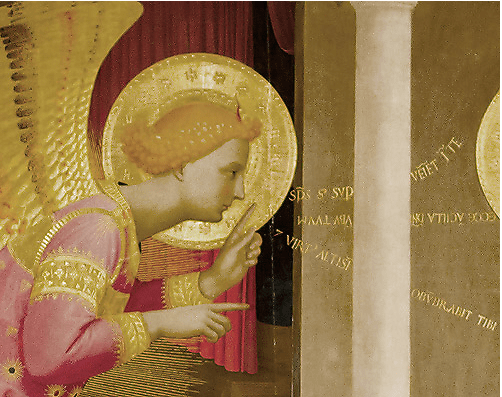
“Slowly the perfume, the song reacted in beauty in men’s minds, and the beauty took to itself form and colour and rhythm, became incarnate in churches and statues, gorgeous in tapestries and paintings, vocal in poetry and music.” (Image: detail from Fra Angelico’s Annunciation of Cortona,1433–1434).
Slowly, through those centuries of a crumbling empire and a resilient faith, the perfume, the song reacted in beauty in men’s minds, and the beauty took to itself form and colour and rhythm, became incarnate in churches and statues, gorgeous in tapestries and paintings, vocal in poetry and music. The human spirit passed from Caesar to Saint Francis, from the Colosseum to Chartres Cathedral, from pagan frescoes to Fra Angelico, from Greek choruses to Palestrina, from Virgil and the cynical later poets of a disillusioned autocracy to Dante and the epics and lyrics of new languages seeded and nourished by the old.
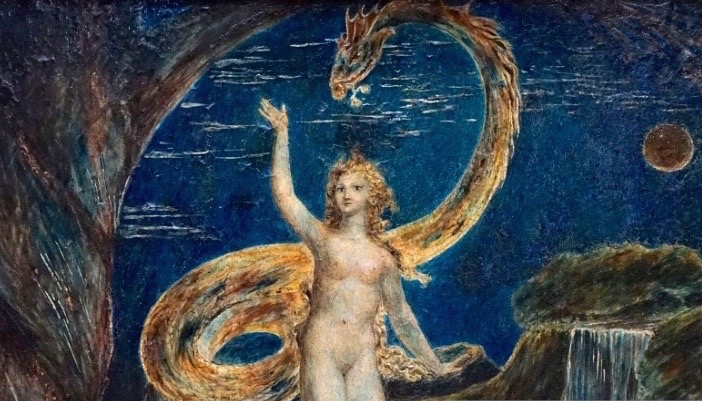
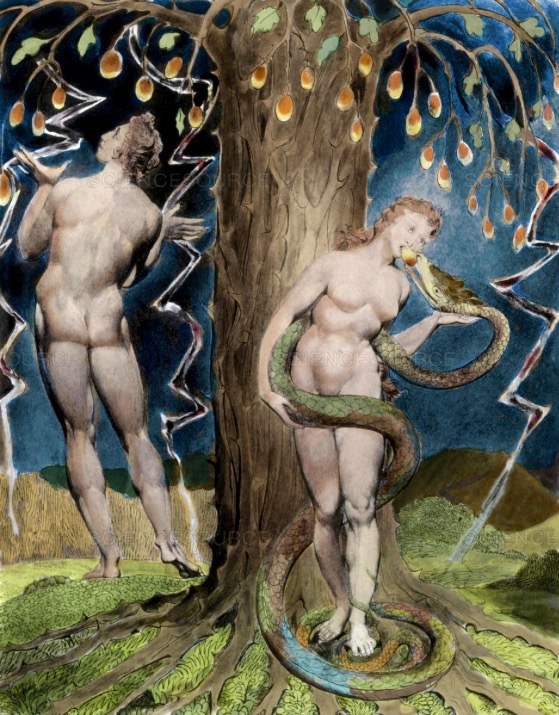
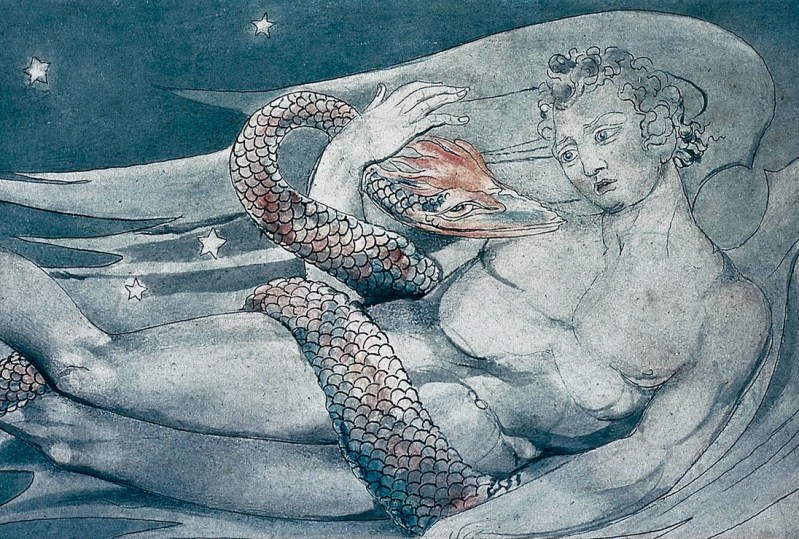
 Blake’s art speaks in symbols. But what exactly are symbols? And why are all of the deepest ancient esoteric truths always communicated through symbol and image? Pike suggests that symbols are the most powerful way to mediate and convey a “truth” that lies beyond ordinary conscious, “rational” thought programmes and parameters: “The first learning in the world consisted chiefly in symbols. The wisdom of the Chaldæans, Phœnicians, Egyptians, Jews; of Zoroaster, Sanchoniathon, Pherecydes, Syrus, Pythagoras, Socrates, Plato, of all the ancients, that is come to our hand, is symbolic. It was the mode, says Serranus on Plato’s Symposium, of the Ancient Philosophers, to represent truth by certain symbols and hidden images.”
 thehumandivinedotorg